E-Paper



Legal position existed for so long: Supreme Court notice to govt on marital rape
Exception 2 of Section 375 of the Indian Penal Code (IPC) decriminalises marital rape and holds that non-consensual sexual intercourse by a man with his own wife is not rape if the wife is at least 18 years old.

 Prefer HTon Google


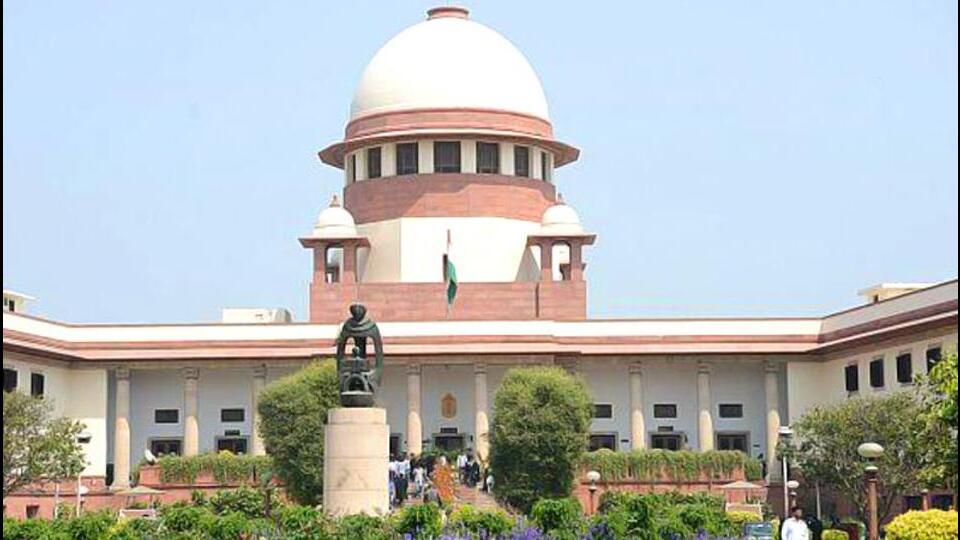
The legal position on marital rape not being a crime against husband has existed for a very long time, the Supreme Court observed on Friday as it sought a response from the Union government on a clutch of petitions against the Delhi high court’s split verdict on the issue, but put the next hearing after five months.
At present, non-consensual sex by a man with his wife is not a penal offence. Exception 2 of Section 375 of the Indian Penal Code (IPC) decriminalises marital rape and holds that sexual intercourse by a man with his own wife, the wife not being under 18, is not rape.
The bench of justices Ajay Rastogi and BV Nagarathna found no urgency in hearing the appeals against the high court’s split verdict on marital rape in May -- with one HC judge terming the clause protecting husbands from prosecution for non-consensual sex with their wives as “morally repugnant”, while the other saying it did not violate any law and could continue to exist.
“This position [on marital rape] has been existing for so long. What can be so urgent?” the bench asked advocate Karuna Nundy, who led the batch of petitions seeking criminalisation of marital rape on the grounds of the relevant legal provision being violative of women’s right to privacy, dignity and sexual autonomy.
Nundy, on her part, requested the bench for an early date of hearing, pointing out that the case before the Delhi high court remained pending since 2017 after the central government took a categorical stand opposing any change in the exception clause but later said that a nationwide consultation was underway to overhaul the criminal laws of the country. “The decision by the high court finally came in May but the issue was pending before the high court since 2017. We are requesting if this could be heard a little early,” she submitted.
But the bench said it would fix the next hearing only in February. “Let it come up later. We will examine it,” it said. The court then proceeded to issue notice and granted leave in the matter, asking all parties to complete the pleadings in the meantime.
While senior counsel Colin Gonsalves represented another petitioner seeking striking down of the immunity clause under IPC, senior advocate Gopal Sankaranarayan and advocate J Sai Deepak also appeared in the case and were allowed to argue. Deepak appeared for organisation “Men Welfare Trust”, which has opposed the plea for criminalisation of marital rape.
On May 11, even as the two high court judges delivered a split verdict on criminalisation of marital rape, they said that the issue raised a substantial question of law and required an authoritative decision by the top court.
In the high court, justice Rajiv Shakdher had held the exception in rape laws was violative of equality and dignity, and added such a clause accords recognition to the abominable Common Law Doctrine that “a married woman is nothing but chattel who loses her sexual agency once she enters matrimony”.
However, his fellow judge on the division bench, justice C Hari Shankar differed, and said the exception does not violate any law and is not unconstitutional. Legitimate expectation of sex was an “inexorable incident of relationship” between a husband and wife, which distinguished it from other relationships, he added.
The split judgment came on a bunch of petitions filed in 2015 by non-governmental organisation, RIT Foundation, All India Democratic Women’s Association, and two individuals. The petitioners argued that criminalising marital rape was about respecting the right of a wife to say “no”, and recognising that marriage is no longer a universal license to ignore consent.
In 2017, the Union government opposed the pleas and said that India cannot blindly follow the west and criminalise marital rape as several factors have to be taken into account.
However, in mid-January this year when the hearing again resumed after a pause due to the Covid-19 pandemic, the Centre told the high court that marital rape cannot be made into a criminal offence until the Centre’s consultation with all stakeholders is complete, paving the way for comprehensive amendments in criminal law instead of “piecemeal” changes.
Later, solicitor general Tushar Mehta, for the Centre, told the court that it is taking a “constructive approach” in the matter and sought time to reach a conclusion, adding that a half-hearted reply would directly affect the citizens of the country.
The government also urged the high court to stop hearing the cases for the time being, underlining that any judicial decision, without letting the Centre complete its consultation with states and other stakeholders, “may not serve the ends of justice”.
After the Centre failed to come up with a definite stand on the issue despite repeated nudges, on February 21, 2022, the high court refused to give further time to the Union government and termed their stand as “Trishanku” — in limbo. It decided to consider the stance given by them in 2017 where it opposed the petitions.
In response to Communist Party of India MP Binoy Viswam’s query on marital rape in Parliament on February 2, Union minister of women and child development Smriti Irani had said that the protection of women and children is a priority but condemning every marriage as violent and every man a rapist is not advisable.
About 50 countries around the world have done away with the provision of marital rape. India is among 34 countries which is yet to criminalise marital rape. According to a UN Women report, most of these 34 countries were developing nations including Pakistan, China, Bangladesh, Myanmar, Sri Lanka, Haiti, Laos, Mali, Senegal, Tajikistan, and Botswana.