
 E-Paper



L-G’s powers under new Act unconstitutional: AAP govt to SC
By the new law, the term ‘government’ as referred to in any law passed by Delhi assembly was amended to mean “L-G” (by adding a new clause (3) to Section 21 of the GNCTD Act) and opinion of L-G was made mandatory for executing any decision of the minister or council of ministers on certain matters


The Aam Aadmi Party (AAP) government has told the Supreme Court that the Amendment Act introduced by Centre to give overriding powers to the Centre’s nominee – Lieutenant Governor over Delhi legislature and executive is unconstitutional as it has in effect “disenfranchised” the people of Delhi by taking away power from their elected representatives, striking at the root of representative democracy and violating the law-making power of Delhi assembly recognised under the Constitution and decisions of the Supreme Court.
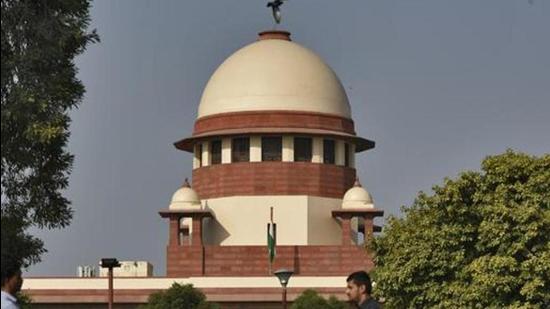
The Government of National Capital Territory of Delhi (Amendment) Act, 2021 and the Transaction of Business of the Government of National Capital Territory of Delhi (GNCTD) Rules, 1993 came into effect from March 28, 2021 by which four crucial provisions of the Act stood amended.
By the new law, the term ‘government’ as referred to in any law passed by Delhi assembly was amended to mean “Lieutenant Governor” (by adding a new clause (3) to Section 21 of the GNCTD Act) and opinion of L-G was made mandatory for executing any decision of the minister or council of ministers on certain matters under any law in force (by adding a proviso to Section 44(2) of the Act). A host of other amendments were also introduced in the Rules.
Also Read | DDCA appoints retd judge Indu Malhotra as new Ombudsman cum Ethics Officer
The petition was filed on August 9 and was mentioned by the Delhi government represented by senior advocate Abhishek Manu Singhvi on Monday before the Chief Justice of India (CJI) for an urgent listing. The CJI agreed to list the matter without specifying a date. The copy of the petition was made available only on Wednesday.
Terming the amendments unconstitutional, the Delhi government petition filed through advocate Shadan Farasat said, “The impugned provisions as amended by the amendment Act have in effect disenfranchised the people of Delhi, and violated their political rights under the Constitution in as much as the amendment Act takes away the power from their elected representatives and gives it to an unelected official, being the LG.”
The petition stated that the GNCTD Act “diminishes the constitutionally guaranteed powers and functions of the elected legislative assembly and council of ministers of the NCT of Delhi” and overturns the constitutionally stipulated balance between the Delhi government and the Union government.
The provisions of the 2021 Act, the petition said, “are an attempt to treat the L-G as the default administering authority over the NCT of Delhi” by authorising him to withhold consent from bills that, in his judgment, may be “incidentally” outside the scope of legislative assembly’s legislative powers and by empowering him interfere in the day-to-day administration of the NCT.
By the said provisions, the Act “impermissibly encroaches on the scope of the Delhi Legislative Assembly’s “core legislative functions” by interfering with the Assembly’s power to frame its own rules of business or to hold the executive to account, the petition added. The new law even prohibited the assembly from making any rule to enable itself or its Committees to consider the matters of day-to-day administration of the Capital and conduct any inquiry in relation to administrative decisions.
The accompanying amendments to the 1993 Transaction of Business Rules have further dented the independence and working of the Assembly, according to the petition. Article 239AA of the Constitution recognises Delhi as the National Capital Territory having L-G and an Assembly allowed to legislate on all other matters other than three excluded subjects – land, law and order and police, where Centre alone can legislate.
“Introduction of a deeming provision in Rule 49 of 1993 Rules now allows for any and every matter to be referred by the LG to the Central Government,” the petition said, adding that the amendments have vested direct executive authority in the secretaries of the Delhi government, allowing them to perform without reference to and even in derogation of the orders of the concerned ministers or council of ministers.
The petition also held the current amendments to violate the 2018 decision of the Supreme Court in Government of NCT of Delhi v Union of India which interpreted Article 239AA and said, “The exercise of establishing a democratic and representative form of Government for NCT of Delhi… would turn futile if the Government of Delhi that enjoys the confidence of the people of Delhi is not able to usher in policies and laws over which the Delhi Legislative Assembly has power to legislate for NCT of Delhi.”
The decision stressed on harmonious working between the L-G and Delhi government and held that the power of L-G to recommend an issue to the President cannot be to such an extent to obstruct the stream of governance.
The petition said that the basis of this judgment still remains as Article 239AA has not been amended. It required the Court to clarify that even under the new amendments L-G should act only on the aid and advice of the Council of Ministers insofar as he exercises any power as “Government” pursuant to a law passed by the Legislative Assembly.


