
 E-Paper



Lingayat MLAs to hold meeting against the caste census
Veerashaiva Mahasabha held a meeting in Bengaluru where they demanded a thorough review of the report, citing numerous flaws in the data collection process


Bengaluru: The Veerashaiva Mahasabha has announced its decision to convene a meeting of Lingayat MLAs from various political parties in a move to collectively determine the community’s stance and chart the next course of action in response to the caste survey report.
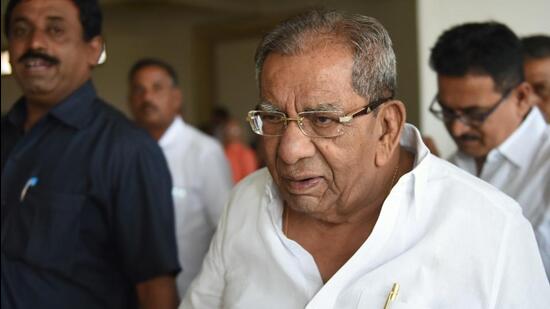
“To address the concerns surrounding the report, the Mahasabha has chosen to bring together Lingayat MLAs from across the political spectrum. The meeting will serve as a platform for open discussions and strategising our response to this. The exact date of the meeting will be decided soon,” said a senior Lingayat MLA who didn’t want to be named.
Jayaprakash Hegde, the chairman of the Other Backward Classes (OBC) Commission, is anticipated to present the report to the government before November 25, according to people familiar with the development.
The controversy surrounding the acceptance of the 2015 caste census report in Karnataka has escalated, with prominent caste groups raising their objections. Days after seers from the Vokkaliga community rejected the report, on Thursday the president of the Veerashaiva Mahasabha, the apex body of the Lingayat community, has now voiced their concerns regarding the report.
The Kantharaj committee’s report, often referred to as the “caste census,” has been a topic of dispute since its commissioning during the first term of Chief Minister Siddaramaiah. Despite its completion, no government has officially accepted the report to date.
Veerashaiva Mahasabha president and senior-most Congress MLA Shamanur Shivashankarappa labelled the report as ‘flawed.’ The former minister targeted his own party and claimed that the report was written in a home.
Veerashaiva Mahasabha held a meeting in Bengaluru where they demanded a thorough review of the report, citing numerous flaws in the data collection process. According to Shivashankarappa, the survey was inadequately conducted and the report was crafted in a manner that underrepresented their community.
“There are many flaws in the data collected by the committee. The survey was not done at houses belonging to our community. The survey was not done satisfactorily. A fresh survey must be done scientifically with advanced technology. The report was written by sitting in a home. In the report, the population of Veerashaiva Mahasabha was shown less, it will have a severe impact on our community,” the Davanagere South MLA said.
The opposition to the Karnataka government’s decision to accept the 2015 caste census report has grown with the prominent seers of the Vokkaliga community expressing their displeasure. Nirmalanandanatha Swami, a prominent Vokkaliga spiritual leader, who led the meeting of the community leaders last week had called the report deeply flawed and unscientific.
According to the seer, the current report is incomplete and could lead to injustices within various communities. He went on to urge the government to reconsider its decision and suggested that a comprehensive recovery of the population census is necessary to rectify the report’s deficiencies.
Meanwhile, federations representing Dalits, tribals, and other backward classes (OBC) have demanded that the findings of the caste census be made public. They allege that certain leaders from dominant communities within the government are blocking the report’s release. They argue that sharing the report’s findings would provide clarity on caste-wise population distribution, and educational, social, and economic status, potentially ending disputes over these issues.
Leaked figures from the report in 2018 had already stirred discontent among larger communities like Lingayats and Vokkaligas, as it indicated lower population figures than commonly believed. The leaked data indicated that Scheduled Castes (SCs) accounted for 19.5% of the state’s total population, followed by Muslims at 16%. Lingayats and Vokkaligas represented 14% and 11% of the population, respectively. Within the Other Backward Classes (OBCs), the Kuruba community alone comprised 7% of Karnataka’s population, contributing to the OBCs’ overall representation of 20% in the state.


