E-Paper



Loss and damage fund, Paris goal review on COP28 agenda
The G20 New Delhi declaration sets the path for discussions on higher and adequate climate finance at COP28

 Prefer HTon Google


Operationalising the loss and damage fund and setting out an energy pathway to keep the Paris Agreement goal of containing global temperature rise within 1.5 degrees Celsius are among key parameters to determine the success of the upcoming UN climate summit to be held in Dubai later this year, a key official said.
The outcomes of the conference are particularly important because the combination of climate crisis and El Nino is leading to record global land and sea surface temperatures.
“We have spent a lot of time with partners, listening to them to understand where we can find success at COP28. In terms of negotiated outcomes, we need to deliver on the Global Stocktake, the Global Goal on Adaptation and operationalisation of the Loss and Damage fund. Those are mandated outcomes as well as the just transition work that we have to deliver,” Ambassador Majid Al Suwaidi, COP28 Director General from UAE, which holds the presidency for the summit this year, said during a briefing last week.
COP28 is short for conference of parties, where parties denote nations signatories to the United Nations Framework Convention on Climate Change.
Besides the mandated outcomes, the UAE presidency is working on four focus areas that include energy, climate finance, nature, people and livelihoods, and inclusivity.
“We are focused on four pillars--one is how do we deliver something on energy with a focus on energy transition so that we can decarbonise the energy system we have today. While at the same time, look at how can we rapidly build up the energy system of the future. Our focus will be on doubling energy efficiency, doubling green hydrogen, zero methane by 2030, tripling of renewable energy capacity and many other targets,” he added.
On climate finance, the UAE is confident that the long promised $100 billion will come through this year. In 2009, at COP15, developed countries had pledged to this amount in climate financing for developing nations starting 2020. The G20 New Delhi declaration sets the path for discussions on higher and adequate climate finance at COP28.
There is a need for $ 5.8-5.9 trillion in the pre-2030 period for developing countries in particular to implement their nationally determined contributions, or NDCs that are emission reduction commitments, as well as a need of $ 4 trillion per year for clean energy technologies by 2030 to reach net- zero emissions by 2050, according to the G20 consensus statement released on September 9.
“On finance, we know developed countries promised that $100 billion. We need to see that $100 billion being delivered this year by developed countries and a lot of progress has been made on that already. But we need to also see reforms of multilateral development banks and international financial institutions to ensure we can go from hundreds of billions of investments to trillions,” Suwaidi said.
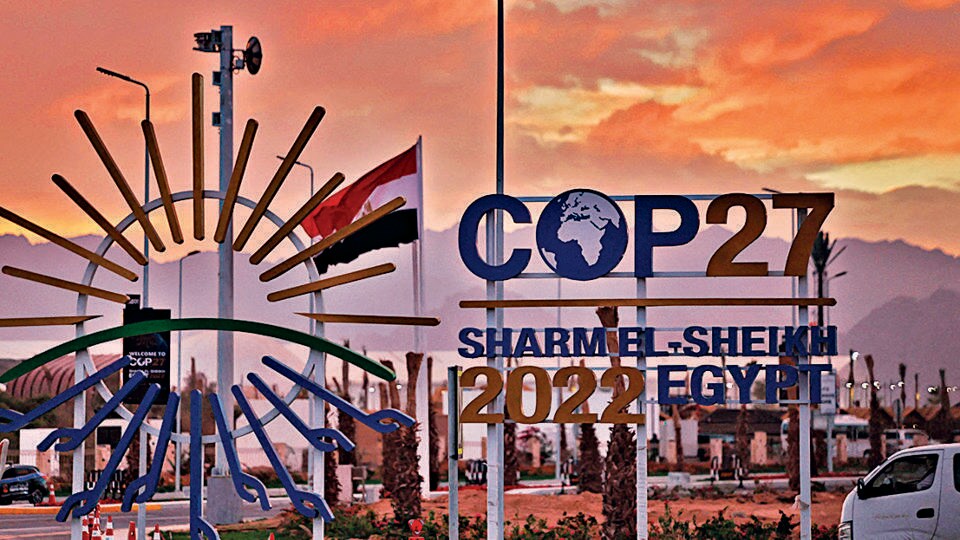
Among various sore points, experts have said there are likely to be major differences among developed and developing countries on how the loss and damage fund will be operationalised. The summit last year in Egypt’s Sharm El Sheikh ended with a decision to create a loss and damage fund, which will provide support to developing countries to avert, minimize and address loss and damage associated with the climate crisis.
One of the main contentions on the funding issue was that developed countries were pushing to expand the donor base to include high-income countries and emerging economies like China and India, and wanted to narrow the beneficiaries to only the most vulnerable, which essentially means island nations and least developed countries. The European Union had also sought to link the formation of the facility to mitigation efforts, such as peaking global emissions before 2025.
These debates are continuing, according to the Third World Network, an advocacy group. On the margins on the United Nations general assembly on September 22, a consultative ministerial meeting of UNFCCC on funding arrangements for responding to loss and damage was convened by the Egypt, the COP27 president.
“The outcome of the consultations saw clear and sharp divergences in positions between ministers or their representatives from developed and developing countries on critical issues relating to the loss and damage fund and funding arrangements, forewarning expected clashes and stark battle lines that lie ahead.. at Dubai, when COP28 takes place...,” the network said on September 26.
The other issue likely to blow up at COP28 is the silence on fossil fuel phase out or phase down. The Delhi Declaration of G20 managed to address the concerns of the petro states, even as it expressed an ambition to meet Paris Agreement goals by committing to global net- zero emissions by mid-century, HT reported on September 11.
“We wish to consider all possible solutions. As presidency, we do not wish to single out any one particular technology,” an UAE official said on whether carbon capture and storage technology was on the COP28 agenda.
Global efforts on climate crisis are falling short of meeting the Paris Agreement goals of keeping global warming under 2 degrees Celsius over pre industrial levels and pursuing efforts to keep it under 1.5 degrees, according to a synthesis report released on September 8.