
Madhya Pradesh cabinet okays bill against forced conversions
The conversion or an attempt of conversion by means of misrepresentation, allurement, threat, force undue influence, coercion, marriage and any other fraudulent means has been prohibited in MP
The state Cabinet on Saturday approved the Madhya Pradesh Dharm Swatantrey (Freedom of Religion Act) 2020 with a provision for a maximum of 10 years in jail for anyone “forcing women, minors, and people from Scheduled Castes and Scheduled Tribe to undergo religious conversion”.
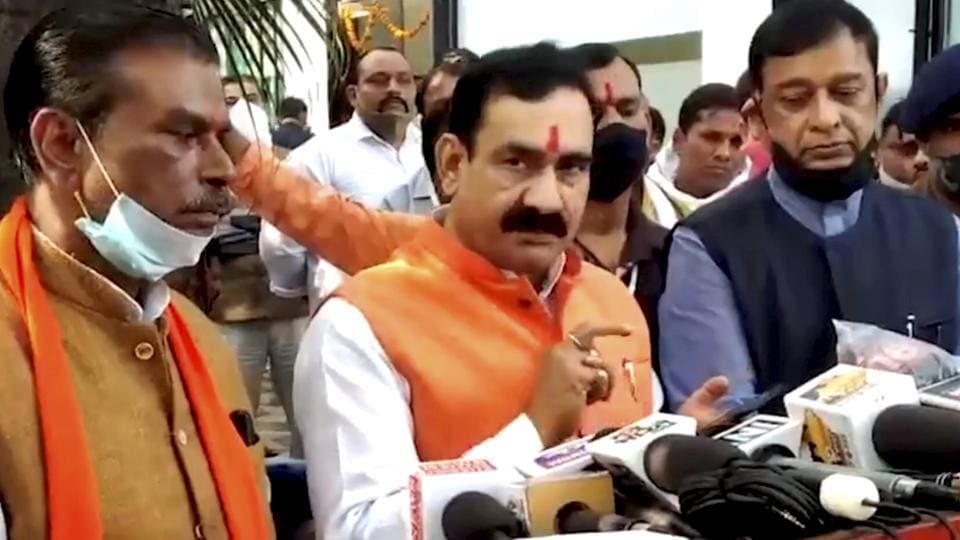
The draft bill says Ghar Wapsi, or conversion to Hinduism, will not be treated as conversion. “Under this legislation, the re-conversion to the ancestral religion will not be treated as conversion,” said the draft.
The proposed legislation will replace the 1968 Madhya Pradesh Freedom of Religion Act, said state home minister Narottam Mishra.
He said the bill seeks to prohibit religious conversions or an attempt of conversion by means of misrepresentation, allurement, threat, undue influence, coercion, marriage, and any other fraudulent means.
Mishra said it provides for one to 10 years of imprisonment and a maximum fine of 1 lakh for conversions.
“The forceful conversions and marriages will be a cognisable offence and non-bailable. There will be a provision for declaring such marriages null and void. Before conversion, the person and religious gurus have to inform district magistrate at least 60 days prior,” said Mishra
The bill provides for a five-year jail term for religious gurus, who perform conversion ceremonies, says the draft.
ABOUT THE AUTHORShruti TomarI have spent over a decade chronicling Madhya Pradesh’s political and social landscape, covering politics, investigative journalism, crime, human interest, and government policy, blending sharp insight with ground‑level depth. I have closely tracked three assembly elections, three Lok Sabha elections, leadership transitions in MP while exposing governance lapses, tender irregularities, and flawed policy rollouts. My reports have revealed gaps in the Cheetah project, irregularities in medical education, rigging in recruitment exams, and loopholes in policy implementation. In crime reporting, I have moved beyond FIRs to map systemic patterns — from organised crime networks and gender‑based violence to custodial accountability — balancing urgency with sensitivity. My journalism is defined by a commitment to human interest. I have profiled the marginalised Bancchda community, documented atrocities against tribal groups, and highlighted efforts to preserve their culture through heritage liquor and revival of spiritual practices. I have reported on farmers struggling with failed MSP promises, giving voice to those often reduced to statistics in policy files. Passionate about field reporting, I have reported on rampant sand mining in Chambal and Narmada, pharmaceutical companies supplying medicines under altered names, the dire condition of schools and colleges, the plight of commercial sex workers, and skewed sex ratios in specific districts. Beyond deadlines, and as HT’s state correspondent and assistant editor in Madhya Pradesh, I engage with ministers, farmers, students, and activists, believing the best policy stories begin with a single human voice. A postgraduate in Journalism and Mass Communication, I also hold a diploma in sports journalism.Read More

E-Paper


