
 E-Paper



Madhya Pradesh floor test and what it means for Congress
Bharatiya Janata Party leader Shivraj Singh Chouhan rushed to the Supreme Court, along with nine other BJP legislators, to petition the top court demanding an immediate floor test in Madhya Pradesh after the assembly was adjourned over coronavirus concerns.

 Prefer HTon Google


Madhya Pradesh chief minister Kamal Nath has said there is no need for trust vote as he enjoys a majority in the assembly after Governor Lalji Tandon on Monday issued a fresh deadline for a floor test.
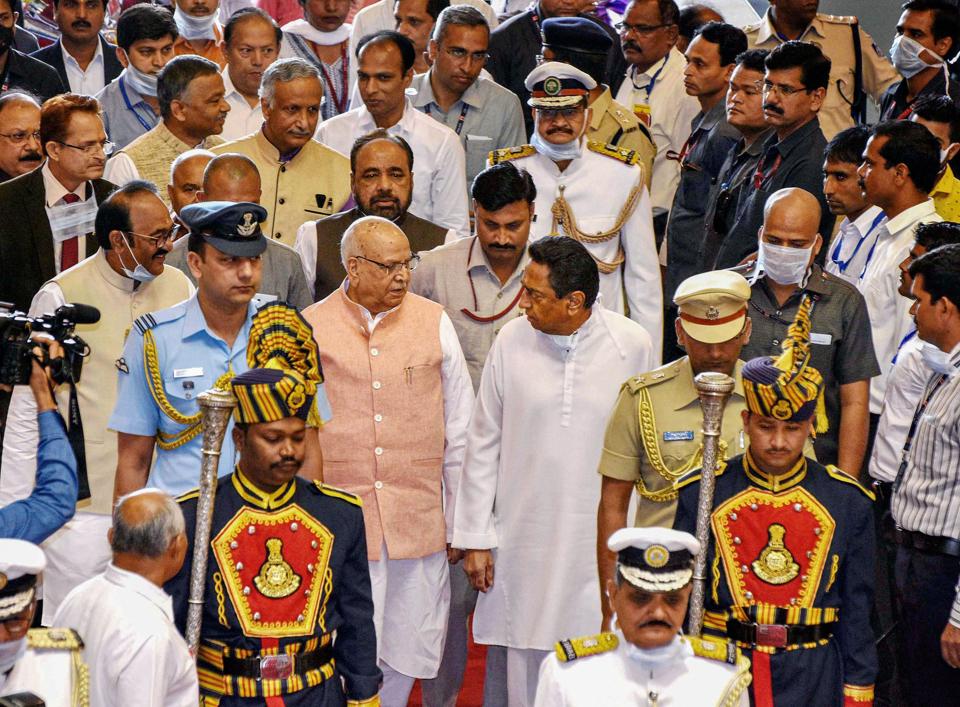
Tandon said he will consider chief minister Kamal Nath’s government to be in a minority if he failed to seek a trust vote by Tuesday.
The new deadline came hours after Speaker NP Prajapati on Monday abruptly adjourned the assembly for the next 10 days citing health concerns over coronavirus.
Also Watch l Kamal Nath running away from floor test, says BJP; CM puts onus on speaker
The assembly would reconvene on March 26, the day lawmakers in the state have to vote for the Rajya Sabha elections, Prajapati said.
Bharatiya Janata Party leader Shivraj Singh Chouhan rushed to the Supreme Court along with nine other BJP legislators within minutes to petition the top court demanding an immediate floor test in Madhya Pradesh.
The top court will hear the petition by BJP legislators on Tuesday.
Here’s an explainer on a trust vote, floor test and no-confidence motion:
What is a trust vote or floor test?
A floor test is a constitutional mechanism used to determine if the incumbent government enjoys the support of the legislature.
A confidence motion or a vote of confidence or a trust vote is sought by the government in power on the floor of the House.
A trust vote or confidence motion has to be moved by an MLA or an MP, and the objective is to find out whether the chief minister has the ‘trust’ or ‘confidence’ of the House.
If Kamal Nath wins the trust vote, he will continue to be the chief minister. In this case, there cannot be another trust vote for six more months. And if he loses, the ball goes to Governor Lalji Tandon’s court.
The governor can invite the BJP to form the government. He can also choose to declare President’s rule, and the state will go to elections in six months.
How does it take place?
The voting takes place in the Legislative Assembly or the Lok Sabha at the central level.
The chief minister has to prove they have the magic number—the total number of seats required to form a government or stay in power. It is the half-way mark, plus one. In case of a tie, the speaker casts the deciding vote.
However, at times, a government’s majority can be questioned and the governor can ask the chief minister to prove his majority in the House. The leader of the party claiming the majority has to move a vote of confidence.
In the absence of a clear majority, when there is more than one individual staking claim to form the government, the governor may call for a special session to see who has the majority to form the government.
The voting process can happen orally, with electronic gadgets or a ballot process.
In his letter to the chief minister ordering a trust vote last Saturday, the governor had directed that the division of votes during the floor test be conducted only by pressing the button or through the electronic voting system and by no other way.
However, Tandon issued new directives on Sunday after a delegation of BJP leaders urged him to direct the speaker to conduct the floor test by raising of hands.
They claimed that the electronic voting system is not in place in the assembly.
Tandon issued new directives in his letter on Sunday, saying the voting during the trust vote should be taken up only through the raising of hands and that no other method should be adopted.
Some legislators may be absent or choose not to vote and, in that case, the numbers are considered only on the basis of the MLAs were present to vote.
If some MLAs remain absent or abstain from voting, the majority is counted on the basis of those present and voting. This effectively reduces the strength of the House and in turn, brings down the majority-mark.
Numbers
The state plunged into a political crisis after Jyotiraditya Scindia, a senior Congress leader, resigned from the party last week to join the BJP. Scindia’s decision to leave the Congress was followed by the resignation of 22 party MLAs loyal to him.
Madhya Pradesh Governor Lalji Tandon directed Kamal Nath to seek trust vote after the 22 legislators of the Congress party submitted their resignations last week.
The BJP claims the Congress, which had 114 MLAs in the House with an effective strength of 228, has been reduced to a minority government following the resignation of 22 of its legislators.
The opposition party has 107 legislators. There are two MLAs from the Bahujan Samaj Party (BSP), one from the Samajwadi Party (SP), and four Independents who support the Kamal Nath government.
Speaker NP Prajapati had accepted the resignations of six ministers on Saturday. With this, the strength of the House has come down to 222 and the majority mark is now 112. The resignations of 16 other MLAs have not been accepted so far.


