E-Paper



Madhya Pradesh loses 25 tigers within year; forest department blames congestion
According to the All-India Tiger Estimation Results released last year, Madhya Pradesh had the highest number of 526 tigers, followed by 524 in Karnataka and 442 in Uttarakhand


Madhya Pradesh lost the maximum tigers -- 25 -- in India over the last 11 months, officials aware of the matter said. It is the sixth year in a row that the state has topped the list of states with the highest number of tiger deaths in the country, they added.
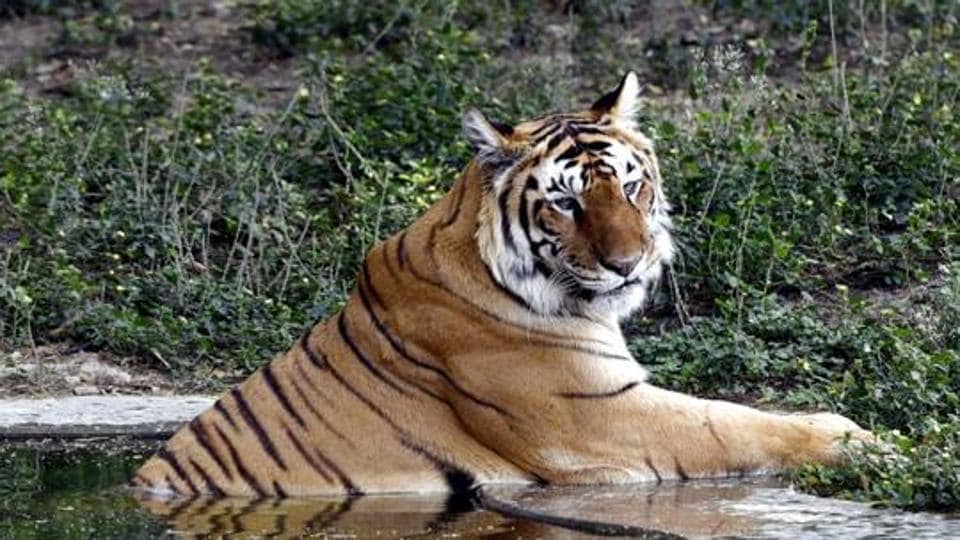
According to the All-India Tiger Estimation Results released last year, Madhya Pradesh had the highest number of 526 tigers, followed by 524 in Karnataka and 442 in Uttarakhand.
Top forest officials and experts blamed multiple reasons for tiger deaths in the state including congestion in reserves and said the state government needs to learn from Karnataka, where the mortality rate of big cats is much lower.
Also read | Rajasthan’s Ranthambore tiger returns from Madhya Pradesh’s Kuno after 8 years
Principal chief conservator of forests (wildlife) Alok Kumar said the deaths do not mean that Madhya Pradesh will lose the status of the state with the highest number of tigers because the population of the big cats was increasing. “Most tigers died of natural causes. But some deaths are a result of human-animal conflict. These include a suspected case of the poisoning of a tigress and a two-and-a-half-year-old cub last month. A tiger also died of electrocution in Bandhavgarh Tiger Reserve,” said Kumar. He added tigers also killed five people and more than 50 animals in the state.
Kumar cited the latest census and said the number of tigers in Kanha Tiger Reserve has increased to 140 tigers and there are at least 125 big cats at the Bandhavgarh Tiger Reserve. “The number of tigers increased due to favourable habitat. But at the same time, the increase has left less than 10 square km for each tiger in these reserves.”
Kumar called the problem of congestion severe in Bandhavgarh. “The nine deaths, highest in Madhya Pradesh, have been reported from Bandhavgarh over in the last 11 months. Four tigers died in territorial fights, one was killed by poachers, and reasons for other deaths are unknown.” Kumar said they are trying to reduce human-animal conflict.
Another official, who spoke on condition of anonymity, questioned how would a forest officer take corrective measures without knowing the exact reason for deaths that takes a long time in the state. “Another reason for tiger deaths is electrocution. The illegal live electric wire fencing is also posing threat to wildlife. The farmers set up the fencing to save their crops and to catch wild boars but many wild animals and big cats get trapped in them and die. The trend of deaths of big cats due to electrocution has increased since 2013. No serious step has been taken in this regard. This needs to be addressed immediately.”
SK Mandal, a retired top forest officer, said congestion, electrocution, and human-animal conflicts are the main reasons for the deaths of tigers. “This is happening because of fragmented forest areas in Madhya Pradesh. There should be contiguity and hideouts between two forests for the movement of tigers. The government should plan to interconnect forest areas to reduce congestion as well as human-animal conflicts.”