
 E-Paper



Madvi Hidma: How India’s most wanted Maoist commander rose through the ranks
On Tuesday, security forces killed him in an operation in the bordering area of Chhattisgarh and Andhra

 Prefer HTon Google


Madvi Hidma, also known by aliases such as Hidmalu and Santosh, was one of India’s most wanted Maoist commanders, a figure whose name became synonymous with some of the deadliest attacks in the country’s decades-long insurgency.
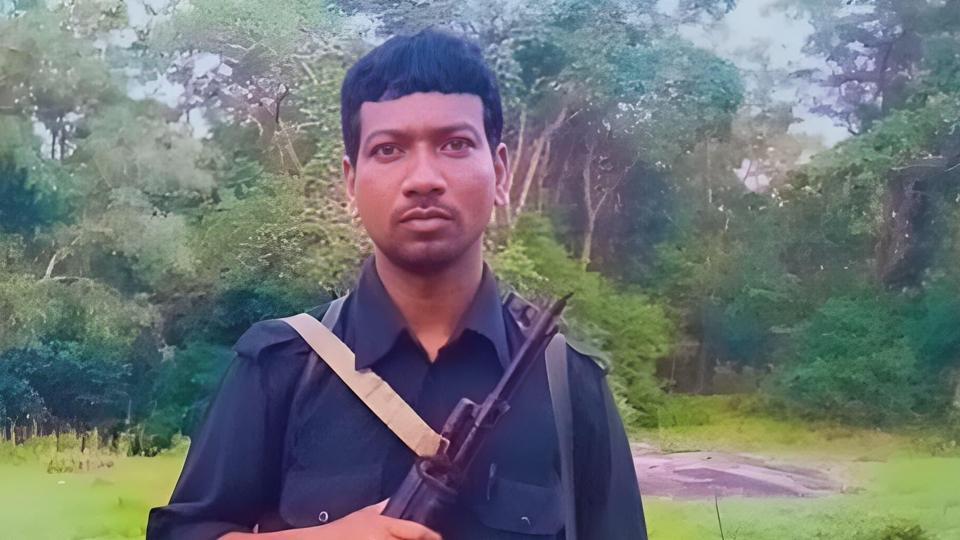
On Tuesday, security forces killed him in an operation in the bordering area of Chhattisgarh and Andhra Pradesh, marking what they describe as one of the most significant blows to the outlawed CPI (Maoist) in recent years.
Hidma, a native of Sukma district in Chhattisgarh, had spent nearly twenty years rising through the Maoist ranks.
He was widely believed to be the chief of Battalion No. 1, considered the most lethal strike unit of the CPI (Maoist) operating across the dense forests of the Dandakaranya region.
Known for his intimate knowledge of the Abujhmad and Sukma-Bijapur forest belt, Hidma was long regarded as the most formidable operational commander still active in south Bastar.
Also Read: Top Maoist Madvi Hidma killed in encounter in Andhra Pradesh
Madvi Hidma's link to major Maoist attacks
Security agencies linked him to nearly every major Maoist attack in the past two decades. His name appears in police records for the 2010 Dantewada massacre in which 76 CRPF personnel were killed, the 2013 Darbha valley attack that wiped out the top Congress leadership in Chhattisgarh, the 2017 twin attacks in Sukma which left 37 personnel dead, and the 2021 Tarrem ambush in Bijapur.
In 2011, during the Tadmetla attack where 75 CRPF men were killed, agencies say he was present on the spot.
His notoriety earned him a place on the NIA’s most-wanted list, with cumulative rewards from central and state agencies exceeding ₹1 crore.
In recent years, Hidma continued to elude security forces despite intensified operations.
In April 2025, the forces claimed he narrowly escaped a prolonged encounter in the Karregutta hills, where 31 Maoists were killed.
Madvi Hidma's rise through the ranks
Internally, he had been elevated to the position of secretary of the Dandakaranya Special Zonal Committee (DKZC), one of the CPI (Maoist)’s most powerful decision-making bodies.
Officials say Hidma commanded a battalion of 130–150 armed cadres, drawn from Sukma, Bijapur and surrounding areas.
His unit operated through a network of forest hideouts and villages still under Maoist influence, making him central to sustaining the insurgency’s military structure in the region.
His killing comes amid the Union government’s intensified offensive under Mission 2026, which aims to dismantle the last remaining Maoist strongholds in Bastar.
Impact of Madvi Hidma's death
According to inspector general of police (Bastar Range) Sunderraj P, the operation marks part of a “decisive phase” in counter-insurgency efforts.
“Many former Maoist cadres have joined the mainstream, and we once again appeal to remaining members to surrender. Those who continue to engage in violence will be dealt with in accordance with the law,” he said.
Security agencies believe Hidma’s death may lead to a significant leadership vacuum within the Maoist ranks in south Bastar. However, they caution that operations will continue to track other senior leaders and dismantle the network further.
For the Bastar region, where the insurgency has shaped everyday life, governance and security for decades, Hidma’s killing marks a critical moment.
-kW0H-U20214218012MgB-250x250%40HT-Web.jpg)


