E-Paper



Malayalam and Tamil speakers’ international diaspora bigger than domestic one
The idea of Tumbe’s paper, also published in the journal Sociological Bulletin, is to identify diasporas or migrants who cross significant cultural zones

 Prefer HTon Google


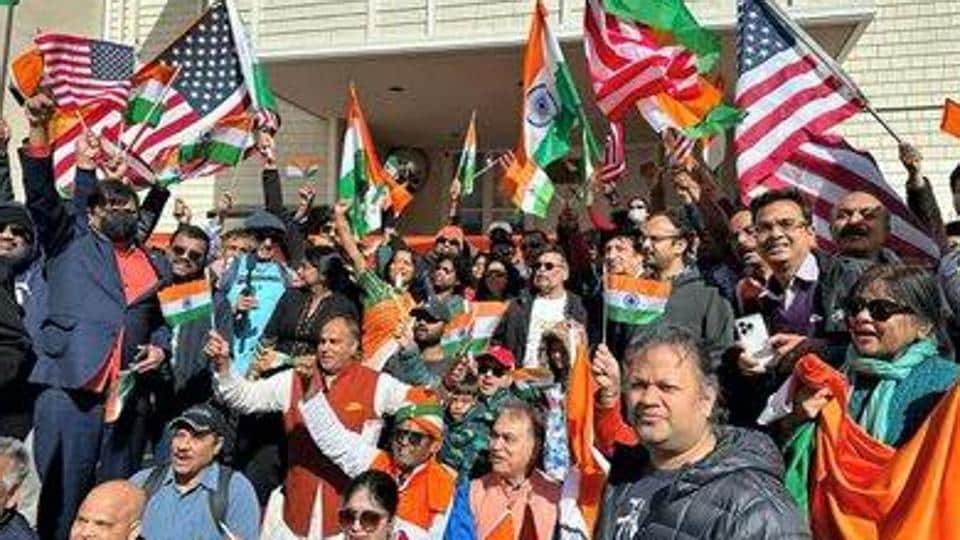
New Delhi: There are more people who speak Tamil or Malayalam as their mother tongue outside India than outside the states of Tamil Nadu or Kerala within India. Counterintuitive as it may sound, Punjabi and Gujarati migrants are still more likely to be found outside their states within India than abroad. To be sure, Punjabis are the most “dispersed” linguistic community in the country. These extremely interesting findings are from a paper published by Chinmay Tumbe from IIM Ahmedabad. The paper underlines the need for studying domestic and international migration patterns together and calls for rectifying the “flawed idea” of “constraining the concept of the diaspora to national borders”.

The idea of Tumbe’s paper, which has been published in the journal Sociological Bulletin, is to identify diasporas or migrants who cross significant cultural zones. Since most internal migration in India is intra-district or intra-state migration for marriage, or within the same culture, it has used mother tongue to identify both domestic and international diasporas. The paper has essentially compared estimates of internal and international diaspora – the latter can often be a result of historical rather than more recent migration – for India’s major languages, and by extension, their core speaking states. The paper uses data from the 2001 and 2011 census to estimate domestic diaspora for major Indian languages and various sources, both official and unofficial, to estimate international diaspora.
Among its key findings, the most striking is the fact that Malayalam and Tamil are the only linguist groups in India where the size of the international diaspora is larger than the domestic diaspora. While Malayalis have mostly migrated to West Asia and more recently America and Europe, Tamils have a longer history of migration beginning with South East Asia, present day Myanmar and more recently North America. These two linguist groups also show a reasonably high share of diaspora as a share of total population speaking the language, although it is Punjabi speakers who are ranked first on this count. The linguistic group which has the lowest share of diaspora with the total population is Bengali, although Tumbe does point out that the number is likely to have increased as West Bengal has seen a sharp increase in migration in the last two decades.
Hindi speakers, of course, have the largest absolute size in both internal and international diaspora given the large base of speakers the language has, even though it figures fourth lowest in the list of nine major languages (these nine are among the largest of India’s 22 scheduled languages and also had studies available on international migration) in terms of share of the diaspora in the total population. To be sure, language alone as a tracker of diaspora could lead to an underestimate of migration for Hindi speakers as they mostly tend to migrate in the same language speaking regions Among other major linguistic groups, Telugu speakers show one of the highest internal migrations as a share of total speakers and so do Punjabis and Gujaratis. Madurai district alone had over 65000 Gujarati speakers in 2011, Tumbe’s paper shows.
The paper also ranks India’s ten biggest cities in 2001 by share of different linguistic diasporas. This also shows interesting trends. For example, Mumbai was the biggest diaspora settlement for five of the nine languages: Tamil, Malayalam, Kannada, Gujarati, and Hindi. Marathi speakers partially returned this favour by settling the most in Surat, Bangalore, and Ahmedabad; although they migrated somewhat more to Delhi than Chennai. Among the remaining three languages, Telugu diaspora is the biggest in Bangalore while Bengali and Punjabi speakers have their biggest diasporas in Delhi.