
 E-Paper



Mask use to continue till WHO declares pandemic over: Official
The developments come at a time when Covid-19 cases in the country are at their lowest since the end of April, 2020, a period when the outbreak was just taking hold and the country was in a hard nationwide lockdown.


Wearing a face mask will need to be followed in India till the World Health Organization (WHO) formally declares the pandemic to be over, senior officials familiar with the matter said on Wednesday, after it emerged that the Centre will no longer classify Covid-19 as a nationwide national disaster under the National Disaster Management Act.
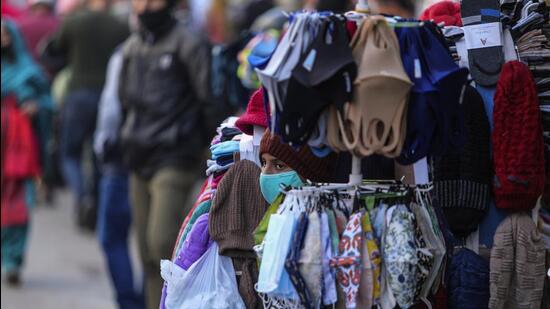
The developments come at a time when Covid-19 cases in the country are at their lowest since the end of April, 2020, a period when the outbreak was just taking hold and the country was in a hard nationwide lockdown.
“Covid appropriate behavior, especially wearing of mask, will have to continue till WHO declares that the pandemic is over,” said a senior health ministry official aware of the matter, on condition of anonymity.
The home ministry, in a letter sent by Union health secretary Ajay Bhalla on Tuesday, told states that it has decided to stop issuing Covid-19 containment from March 31, two years after it invoked the disaster management act to assume countrywide powers to combat the pandemic.
“Some media reports are suggesting relaxation in mask wearing and hand hygiene #COVID19 protocols. These are untrue. Use of face mask and hand hygiene will continue to guide Covid management measures,” tweeted ministry of health on Tuesday after the announcement was made by the home ministry.
Bhalla’s letter to states also mentions that ministry of health’s advisories on Covid containment measures, including on the use of face masks and hand hygiene, will continue to guide the overall national response to the pandemic.
Studies on viral dynamics have shown that face masks are among the most effective tools to minimise the spread of the virus from an infected person. The Sars-CoV-2, which causes Covid-19, spreads mainly via airborne droplets that are spread when an infected exhales, talks or coughs.
Mandatory, universal mask policies also minimise the risk of people accidentally infecting others since people often are highly contagious before they develop any symptoms. Contact-tracing studies offer little evidence that virus spreads from touching surfaces -- the virus rapidly loses its biological viability within a couple of minutes in the air or on a surface -- making face covering one of the most important tools to reduce transmission.
“Masks and respirators are effective at reducing transmission of Sars-CoV-2... when worn consistently and correctly. Some masks and respirators offer higher levels of protection than others, and some may be harder to tolerate or wear consistently than others. It is most important to wear a well-fitting mask or respirator correctly that is comfortable for you and that provides good protection,” according to guidelines by the US Centers for Disease Control (CDC) on masks and respirators.
An evidence review found the efficacy of face masks in preventing Covid-19, published last year in PNAS -- the official journal of the National Academy of Sciences -- to be consistent in laboratory and clinical contexts. Public mask wearing was most effective at reducing spread of the virus when compliance was high.
“In a systematic review sponsored by the World Health Organization, Chu et al. looked at physical distancing, face masks, and eye protection to prevent person-to-person transmission of Sars-CoV-2. They found that “face mask use could result in a large reduction in risk of infection… the use of masks was strongly protective, with a risk reduction of 70% for those that always wore a mask when going out..,” read the paper.
As restrictions under the national disaster management act were lifted in India on Wednesday, Union health ministry wrote to states advising on broad-based framework for relaxations and restrictions that included 10% or higher weekly case positivity or ICU or oxygen bed occupancy of 40% and above in any part of the country.
“In order to identify areas where restrictions need to be imposed or continued in districts or areas, the following broad-based framework is provided to aid states and union territories ,” read the letter sent by Union health secretary, Rajesh Bhushan, on Wednesday.
The letter also said that there should be continued focus on the five-fold strategy i.e. test, track, treat, vaccination, and adherence to Covid-19 appropriate behaviour.
“The state enforcement machinery should effectively enforce the norms of covid appropriate behaviour that includes wearing of face masks, and maintaining safe physical distancing in all public areas and gatherings,” the letter read.
India recommended use of well-fitted facemasks since the beginning of the pandemic, and according to experts, it should be continued even though incidence of Covid-19 is currently low.
“The pandemic is not over yet and we don’t have much on hand scientifically to tell us what lies ahead, in a situation like this, what else do you tell people but to continue with Covid appropriate behavior, especially wearing a mask, since we are dealing with a respiratory disease. It is also not going to harm in any way; and not just Covid-19, it may also help in managing other infectious diseases like TB that is a huge problem for a country like India,” said Dr Amita Jain, professor & head, tuberculosis, clinical microbiology, virology, King George’s Medical University.


