
 E-Paper



May take decades to clean Ganga water, say experts
The dissolved oxygen level, or the amount of oxygen available to living aquatic organisms, has improved at 27 locations and the biochemical oxygen demand (BOD), the amount of oxygen consumed by bacteria while they decompose organic matter, and faecal coliform (FC) content, a measure of the suitability of water for consumption, has improved at 42 and 21 locations, respectively.

 Prefer HTon Google


Namami Gange, the Central government’s ambitious project to clean the Ganga, seems to have delivered modest results, with the quality of river water from Rudraparayag in Uttarakhand to Uluberia in West Bengal having improved between 2014 and 2019, according to Jal Shakti ministry data, but experts say it will take decades before the water becomes fit for human consumption .
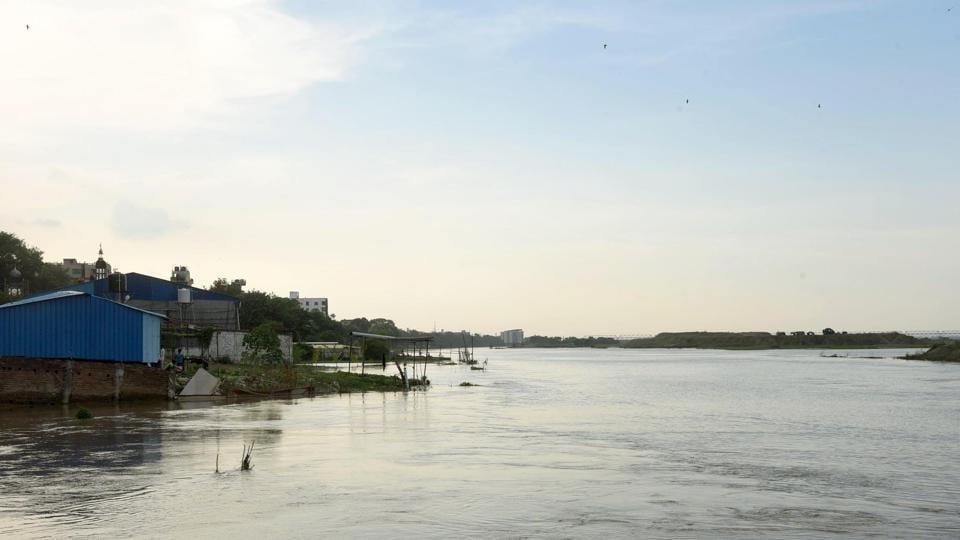
The dissolved oxygen level, or the amount of oxygen available to living aquatic organisms, has improved at 27 locations and the biochemical oxygen demand (BOD), the amount of oxygen consumed by bacteria while they decompose organic matter, and faecal coliform (FC) content, a measure of the suitability of water for consumption, has improved at 42 and 21 locations, respectively.
The information was provided by the Jal Shakti ministry in response to a query by Kochi-based RTI applicant, K Govindan Nampoothiry. The ministry has provided the annual average of Ganga water quality on these three parameters, thereby discounting seasonal variations.
After coming to power in May 2014, the National Democratic Alliance (NDA) government the following month launched the Namami Ganga project with the objectives of reducing river pollution, and promoting its conservation and rejuvenation.
Higher dissolved oxygen (the national standard is 5 milligrams per litre or more) shows whether water can sustain aquatic life. A lower BOD (the national standard is 3 milligrams per litre or less) shows there is less bacteria and other microorganisms in water. The faecal coliform (national standard less is than 2,500 coliform in 100 ml of water) indicates the amount of sewage in water.
Jal Shakti ministry data shows that in past six years, the water quality of the river on these three parameters has improved marginally at most locations and at this pace, the authorities would take decades to make the river’s water fit for human consumption, experts said.
“The progress so far has been slow. In six years, if Ganga’s water quality has improved by just 10-15%, it would take decades to clean the Ganga,” said BD Joshi, founder of the Indian Academy of Environmental Sciences, who has worked on the river for more than four decades.
The Central government had initially fixed 2019 as the deadline to clean the river, but extended it to 2022 as the Namami Ganga Project (NGP) took off slowly. As of August 1, only 29% of the 154 sewage projects taken up had been completed. For the projects, the ministry has allocated ₹23,120 crore, according to government documents.
A ministry official privy to the information about Namami Ganga said sewerage infrastructure projects were coming up in eight states — Uttarakhand, Uttar Pradesh, Bihar, Jharkhand, West Bengal, Haryana, Delhi and Himachal Pradesh — through which the 2,525-km river flows. The 97 towns located on the main stem of the Ganga generate 2,953 million litres a day (MLD) of sewage. The available treatment capacity is only 1,794 MLD.
The RTI reply showed the maximum improvement in Ganga water quality has taken place in the hills of Uttarakhand, primarily due to efforts made to contain the flow of human and animal sewage. Another reason for this could be that unlike in the plains, the flow of industrial waste in the hill is much less.
“We have minimized flow of human sewage by building sewage treatment plants in towns and toilets for all those living close to river Ganga. Work is on for zero sewage into river Ganga in the state,” said Uttarakhand environment minister Harak Singh Rawat.
The reply showed that as the river flows into the pilgrim centre of Haridwar in Uttarakhand, the water quality deteriorated and further fell in the downstream in the industrial town of Kanpur, where industrial waste still flows into the river.
The water quality between Haridwar and Kanpur improved between 2014 and 2019 by 8-10%.
The water quality was slightly better in Chapra and Patna because of the fresh flow of water from Ganga tributaries in Bihar such as Kosi and Gandak. But it again fell as the river entered West Bengal. The water quality in Bihar and West Bengal has improved by almost 30% between 2014 and 2019.
Himanshu Thakkar, coordinator of the South Asia Network of Dams, Rivers and People (SANDRP), said a bigger issue than improvement in water quality is the flow of the river.
“If the flow of the river improves in all seasons, the water quality will improve significantly. But the reality is that the flow is decreasing and it will have huge implications for people living in the Ganga river basin even if water quality improves,” he said.
Thakkar acknowledged that work has happened in building sewage and industrial affluent treatment plans. “The state pollution control boards need to ensure that plants don’t give false reports and work at their maximum capacity,” he said.


