
 E-Paper



Meet MP’s ‘Raman Raghav’ who snacked after murder, believed in superstitions
MP’s Raman Raghav, Sarman Shivhare, was smart and had a charismatic personality, and killed at least 22 people before was finally caught. His rules were simple — don’t use mobile phones and never trust anybody with your plans.

 Prefer HTon Google


Anurag Kashyap’s latest movie, chronicling the life of a Mumbai serial killer, brings back horrid memories of a psychopath who roamed the streets of Madhya Pradesh barely five years ago.
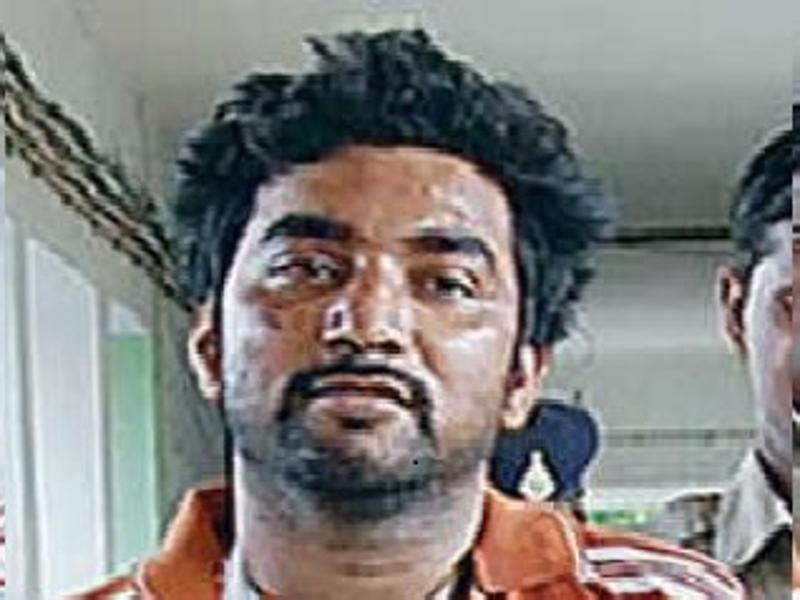
MP’s ‘Raman Raghav’, Sarman Shivhare, was smart and had a charismatic personality, and killed at least 22 people before was finally caught. His rules were simple — don’t use mobile phones and never trust anybody with your plans.
A resident of Panna district, Shivhare had illusions of grandeur and harboured political ambitions. “While we were interrogating him, he would say: Saheb, maariyega nahi. Jo poochenge bataa denge. Mein bahut badaa aadmi hone valaa hoon… abhi chunaav ladnaa hai (Sir, don’t hit me. I will tell you whatever you want. I am going to become a big man once I contest the elections),” said a police officer.
Read: Raman Raghav 2.0 review: A deadly killer is roaming around us
Once, after killing a lady doctor and her office boy at Sarman dispensary in Vijay Nagar, Indore, Shivhare strolled to a nearby food stall for a snack. When asked why he wasn’t afraid of being caught, he almost contemptuously said it was barely a risk in a city where vehicles didn’t stop at traffic signals.
But this brutal murderer too had a weakness — superstitions. “Once he ditched a plan to shoot a target because a cat crossed his path,” said an Indore police officer.
In sharp contrast to the brutal killer he became, Shivhare had an ordinary start in life. After passing his intermediate exam from Panna, he took admission in an engineering college at Sagar. However, the quiet didn’t last — Shivhare dropped out of college after the first year and took up a sales job.
It was then that he got his hands on his first gun — a country-made pistol — from a weapons manufacturer in Gwalior.
“He was a psychopath. To test his pistol, Shivhare entered a house and shot a woman. While he was watching his victim die, he felt some divine power come over him,” another interrogator said.
In the years that followed, Shivhare killed several people at random. When police finally caught up with him in Satna in 2011, he confessed to 22 murders. Police, however, suspect there could be more victims.
“We believe he confessed only to the murders he wanted to confess. He was mad,” said a police officer.
Somewhere along the way, Shivhare had upgraded from his country-made weapon to a handy 9-mm pistol. “He shot a policeman in Jabalpur with it. Shivhare was obsessed with guns and blood. He thought he was some kind of superman,” the officer said.
Shivhare believed in working alone, but he made an exception for a man from Dewas. “They pulled off a few crimes together. But then, one day, his accomplice fell in love with a woman. Shivhare didn’t like that… so he killed him too,” said a police officer posted in Indore, where Shivhare is said to have committed three murders.
Inspector general of police (Rewa) Gajriram Meena was the first person to question Shivhare after he was arrested for killing a jeweller’s wife during a botched robbery attempt on a busy Satna street. “He believed he had divine powers that prevented him from getting arrested,” said Meena.
Shivhare was later acquitted in some of the cases, and is serving a sentence in Gwalior jail.
-kW0H-U20214218012MgB-250x250%40HT-Web.jpg)


