Meitei, Kuki farmers work side by side, hold out hope for peace in Manipur
A Kuki farmer said they have been suffering due to the ongoing clashes, but now the violence is decreasing, and they must cultivate paddy for their livelihood
On July 14, unidentified attackers fired 10 rounds at farmers working in paddy fields at Chanung in ethnic violence-hit Manipur’s Imphal East. A 60-year-old farmer was shot a month earlier on June 19. The attacks sparked fresh concerns among farmers trying to get on with their lives after over two years of violence.
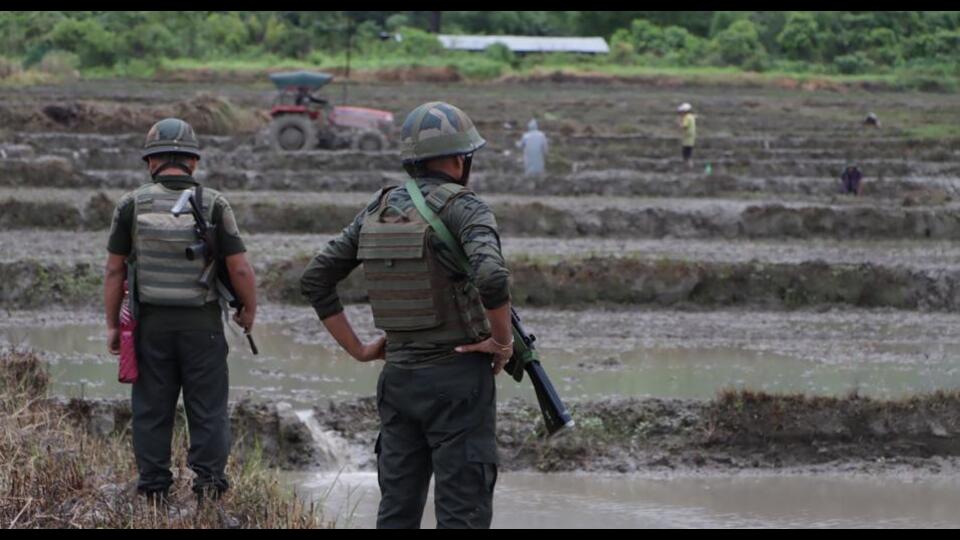
Security forces have been deployed for farmers in vulnerable areas between Meitei and Kuki villages. (HT PHOTO)
Meitei and Kuki farmers have been working side by side in Bishnupur’s paddy fields since security forces were deployed for them in vulnerable areas between villages of the two communities as part of efforts to restore peace.
A Kuki farmer, who did not want to be named, said they have been suffering due to the ongoing clashes, but now the violence is decreasing, and they must cultivate paddy for their livelihood. “Most of the Meitei villagers are well known to us, and we trust they would not attack us. But we do fear outsiders who might attack,” he said.
Manoj, a Meitei farmer in Phayeng, said his paddy field became a disputed area after the crisis erupted. “You can even see a burnt house behind me. But with the deployment of central security forces, we are now able to engage in agricultural work,” he said. “We want to cultivate freely as before, without fear or the need for security protection.”
As the guns have largely fallen silent, people from both communities have begun to speak about the need for rehabilitation and dialogue as displaced families in relief camps have limited access to livelihoods and education.
Many say they are ready to go home if they can do so safely. “We have suffered enough,” said a Meitei woman living in a relief camp in Imphal East for over two years. “We want to return to our homes, but we need assurance from the government that we will not face violence again.”
A Kuki elder from Kangpokpi echoed the woman. “We are tired of living in fear and uncertainty. Our children have lost a year of school, and we have lost our land and dignity. It is time the government and community leaders come together to build trust again.”
The government has announced housing schemes, livelihood support, and assistance for relief camps as part of efforts to restore peace. It has allocated over ₹375 crore for permanent homes for displaced families. Incentives are being offered to help internally displaced persons rebuild their lives.
On July 4, Prashant Kumar Singh, who has since been replaced as the chief secretary, announced that relief camps would be shut down by December. He added that the rehabilitation of displaced families would begin in three phases from July. “If they are unable to return to their homes by the deadline, they will be allotted newly built prefabricated housing units.”
A government official acknowledged the situation remains fragile, but there is a growing realisation on both sides that continuing this division will only deepen the suffering. “Rehabilitation must include not just homes and jobs, but rebuilding relationships.”
The Union government has hinted at supporting a peace and reconciliation mechanism, although political consensus remains elusive. Long-term solutions may take time, but the growing calls for peace from people signal a possible shift in the mood.
The conflict has led to displacement, destroyed homes, fractured trust, and deep social divisions. At least 260 people have been killed and 1,500 injured since ethnic violence was triggered in May 2023. The government has said the number of displaced people has decreased from 62,000 to 57,000, with many families returning home. As many as 1,000 additional prefabricated homes are under construction to accommodate those still unable to return.
Meiteis lived largely in the plains of the Imphal valley, and the Kukis in the hills. They have since withdrawn to their respective strongholds. The groups set up blockades to restrict the movement of essential items between their strongholds separated by fortified buffer zones.
Manipur has been under the president’s rule since February, when N Biren Singh resigned as the chief minister. Singh stepped down days after the Supreme Court sought a report on leaked audio tapes allegedly featuring him saying the ethnic violence was instigated at his behest.
Get the latest India News, breaking headlines and real-time updates from across the country. Stay informed about politics, government policies, crime, weather and major national developments.
Home/India News/Meitei, Kuki Farmers Work Side By Side, Hold Out Hope For Peace In Manipur

 E-Paper