
 E-Paper



‘Middle path with US’: Expert on why India did not allocate budget funds for Chabahar port in Iran amid Trump's threats
“Absence of funding for Chabahar in India’s 2026–27 Budget may therefore reflect a tactical freeze rather than a strategic retreat,” Brahma Chellaney said.

 Prefer HTon Google


A day after the Union Budget of India for 2026-27 did not allocate any funds for the Chabahar port project in Iran, strategic affairs expert Brahma Chellaney has said the Modi government's move may be “a tactical freeze rather than a strategic retreat” in the ongoing collab with Tehran amid threats and sanctions by the United States against the Islamic Republic.
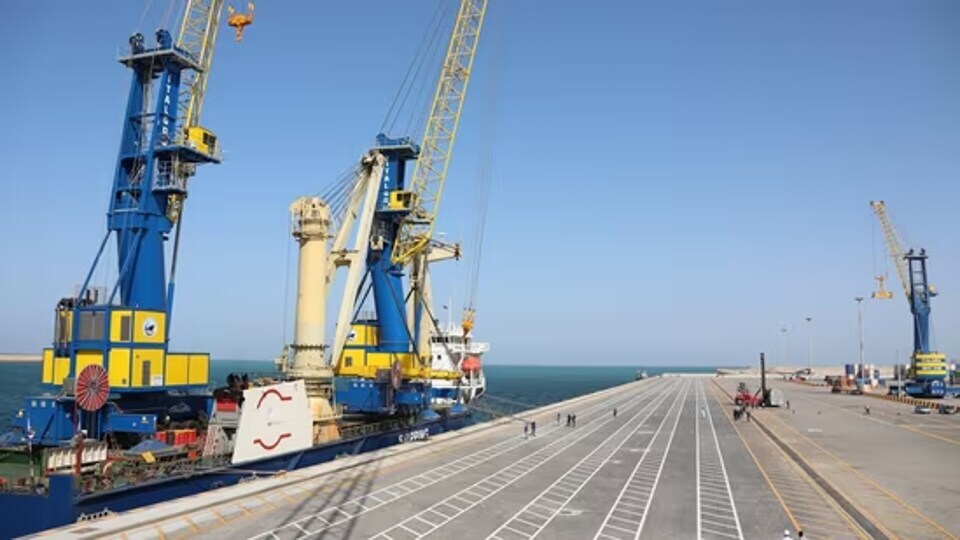
“Chabahar Port is India’s only viable route to Afghanistan and Central Asia that bypasses Pakistan. An Indian exit would almost certainly leave a vacuum for China to fill,” Chellaney posted on X.
“The absence of funding for Chabahar in India’s 2026–27 Budget may therefore reflect a tactical freeze rather than a strategic retreat, given Washington’s April 26 deadline for India to wind down operations or face sanctions,” he noted.
He added that India has already transferred its principal commitment of $120 million toward the development of Chabahar’s Shahid Beheshti terminal to Iran.
“Because these funds are already ‘in the system,’ a fresh budgetary allocation may not have been technically necessary at this stage. New Delhi is reportedly exploring a ‘middle path’ with Washington on Chabahar,” Chellaney theorised.
There is no official word from the India government on this yet.
Chellaney noted that “stepping up its wanton pressure on New Delhi”, the Trump administration had last September withdrawn the Chabahar-specific exemption from sanctions granted to India in 2018. It subsequently issued a temporary six-month waiver to let India wind down its operations by April 2026.
Where the port project stands now
In the last few years, India has been making an annual outlay of ₹100 crore to the project in the Sistan-Balochistan province on Iran's southern coast, being a major partner in the development of the port.
As of now, India has not officially pulled out of the Chabahar project, but this pause in funding comes also amid tightened US sanctions and massive tariffs on India. Half of the 50% tariffs on India already are for its oil trade with Russia despite the Ukraine war, Donald Trump has said. The US President wants India to cut its trade with Iran too.
It is learnt that India was mulling various options relating to the project after Trump administration threatened a 25% additional tariff on countries doing business with Tehran, news agency PTI has reported.
There have been reports that India has pulled out altogether and transferred its full committed amount of $120 million to the Iranian side, the last tranche being in August 2025. India has not confirmed this, and is learnt to be managing the project through local Iranian staff to avoid violating US rules, Reuters has reported.
The 2024 10-year deal to operate the port is a strategic, though constrained, investment for India.
The long-term India-Iran agreement for the Shahid Beheshti Terminal at Chabahar was signed on May 13, 2024. This contract, signed in Tehran by India Ports Global Limited (IPGL) and Iran's Ports and Maritime Organisation (PMO), replaced earlier, shorter-term agreements.


