
 E-Paper



‘Misgivings on post-dose illness major reason for vaccine hesitancy in U.P’
Second to this, about 25% of the survey respondents didn’t let their kids get vaccinated as they were sick. Further, around 14% of them didn’t see any value in vaccination and another 14% had false preconceived notions about immunisation.


LUCKNOW A survey of 98,832 respondents in Uttar Pradesh has revealed that 47% of the people have apprehensions about falling ill following inoculation. Some of them even fear negative reactions -- a concern technically known as adverse events following immunisation (AEFI).
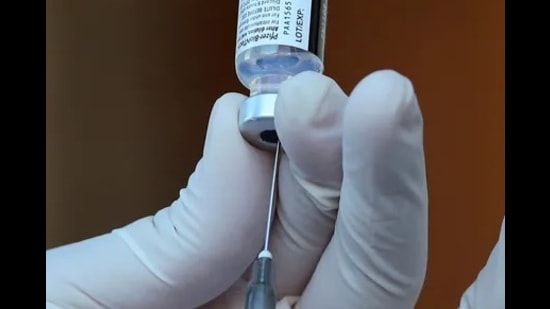
Second to this, about 25% of the survey respondents didn’t let their kids get vaccinated as they were sick. Further, around 14% of them didn’t see any value in vaccination and another 14% had false preconceived notions about immunisation.
The aforementioned data was presented by Kanupriya Singhal, a health specialist from UNICEF, while sharing a presentation on ‘reasons for vaccine hesitancy in U.P’ at the state-level workshop on special vaccination fortnight for the elimination of measles-rubella. The presentation was based on the community survey of 98,832 “vaccine-hesitant” families.
On the occasion, she said, “By activating block response team, health supervisors, ASHA workers and ANMs, and community influencers -- including lekhpals, village development officers, teachers, food inspectors, electricity department functionaries, ration dealers, doctors, and religious leaders, among others, we can address the issue of vaccine hesitancy.”
Speaking on the issue, Dr Rajkumar, AEFI consultant at National Health Mission, “Fatality in vaccination takes place in rarest of the rare case. In fact, AEFI helps the health staff find out what reactions are occurring due to a particular vaccine dose. This is why ANMs tell parents that child may develop fever or rashes temporarily post-vaccination.”
According to pan-India data, nearly 80% of measles cases are from seven states. While Maharashtra is on top of the list, followed by Uttar Pradesh, Jharkhand, and West Bengal. Uttar Pradesh has 41 high-risk districts while 31 districts that come under medium risk and three districts in the low-risk category for measles-rubella risk assessment. In India, there are 164 high-risk, 336 medium, and 183 low-risk districts.
“Two doses of MR vaccine provide 95% immunity against the disease,” said Dr Ajay Gupta, state immunisation officer, Uttar Pradesh. He added, “If the backlog is cleared, we can achieve 94% immunisation coverage, which was the status before the pandemic.”


