E-Paper



Modi vows to boost connectivity in Northeast, but Opposition unimpressed
PM Modi reiterated his government’s commitment to connect all state capitals in the region by rail, even sanctioning Rs 90,000 for development projects focused on road connectivity.


Northeast India is the flavour of the season, at least as far as the Centre is concerned.
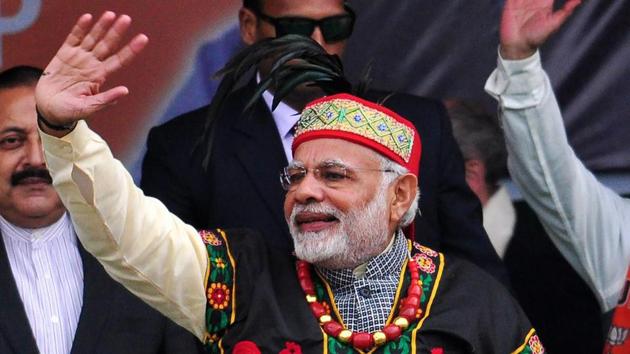
The region – which has always suffered from poor road, rail and air connectivity – is getting a lot of attention from the Narendra Modi government as it pushes ahead with its ‘Act East’ policy. The ruling dispensation also aims to open up links between the eight states in the region and Southeast Asian countries such as Myanmar and Thailand.
“Lack of connectivity is one of the biggest hurdles in developing the country’s Northeast region. We aim to rectify this through adequate investment in infrastructure,” the Prime Minister said at a public meeting in Aizawl last week.
The Centre has sanctioned the construction of national highways stretching over 3,800 km at an investment of Rs 32,000 crore in the last three years, Modi said, adding that nearly 1,200 km of these roads have already been laid. “The Union government will invest another Rs 60,000 crore under the Special Accelerated Road Development Programme in the Northeast, and Rs 30,000 crore under the Bharatmala project in the next two-three years to build a network of highways and roads in the region,” the Prime Minister promised.
Modi reiterated his government’s commitment to connect all state capitals in the region by rail. He said that while 15 new railway projects to lay 1,385 km of tracks at a cost Rs 47,000 crore will be taken up soon, funds amounting to Rs 5,300 crore have been spent annually in the last three years to enhance related infrastructure in the region.
“We are working on a detailed plan to improve air connectivity in the region too. Using sea planes to link remote areas in the region will help in that regard,” Modi said at a separate rally in Shillong on Saturday.
As many as 92 air routes connecting state capitals in the region are being planned as part of the Centre’s Udaan scheme.
Connectivity through waterways also forms part of the plan. Of the 106 new national waterways declared as part the National Waterways Act-2016, two major ones — 891km on the Brahmaputra from Sadiya to Dhubri and 121 km on the Barak from Lakhipur in Bhanga — happen to be in Assam.
“Internet connectivity is also getting lot of attention from the Union government. The Centre’s focus will help bridge transport bottlenecks to Myanmar and Thailand by road, to Bangladesh via waterways, and the rest of Southeast Asia by air,” said Assam industries and commerce minister Chandra Mohan Patowary.
Opposition parties, however, claim that the central projects only look good on paper. Dubbing Modi’s promises as “mere marketing gimmicks”, Nagaland Congress chief K Therie said: “The so-called proposals are an attempt to fool the people. Modi has been making lot of false promises since 2014, but the ground reality is very different. They have not done anything to improve road connective in my state.”
Assam Congress president Ripun Bora said most of the projects announced by the NDA government are nothing but extensions of old connectivity schemes prepared during the UPA rule.