
 E-Paper



UNESCO names Ahom dynasty's Moidams in Assam as India's 43rd World Heritage Site
The Moidams, also know as Pyramids of Assam, the burial mounds of Ahom kings, queens, and nobles are included in world heritage list of UNESCO.

 Prefer HTon Google


The Moidams of the Ahom Dynasty in Assam were declared India's 43rd World Heritage Site on Friday during UNESCO's 46th World Heritage Committee session in New Delhi.
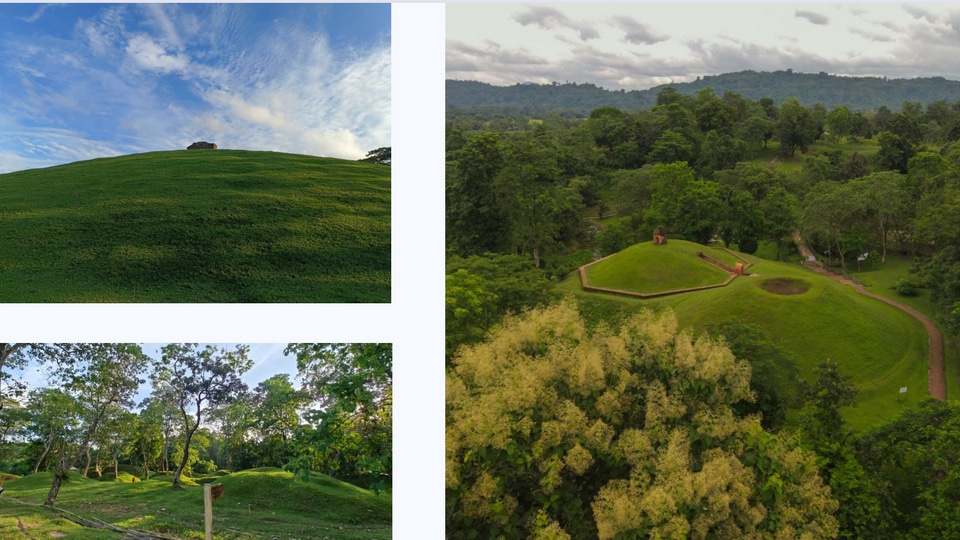
The Moidams were nominated as India's candidate for the UNESCO World Heritage List for 2023-24. This makes them the first cultural property from Northeast India to receive this prestigious recognition from the United Nations' agency that works to promote educational, scientific and cultural development
What are Moidams of Ahom dynasty?
The Moidams (also spelt as Maidam) are burial mounds of Ahom kings, queens, and nobles in Assam. The name "Moidam" comes from the Tai words "Phrang-Mai-Dam" or "Mai-Tam," meaning to bury and the spirit of the dead, according to an academic report from Assam government.
ALSO READ- UNESCO opts not to include Nepal’s Lumbini in World Heritage Sites in Danger
Understand importance of Moidams in 5 points
• Moidams are unique burial mounds built by the Ahom Dynasty rulers in Assam from the 13th to the early 19th century.
• These mounds are distinct for their architecture and reflect the Ahom’s foreign influences.
• Moidams primarily serve as the burial sites for Ahom kings, queens, and nobles.
• They are found throughout upper Assam, with Charaideo, the first Ahom capital, being the main necropolis.
• Charaideo became a sacred site where the Ahom royalty were buried following traditional Tai-Ahom rites.
ALSO READ- Found: Medieval training site for Ahom warriors
What does a Moidam have?
Each Moidam has three main parts:
1. A vault or chamber where the body is placed.
2. A hemispherical earthen mound covering the chamber.
3. A brick structure (Chaw-chali) on top for annual offerings and an octagonal boundary wall with an arched gateway.
The size of the Moidams ranges from small mounds to large hillocks, depending on the status and resources of the deceased. Originally, vaults were made of wooden poles and beams but were replaced with stone and brick during the reign of King Rudra Singha (CE 1696-1714).
Inside the vault, the dead were buried with their belongings, including clothes, ornaments, and weapons. The burial also included valuables and, at times, living or dead attendants.
The practice of burying people alive was abolished by King Rudra Singha.
ALSO READ- Stonehenge, Avebury, will not be listed as world heritage in danger: UNESCO
How did Moidam burial tradition start and came to an end?
The Moidam burial tradition began with the first Ahom king, Chau-lung Siu-ka-pha, who was buried at Charaideo according to Tai-Ahom rites. This practice continued for Ahom royalty, making Charaideo a sacred site during their 600-year rule.
Over time, with Hinduism influence, the Ahoms began cremating their dead. However, Moidam burials are still practiced by some priestly groups and the Chao-dang clan (Royal bodyguards).


