
 E-Paper



New in Northeast | ‘Pyramids of Assam’ await world recognition
For centuries, kings, queens and other royals of the Ahom dynasty of Assam have rested in maidams at Charaideo after passing away. Now the mound-shaped grounds where they have remained buried await world recognition for this unique symbol of post-death ritual

 Prefer HTon Google


Charideo (Assam): Death could mean the end of one’s existence for many, but for some, it could signify the start of another journey in the afterlife. For centuries, kings, queens and other royals of the Ahom dynasty of Assam have rested in maidams at Charaideo after passing away. Now the mound-shaped grounds where they have remained buried await world recognition for this unique symbol of post-death ritual.
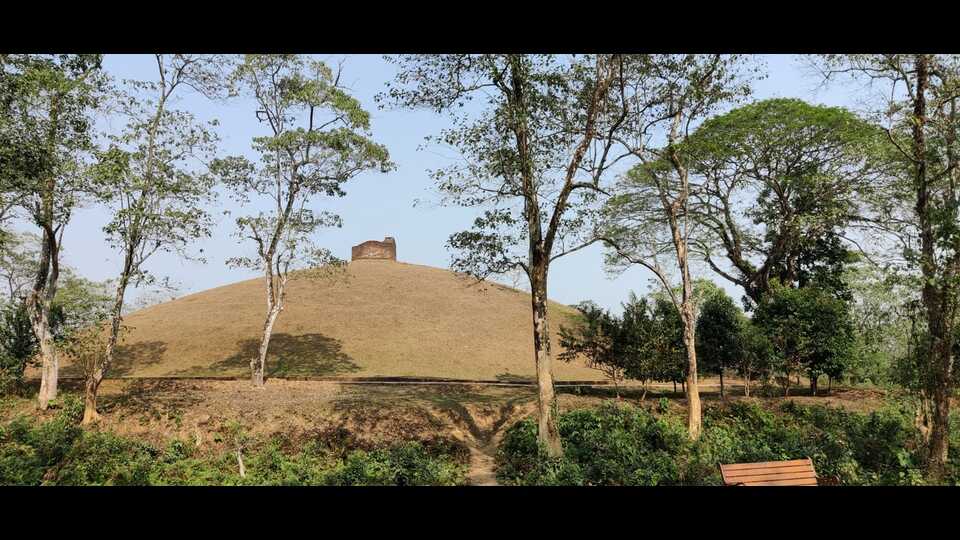
Earlier this month, the Indian government submitted the Charaideo Maidam as the only entry from the country to UNESCO for recognition as a world heritage site in the cultural category in 2023-24. A team of UNESCO experts will visit the site in September, and if they approve, the maidams could get the world heritage tag by March next year, Assam chief minister Himanta Biswa Sarma said last week.
Starting with Chaolung Sukapha, a Shan (Tai) prince from Mong Mao in Yunan of southern China who came to Assam after crossing the Patkai Mountains via Myanmar and established the Ahom kingdom in 1228, kings, queens and royal family members were buried at Charaideo, the first Ahom capital located around 28 km from Sivasagar.
Of the 386 maidams explored so far, 39 are believed to be of Ahom kings who ruled Assam for nearly 600 years till the Burmese invasion of the region and subsequent annexation by the British East India Company after the signing of the Treaty of Yandaboo in 1826. Of all the maidams, nearly 90 have been preserved well and are the best representations of the burial system, sometimes referred to as the ‘Pyramids of Assam’.
“A maidam (also spelled moidam) is a tumulus---a mound of earth or stones over a grave. While the maidams at Charaideo housed graves of the Ahom royals, there is record that even other Ahoms including soldiers used to get buried in maidams of smaller dimensions. They are spread all across the region where Ahoms ruled in Assam,” said Arup Kumar Dutta, author of The Ahoms: A Reimagined History.
The Ahoms were good record keepers, and details of their history are found in ‘buranjis’, which chronicled their rule and important events. The practice of burying the deceased in maidams, which in Tai language means “place where the dead are worshipped”, started in Assam’s Charaideo with Sukapha also finds mention in one such ‘buranji’.
“It is mentioned that after Sukapha’s death, his eldest son made the king’s ‘maidam’ on the foothills of Charaideo hills and prayed to the gods. This is clearly written in ‘buranji’ and is the only evidence that the first Ahom king was buried in Charaideo,” said Birendra Kumar Gohain, who has written several books on the Ahoms and is considered an authority on the dynasty and their traditions.
While the practice was new to Assam, it is believed to have continued the tradition the Shans followed in regions of China and Myanmar where they lived. The act of burial at maidams, which started with Sukhapha, continued for the next six centuries. All Ahom kings, their queens and family members continued to be buried in the mound-shaped burial grounds.
“The practice of building a mausoleum for the dead king was part of the practice followed by Shans in Mong Mao and they continued it after coming to Assam. This can be known as maidams were constructed right after Sukapha’s death. So, we can say that it was part of their tradition and not something new which they did after arriving in Assam,” said Dutta.
“During the course of their 600-year rule, the Ahoms gradually gave up their language and religion, but some of their rituals including the practice of constructing maidams and the wedding practices continued as per their old tradition,” he added.
Though the maidams, shaped like a hemisphere covered in grass with an octagonal structure on top, were sealed after putting the body of the king and other royals, an officer was appointed to take care of their maintenance and beautification.
While the Ahom capital shifted later to other places, kings, queens, and other royals continued to be buried in maidams at Charaideo. During their rule, a few later kings took to Hinduism. But even those kings had their maidams at Charaideo with ashes from their cremation (as per Hindu practice) buried according to Tai rituals.
“The maidams were elaborate structures which had a foundation of stones and had several layers with chambers holding all things including food that the king or other royals would require in their afterlife. There were specific measurements for the size, shape and other requirements. Details of the same are found in a ‘buranji’ of Changlung Phukan, a chief engineer during Ahom rule,” said Gohain.
While the kings had their maidams on one side, the queens, mothers of kings, had theirs across a stream that flowed nearby. Some experts say that the king’s favourite or eldest queen used to be buried alive with him and several of his servants to serve him in the afterlife. But this is disputed.
“It is not true that queens were buried alive along with kings. But servants used to be buried together with kings. According to a ‘buranji’, the practice was said to have been discontinued after Rudra Singha, the 30th Ahom king, saw a dream in which his father Gadadhar Singha asked him to desist from burying servants as the maidams used to get dirty from their excrements,” said Gohain.
Apart from things of daily use and clothing of the kings and queens, they also contained treasures in gold, silver, coins, ornaments and other valuables, which were buried in the maidams.
“The first recorded instance of desecration of the maidams in search of treasures was done by Mir Jumla II, the governor of Bengal during Mughal emperor Aurangzeb’s rule, who invaded Ahom kingdom in 1662. After Assam came under British rule, few Britishers also excavated some maidams in search of treasures. But it stopped afterwards,” said Gohain.
“The maidams at Charaideo are a big treasure for Assam. While some Britishers did cause some damage to them many are still preserved. The UNESCO world heritage tag, if it comes, will ensure proper maintenance and conservation of this unique thing and also bring tourists to Assam,” he added.
There are no world heritage sites in the cultural category in northeast India, and if the Charaideo Maidams gets the UNESCO nod, it will be the first such kind in the class.



