E-Paper



Nadda launches JOSH teams with NCC cadets, MY Bharat volunteers for tuberculosis elimination drive
Union minister of health and family welfare JP Nadda on Thursday launched JOSH (Joint Squad for Health) teams under the TB Mukt Bharat Abhiyaan

 Prefer HTon Google


Union minister of health and family welfare JP Nadda on Thursday launched JOSH (Joint Squad for Health) teams under the TB Mukt Bharat Abhiyaan, comprising National Cadet Corps (NCC) cadets and MY Bharat volunteers, to strengthen community-level outreach and support India’s efforts to eliminate tuberculosis.
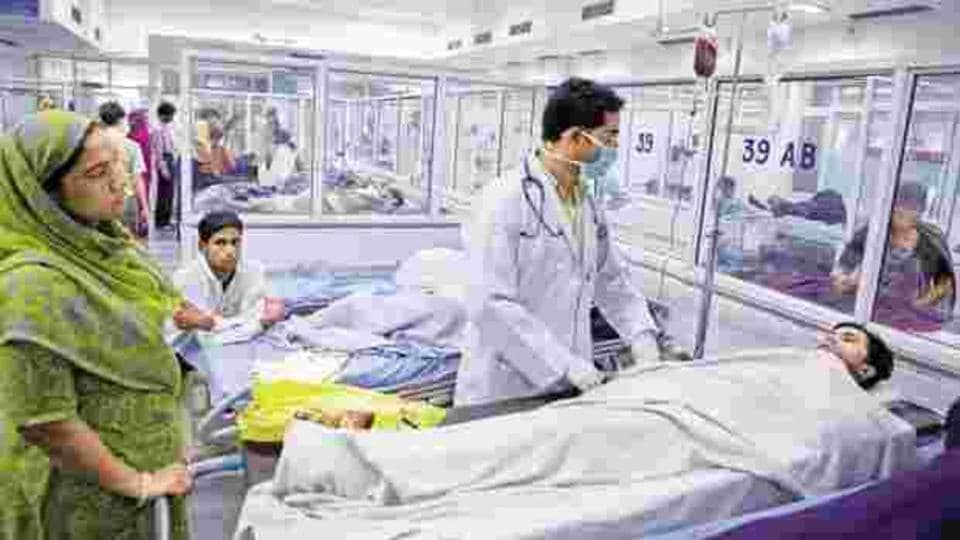
The newly formed JOSH teams will be deployed across 55 districts in 11 states.
A statement by the health ministry said, “Each JOSH Team comprises five MY Bharat Volunteers and five NCC Cadets and is led by a designated Class-I officer at the Block/Ward level. The teams are envisaged to function as an important community-level interface for the TB elimination programme, undertaking regular outreach and field-level activities to improve public understanding of TB, promote early diagnosis and treatment, address myths and misconceptions and encourage greater community participation.”
Through household and community interactions, the teams will focus on strengthening awareness of common TB symptoms, preventive measures, the benefits of early diagnosis and the importance of completing the prescribed treatment.
They will also engage with families and communities to counter stigma and discrimination associated with TB and encourage people affected by the disease to seek care and remain connected with the treatment system.
“The teams were constituted after Prime minister Narendra Modi, in one of the recent review meetings, suggested to involve the youth in an institutionalised manner into the TB elimination campaign,” Union health secretary Punya Salila Srivastava said on Thursday.
The government started the intensified TB campaign in December 2024 and earlier this year launched the second phase to cover the last mile of the elimination programme.
Speaking about the rollout of JOSH Teams, Nadda said that the initiative is being launched in the first phase across 11 states and will progressively expand its grassroots presence.
“The teams will work at district and block levels, supported by digital mechanisms for monitoring and implementation. This youth-led initiative will help identify gaps, strengthen outreach and ensure that TB-related services reach those who remain outside the formal healthcare system,” said Nadda.
Underscoring the importance of active case finding, Nadda said, “Identifying such individuals at the earliest possible stage is critical not only to ensuring timely treatment but also to interrupting transmission within families and communities. JOSH Teams will play an important role in identifying vulnerable populations, facilitating community-level outreach, and encouraging people with symptoms or concerns to come forward for testing.”
According to the latest World Health Organisation (WHO) report, TB incidence in India has declined by 21%, compared to a 12% decline globally. India’s TB treatment coverage has also risen to 92%, significantly higher than the global treatment coverage of 78%.
Government data says 67,933 Panchayats across 697 districts were recognised as TB Mukt.
Nadda cautioned that these gains must not lead to complacency. “India has made significant progress, but the momentum must be sustained and efforts further intensified to ensure that every person with TB is diagnosed, provided timely treatment and supported through the course of care, thereby advancing the country’s collective resolve towards a TB Mukt Bharat,” he said.
India aims to eliminate TB ahead of the global elimination goal of 2030.