
 E-Paper



Hanuman Chalisa and Smit Machchhar’s courage in the face of death
Remembering the divine at the time of death is not as easy as it may sound, especially when death approaches us unexpectedly, as it did Machchhar

 Prefer HTon Google


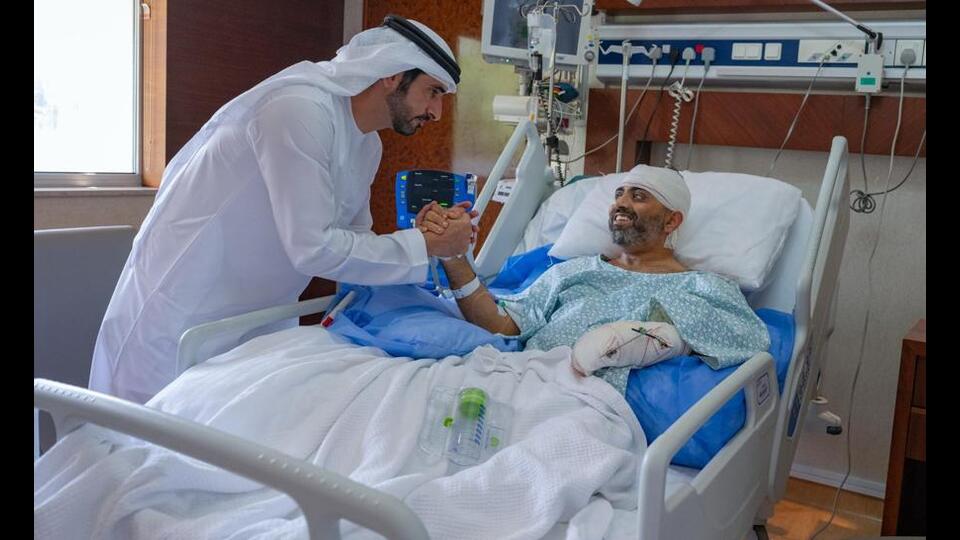
When I first heard of Smit Machchhar — the pilot of the flydubai flight that would have been deliberately crashed by his co-pilot, Hamam al-Hammami, had Machchhar not fought back, sustained serious injuries, and still managed to open the cockpit door — I was reminded of the words from the Bhagavad Gita, “Remember me and fight” (8.7). In an online conversation with Prime Minister Narendra Modi, Machchhar said that, as he lay on the floor, fighting for his life and that of his crew and fliers, the Hanuman Chalisa was running through his mind as he recites it every morning during worship.
The Hanuman Chalisa is one of the two most popular Hindu prayers today. Hanuman is a symbol not only for athletes but also for pilots because he flew over the sea to Ravana’s Lanka and also flew to the Himalayas to retrieve the Sanjeevani herb that saved Lakshman’s life. When Ravana tried to kill him by setting his tail alight, Hanuman used his burning tail as a weapon. He embodies devotion, intelligence, and physical prowess, which Machchhar demonstrated in action.
Like Hanuman, Machchhar saved his own life, that of 170 passengers (mostly Jews, but also Muslims and Christians) and even the life of the murderous co-pilot. Had he not opened the cockpit door as he lay in a pool of his blood, the Israeli passengers could not have rushed in to help him, overpower the terrorist, and avert a disaster; nor could the British and South African pilots have flown the plane to safety. He says that he was sure he was going to die, but the passengers saved his life.
It was a multi-national effort to save the plane, and more than one nation helped save Machchhar’s life too — an Israeli dentist stanched the bleeding, and Saudi Arabian as well as Emirati medical personnel took care of him on the ground.
The Gita teaches that all beings are manifestations of divine consciousness and that we should not be arrogant about our successful actions because we never act alone. Thousands of other beings make every action possible.
Some people online have been mocking Machchhar’s surname, which means “mosquito” in Hindi. From a cosmic perspective, we are all tiny beings. In a critical moment, Machchhar enabled people from many nations to work together and save lives. In recognition of this, the UAE lit up the Burj Khalifa, the tallest building in the world, in India’s colours.
Remembering the divine at the time of death is not as easy as it may sound, especially when death approaches us unexpectedly, as it did Machchhar. As TS Eliot wrote, commenting on the Gita, “the time of death is every moment”. Chanting a divine name is common to most religions and cultures. When it becomes a habit, one remembers it spontaneously, without effort. This makes it most likely that it will come to mind when one is confronted by death.
Absurd conspiracy theories started swirling around almost as soon as the plane landed. We are told that the plane could not have survived a fight in the cockpit, which is not true because this has happened before. In November 1985, an EgyptAir pilot said he smashed an axe into one of the Palestinians who hijacked his flight during a chaotic Egyptian rescue attempt in Malta that left dozens dead. In 2000, an Alaska Airlines pilot defended his cockpit with the axe when a passenger broke in and tried to crash the flight.
Conspiracy theories are very old in Europe and have now spread worldwide: The Moon landing was a hoax, the Holocaust never happened, and Shakespeare did not write his plays and poems. The question conspiracy theorists fail to answer is: How and why did thousands of people keep the secret all their lives? In the case of the postulate that Shakespeare’s plays were written by someone else, why did his fellow dramatist Ben Jonson write a eulogy to him? Why did publishers of several Quartos and the Folio credit him as the author, and why did his home town, Stratford-upon-Avon, honour him so prominently in their church?
In this particular case, all the passengers and crew and their families, the airline, flight trackers such as Flightradar24 that show flight traffic in real time, and heads of State, officials, emergency personnel, and hospital staff in Saudi Arabia and UAE would have had to be in on the hoax.
Machchhar’s first name, Smit, means “smile”. His actions have given us all occasion to be happy so we can smile at the conspiracy theories.
Ruth Vanita is the author of many books including The Dharma of Justice in the Sanskrit Epics. The views expressed are personal
(This is a Hindustan Times digital exclusive)


