E-Paper



Most Indians are still susceptible to Covid-19, finds ICMR survey
The results of the Covid-19 sero survey are reassuring as less than 1% population has shown antibodies in the survey that means we have managed to keep the pandemic suppressed successfully.


By the end of April, only 0.73% of the over 26,000 people across 83 districts of India may have been exposed to the Sars-CoV-2 virus that causes the coronavirus disease (Covid-19), a study showed, highlighting the slow spread of the pandemic in the country, but also the fact that much of its population is not immune to a disease that still has no cure.
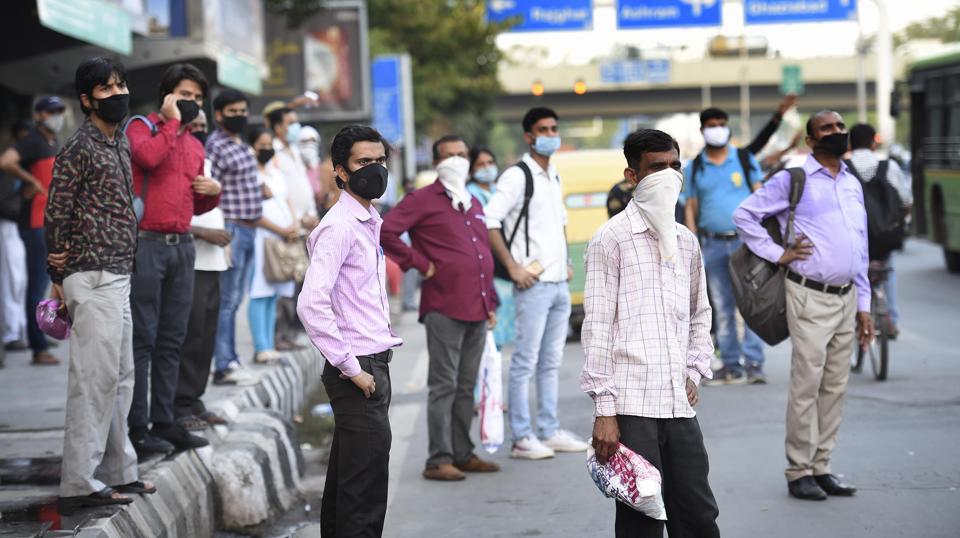
To be sure, only part of the findings of the survey have been released; a key part, on the presence of antibodies in so-called hot spots or containment zones, areas most affected by the disease is awaited.
Blood samples were taken in May from 26,400 individuals in 28,595 households across 83 districts in 21 states and tested for IgG antibodies that determine a past infection due to the virus, and, therefore, also immunity — according to a few scientists.
The results are reassuring as less than 1% population has shown antibodies in the survey that means we have managed to keep the pandemic suppressed successfully. This is a situation around April end as samples were lifted around mid May and it takes about 2 weeks for the results to show,” said VK Paul, chairman, Covid empowered group I, and member (health), Niti Aayog. He also added that the case mortality rate (the proportion of deaths to total Covid-19 cases) in the sample studied was just 0.08%. “This is a big achievement for a country as large as India, and if we continue to keep the loss of life minimal then it will be an accomplishment for the country,” he said.
Covid-19 has, around the world, ravaged crowded urban areas and its preference for these was visible to some extent in the study conducted by the Indian Council of Medical Research, along with National Centre for Disease Control, state health departments and World Health Organization (WHO). Urban areas showed higher Covid-19 prevalence of about 1.09%, and within them, urban slums, 1.89%.
“The results show rural areas were largely unaffected, and even overall prevalence was less than 1%; it means that the lockdown and containment measures in the country have been effective, and spread of the virus was slowed down successfully,” said Dr Balram Bhargava, director general, ICMR, while releasing the data at the briefing. To be sure, a repeat of the survey conducted now may throw up a different result. India saw 155,668 new cases of Covid-19 in May, 54% of its current total of 286,953 cases (as on June 10). The month also saw migrant workers returning to their homes in the hinterland from urban centres, potentially carrying the virus with them.
The findings of the study also shed light on the immunity of the Indian population. Around the world, limited blood tests for Covid-19 bodies have been used to assess the immunity of the population to the disease. And they have shown that herd or mass immunity is still far away.
Stopping further spread is a challenge, say experts. “You have to look at it both ways; if the percentage is low then it means there is a large geographical area where the virus hasn’t gone. Can we contain it like that for ever, and not allow the virus to enter those areas? The immunity in those areas is low, and you have to ensure no infected person goes there ever. Is that even practical or possible?,” asked Dr Shobha Broor, former head, microbiology department, All India Institute of Medical Sciences, Delhi.
The second part of the study, which may provide details of immunity of the general population in hot spots, may still throw up a surprise. “The data for the second part is still being collated, and what we have seen so far is that infection in containment zones is high with significant variations,” said Dr Bhargava.
At the briefing, Dr Bhargava also shared data that compared India’s management of the pandemic with that of other countries. The number of cases and deaths per lakh population in India are also lowest in the world, with 20.77 cases as compared to 91.67 cases globally, and 0.59 deaths in India as opposed to 5.23 deaths in the world.