E-Paper



MP starts to unload Union Carbide waste
The development came weeks after protests rocked Pithampur, after the waste was brought to a private facility for incineration in Jan

 Prefer HTon Google


The process of unloading 337 metric tonnes of hazardous waste transported from the Union Carbide plant in Bhopal began in Pithampur industrial area in Dhar district of Madhya Pradesh on Thursday, officials said.
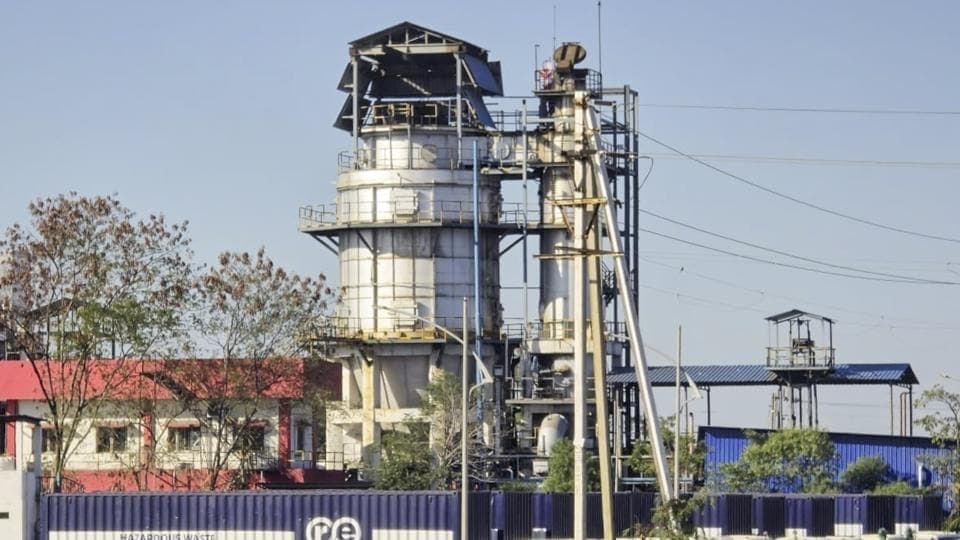
The exercise, which began at around 3pm in adherence of all safety protocols and in the presence of local representatives and administration, is perhaps the first step towards the long-drawn process of closure for the victims and families of the nearly 5,000 people who died on the night of December 3, 1984, when tonnes of toxic methyl isocyanate gas shrouded Bhopal.
Also Read: Toxic waste leaves Union Carbide site for disposal 40 years after tragedy
“We have brought local representatives to the Ramky plant, where containers are parked. The waste is being unloaded from the trucks following all safety regulations,” Pithampur SDM Pramod Singh Gujar said on Thursday.
The development came weeks after protests rocked Pithampur, around 50km from Dhar district headquarters, after the waste was brought to a private facility for incineration in January. Those objecting to the move expressed apprehension that the disposal would harm the local residents’ health and the environment.
To be sure, the waste is only being unloaded from the vehicles that have been parked at Re Sustainability Limited, previously known as RAMKY Envirno Limited, which has been tasked with the disposal, and the actual disposal will begin at a later date.
“The final disposal will start only after filing a compliance report before the Madhya Pradesh high court on February 18,” Indore divisional commissioner Deepak Kumar said.
The waste is being unloaded owing to a rise in ground temperature which could affect the chemical waste, an official said, on condition of anonymity. “The containers were leak proof but not meant to store the waste for a long time. With a rise in temperature, the temperature inside containers will also increase and storing the waste for long periods will not be in line with the guidelines of pollution control board.”
Following the protests, the high court on January 6 granted the state six weeks to dispose the waste ensuring all safety guidelines were met and the public was taken into confidence.
The court also said that the state government was free to take a decision to unload vehicles according to an order given on December 3, 2024, that disposal should be conducted swiftly.
In compliance of the court order, the Madhya Pradesh Pollution Control Board, district administration with Bhopal Gas Relief and Rehabilitation department officials held nearly 100 meetings, chaupals and seminars in Dhar and Indore. The officials showed documentaries with reports related to trial test.
“At least 150 people including science teachers and professors were trained to explain to people that there will be no ill effect of the disposal of the waste on health of people as well as the environment. They cleared the doubts of intellectuals as well villagers, who are protesting against the disposal at Pithampur apprehending that it would pollute the water and soil. Most of the people have been convinced,” Kumar said.
The waste including 13 MT waste of clothes, gloves, PPE kit and others used to pack the waste from the site of the disaster, was transported in 12 trucks on the intervening night of January 1 and 2 from Bhopal to Pithampur following the MP High Court’s order of complete disposal.
According to a plan shared by the government, the waste will be incinerated at a Common Hazardous Waste Treatment, Storage, and Disposal Facility (CHW-TSDF) designed to handle and dispose of hazardous waste with precision and safety. It will be first put in the rotary kiln that operates at 850°C to 1200°C followed by a secondary combustion chamber that operates to destroy volatile organic compounds with 99.99% efficiency, finally waste feeding systems will introduce bulk solids into the incinerator and use compressed air for fine atomisation, ensuring efficient combustion of liquid hazardous waste.
The waste comprises soil, reactor residues, sevin (pesticide) residues, naphthol and semi-processed remnants, according to the state government.