
 E-Paper



MP govt's status report in high court shows action came only after deaths in Indore
Contaminated water in Indore led to at least four deaths; residents blame sewage leaks. State claims healthcare response was adequate, investigation ongoing.

 Prefer HTon Google


State machinery took cognisance, and action, on reports of people falling ill due to contaminated water in a locality in Indore on December 29, by when it had been at least four days since residents raised alarm and three people had died, according to a status report submitted by the state government to the Madhya Pradesh high court on Friday.
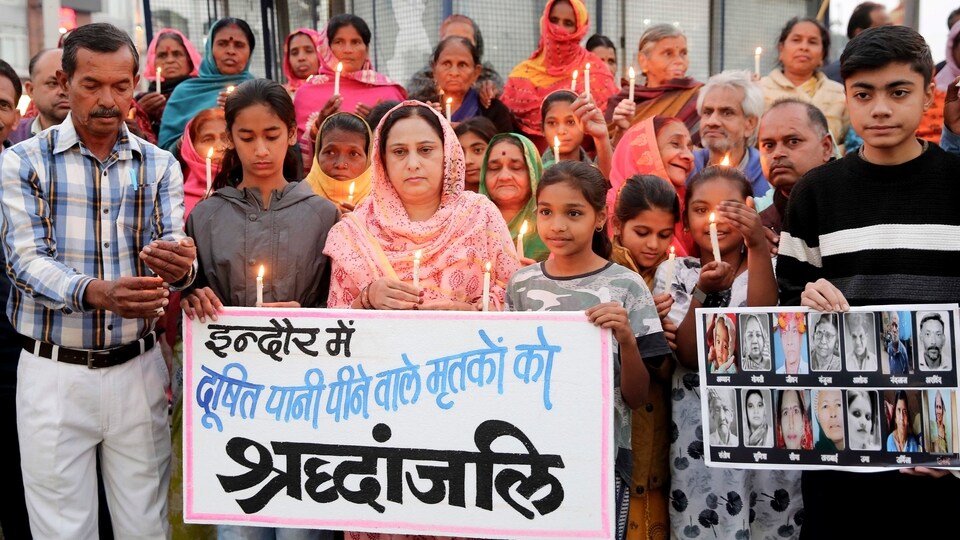
The status report claimed that only four deaths were caused by the contaminated water in the Bhagirathpura area and does not reveal the cause or source of the diarrhoeal illness. Indore’s Mayor Pushyamitra Bhargava on Friday said 10 people died due to the contamination. Residents have blamed the contamination on sewage leaking into a potable water line.
The report, ordered by the court which is hearing a public interest litigation seeking action against administration for failing to perform their duties during the crisis, claimed that there are not shortcomings in the healthcare services provided those affected by the contaminated water.
“On December 29, instances of diarrhoeal illness were reported from Bhagirathpura locality. Immediate cognizance was taken by the District Administration and Health Department. Patients were promptly referred and admitted to government hospitals as well as empanelled private hospitals to avoid any delay in treatment,” the report said.
In the report, the state government addressed the claims of petitioners, denying that patients were left unattended.
It said as many as 30 doctors have been deployed in the area and that on December 30, senior health and epidemiological officers were tasked with on-site supervision, data compilation, and continuous reporting. “.. these measures demonstrate that the situation was treated as a public health contingency, and not as a routine medical issue,” said the report.
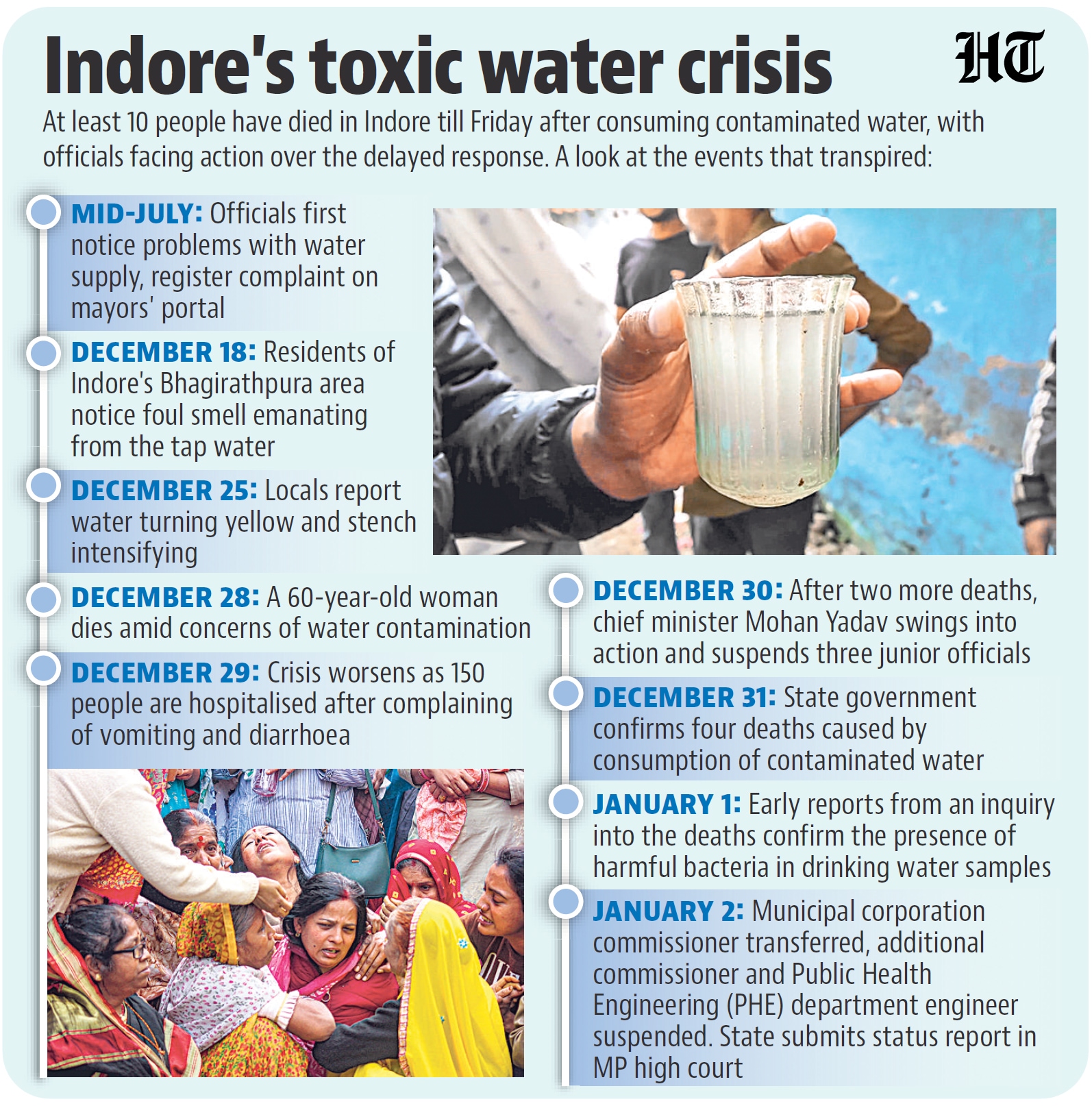
But signs of a problem had been evident for months. A resident who spoke to HT said complaints were raised way back in July. The crisis worsened earlier last week. Local councillor Kamal Baghela told news agency PTI that residents reported a foul smell in the water supplied on December 25.
Diarrhoeal illnesses were reported among residents and at least one, 60-year-old Urmila Yadav, died on December 28 --- a day before the administration kicked into action. On December 29, two more people — 29-year-old Uma Kori and 74-year-old Manjulal Vadhe — died with similar symptoms.
The government said that on December 30, all private hospitals were directed to provide free treatment, diagnosis and medicines to affected persons.
A team is conducting door-to-door surveys to identify any remaining or newly affected persons, and ensuring that no residual or recurring health risk persists in the area, it said.
According to the report, an investigation into the cause and source of the illness, including assessment of water quality, is ongoing as per statutory procedure.
“The state government is hiding the important thing in the report --what caused this incident. They have just mentioned a line about it,” petitioner and advocate Ritesh Inani said



