
 E-Paper



MSP only real risk protection for farmers, says new study
In Punjab, 90% of the agri produce is traded at markets regulated under the Agriculture Produce Marketing Committee (APMC) Act by licensed commission agents. Bihar abolished the APMC Act in 2006 and traders and private players can buy produce directly from farmers.

 Prefer HTon Google


Farmers in fully regulated agriculture markets in Punjab got 30% more price for their produce in 2018-19 than those in totally unregulated markets in Bihar and partially regulated ones in Odisha, a study of the agri markets in three states has found, terming minimum support price (MSP) as only risk-management instrument available for farmers.
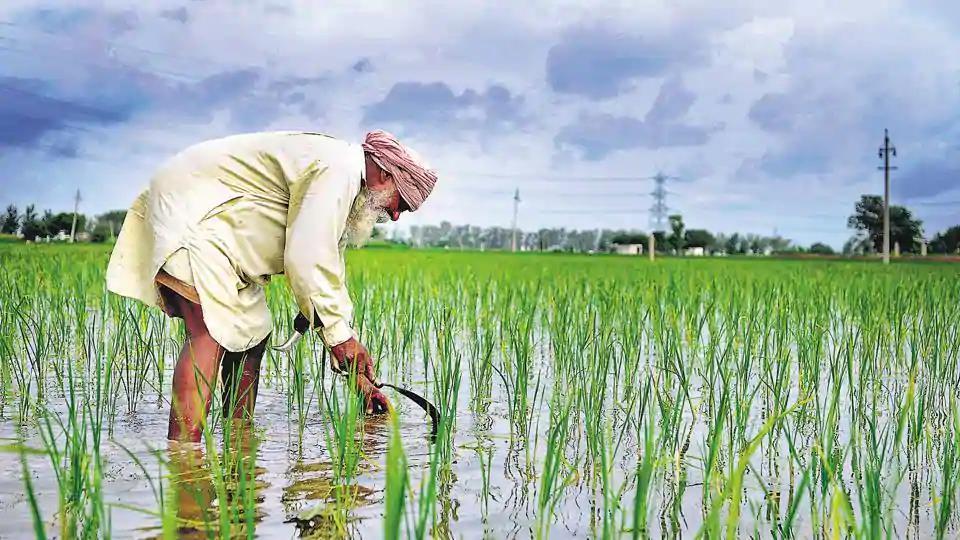
The study, by the University of Pennsylvania Institute for the Advanced Study of India (UPIASI), with local research institutes in Bihar, Odisha and Punjab, attempted to understand the dynamics of three different agriculture trading systems, and comes at the time farmers from Punjab and Haryana are protesting and demanding MSP guarantee in law, and the scrapping of the three new laws that aim to liberalise the farm economy.
Also Read| ‘Bow to farmers’: PM Modi backs laws, slams Opposition
In Punjab, 90% of the agri produce is traded at markets regulated under the Agriculture Produce Marketing Committee (APMC) Act by licensed commission agents. Bihar abolished the APMC Act in 2006 and traders and private players can buy produce directly from farmers. Odisha has both the market system and farm gate procurement. “We found the price gap between open market sales and public procurement was a significant 30% and deregulation of markets as in Bihar, helped traders, more than farmers as their access to produce improves,” said Shoumitro Chatterjee, co-author of the study, in a tweet.
“Erstwhile [APMC] markets in Bihar still remain main produce selling markets but now unregulated and with dilapidated infrastructure whereas in Punjab markets are better,” he said in another tweet, suggesting that private sector investment has not come for agriculture infrastructure in Bihar.
The study said only 5% and 11% of farmers in Bihar and Odisha, respectively, sell their produce to government agencies. Around 80% farmers in Bihar and Odisha are small and marginal, according to agriculture ministry data.The study said that despite constraints such as fewer procurement centres, delays in procurement, and payments, farmers prefer selling to the government because of the assured MSP.
Also Read: PM Modi says Oppn intentionally did not work on Swaminathan Commission recommendations
In Bihar, the farmers told the surveyors that they would like to sell maize, the flagship crop, to the government because of the MSP but there are not enough procurement centres. “The study shows that the MSP is the only risk-management instrument available to the farmers as crop insurance scheme has poor acceptability,” he tweeted. The use of crop insurance was less than 7% in Bihar and Odisha, and less than one% in Punjab. The reason is cumbersome process for claims and low insurance value of produce.
The study, conducted in seven districts of Bihar, Odisha and Punjab, found that persistence of in farmer-trader relationship was weak in Bihar and Odisha, unlike Punjab. The study also found transparency in payment to farmers in Punjab. The commission agents, or arthiyas, are authorised to give cash of up to ₹10,000 only, and rest has to be transferred to the farmer. No such transparency was found in Bihar and Odisha, as unregulated small traders have replaced the licensed traders.
“The study clearly outlined that marketing challenges are more pronounced in Bihar where commission charged by middlemen in unofficial markets are much higher than in the regulated markets in Punjab and Odisha,” said former Union agriculture secretary Siraj Hussain. The study, however, also said while MSP provides price assurance, it could be hindrance for crop diversification. Farmers in Punjab and Haryana, for instance, grow largely wheat and paddy though there is higher demand of cereals and pulses.
R Ramakumar, professor at Tata Institute of Social Sciences in Mumbai, said: “The government needs to sit with farmers and assure them of compensation for the income loss due to diversification. This can be done through higher MSP for crop...,” he said.
Punjab’s cabinet minister Bharat Bhushan Ashu said farmers need assured markets to sell their produce even for diversification. “Although the government declares MSP for 23 crops, there is no assured procurement for most. If there is an assurance, farmers will be willing to diversify,” he said.
An official of the Odisha food department said they are continuously upgrading facilities so that more small and marginal farmers can sell their paddy under MSP system and admitted a shortfall of regulated markets.
Bihar agriculture minister Amrendra Pratap Singh, however, said: “They do not know the system. The MSP of paddy is ₹1,868 per quintal and it is transferred to farmers’ accounts. You can’t deposit less than the MSP.”
(With inputs from bureaus in Patna, Chandigarh and Bhubaneswar)


