
 E-Paper



Mulayam Singh Yadav: A politician who knew his vote bank, limitations
His original aspiration was to become a wrestler, but ended up becoming a government school teacher after obtaining a master’s degree from Agra University


It was wrestling that got Mulayam Singh Yadav, 82, who died Monday morning in a hospital in Gurugram, into politics. He was wrestling in a local competition in the early 1960s when the then Jaswant Nagar (Mainpuri) MLA Nathu Singh was impressed by the young man in his early 20s and got talking to him.
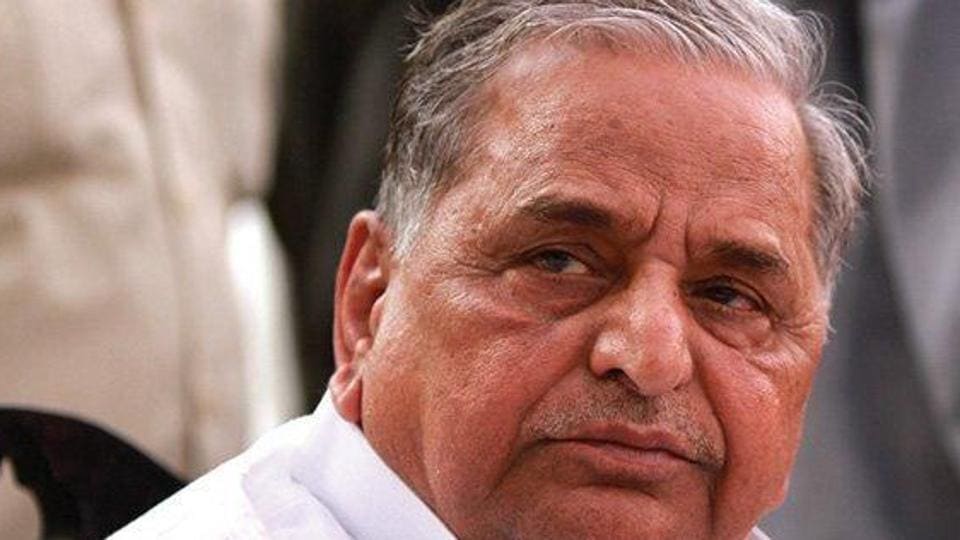
Yadav was deeply political even then. He had developed a keen interest in politics at the age of 15, inspired by socialist leader Ram Manohar Lohia. Singh was doubly impressed after the conversation; he offered Yadav his own assembly seat Jaswant Nagar (Mainpuri). Yadav took the offer and won the seat as Samyukta Socialist Party (SSP) candidate in March 1967. This was the party into which Lohia had merged his own party (Socialist Party-Lohia) in 1965.
Yadav would go on to fight and win eight assembly polls and seven Lok Sabha elections.
By the time of the emergency, Yadav was an MLA again, but this time as part of the Bharatiya Kranti Dal (BKD), a party founded by the late Charan Singh, another socialist leader who left a huge impression on Yadav. The emergency heightened his political profile; he went to jail for the first time for staging a protest against then-Prime Minister (PM) Indira Gandhi.
After the 1977 general elections -- the BKD had become the Bharatiya Lok Dal by then -- the opposition came together to form the Janata Party, and Yadav was one of its young leaders. When the Janata Party imploded, Yadav went on to the surviving fragment headed by Charan Singh, the Lok Dal.
By 1989, he was one of the country’s key leaders, part of the Janata Dal which ousted the Congress from power, and was also chief minister (CM) of Uttar Pradesh (the Janata Dal was supported by the Bharatiya Janata Party (BJP) then). He was just 50.
Yadav was born on November 22, 1939, in Saifai, a village in Uttar Pradesh (UP)’s Etawah district. He came from a poor rural family. His original aspiration was to become a wrestler, but he ended up becoming a government school teacher after obtaining a master’s degree from Agra University (although he continued to wrestle). And, 22 years after he entered politics, he was the chief minister of India’s most populous state, which also sends the highest number of representatives to the Lok Sabha, and a key leader in the coalition ruling India.
The 1990s were the defining era for Yadav -- just as it was for Indian politics. It saw the battle between Mandal (the Mandal commission report was accepted and gave 27% reservation to backward classes in educational institutions and government jobs) and Kamandal (the BJP’s strong Hindutva push; the name comes from the holy vessel carried by Hindu ascetics).
The tipping point was in 1991 when the BJP withdrew support amid a confrontation over the firing on kar sevaks during the Ayodhya, Ram temple movement.
On October 30, 1990, then UP CM Yadav gave an order to the police to open fire at karsevaks (religious volunteers) who had gathered in Ayodhya to march towards the Babri Masjid. The firing led to chaos and a stampede. Police chased down the karsevaks on the streets of Ayodhya.
Another round of clashes erupted on November 2, when the karsevaks came back and resumed their march towards the Babri Masjid adopting a different tactic.
“Ever since, Ayodhya and the temple movement became inextricably linked to Mulayam’s politics as he repeatedly found mention in speeches of BJP leaders, who would describe him as a misled Hindu, allowing him to carve out a Muslim vote bank, which along with his loyal Yadavs, the dominant OBCs, formed the formidable ‘MY’ vote bank that kept Mulayam in political circulation, both in the state as well as in national politics,” said AP Tiwari, a political analyst.
The BJP won the elections that followed, and Kalyan Singh was sworn in.
In October 1992, Yadav founded the Samajwadi Party; in December of the same year, karsevaks demolished the Babri Masjid in Ayodhya. The Union government (the Congress was in power by then) dismissed the UP government and declared President’s rule.
Yadav contested the 1993 polls in alliance with the Bahujan Samaj Party headed by Mayawati. He became the chief minister for the second time. His government, however, fell after Mayawati withdrew support in 1995.
Thereafter, Yadav turned his focus to central politics. He fought the 1996 Lok Sabha elections, won, and was in the reckoning for the top job in the then United Front government but eventually, Janata Dal’s HD Deve Gowda became the PM while Yadav took charge as the defence minister.
Mandal had bested Kamandal.
In 2003, Yadav and his SP staged a dramatic comeback into state politics. He cobbled together enough support to become the UP chief minister for the third time in September 2003 and completed the term in 2007.
That year was a turning point in the state for it started a trend that continues to the day, the emergence of single-party majorities. Mayawati and the BSP won in 2007.
In 2012, it was the SP’s turn to win a majority, but Yadav decided to step aside and made his son Akhilesh Yadav the chief minister, initiating the transfer of power.
Of the 224 seats, his party won, riding on the back of his son and then the state party chief Akhilesh Yadav’s spirited campaign. SP’s Tej Narain Pandey won the Ayodhya assembly seat disrupting the BJP’s 21-year undefeated record in the temple town. “Ayodhya has forgiven me,” Yadav joyously remarked.
That was his swansong. By 2017, the SP was in disarray. Yadav and his son fought, then made up, but the party was never the same again. And Yadav himself seemed to have lost interest.
That came three years after the BJP formed the first majority government in three decades at the Centre and the party’s performance across state elections made it clear that the Kamandal had triumphed over Mandal.
Yadav enjoyed close and warm relationships across parties -- the Congress, of course, but also the BJP. Prime Minister Narendra Modi flew to attend the Tilak function at Saifai of Yadav’s grandnephew in 2015. Four years later, ahead of the 2019 Lok Sabha elections, Yadav showered praise on Modi, saying he wished to see him as PM again.
“Mulayam was a quintessential politician. He knew his vote bank, he knew his politics and he knew his limitations and within those limitations, he played long political innings, one that will surely be recalled for long for the sheer political acumen with which it was crafted,” said professor Manuka Khanna of the political science department of Lucknow University.


