
 E-Paper



Muslims come to help after locals prevent last rites of Covid victim in Assam
The locals argued the area is densely populated and the cremation could lead to infections in the area. Health department officials also unsuccessfully tried to convince the residents


When the body of Mrinal Kanti Dey, 58, was taken to a crematorium in Assam’s Karimganj at 5.30pm on Monday, residents stopped his family from doing his last rites there as he had died of Covid-19. The family’s pleas fell on deaf ears. They tried to convince the resident almost the entire night, and prompted a group of men, including four Muslims, to help cremate the body in an open ground away from Karimganj town. The locals argued the area is densely populated and the cremation could lead to infections in the area. Health department officials also unsuccessfully tried to convince the residents.
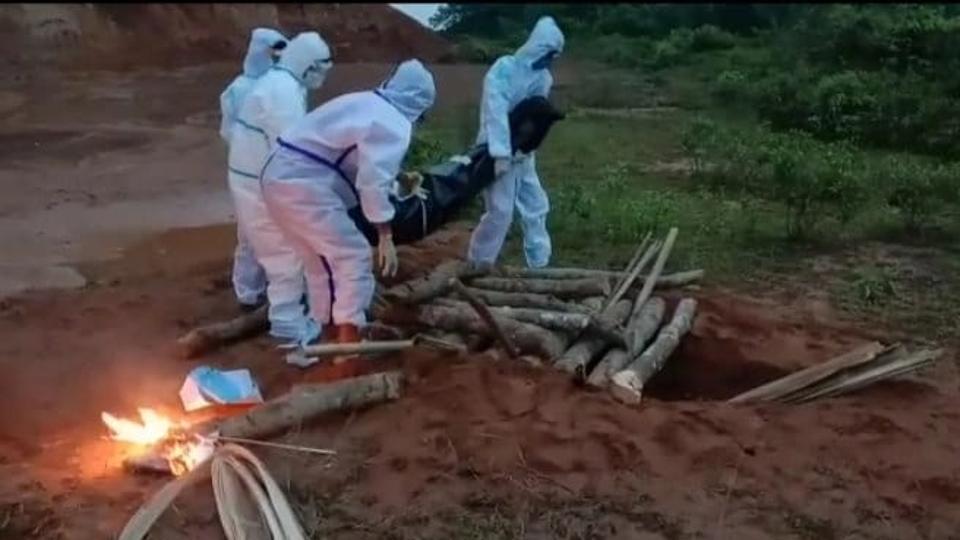
The group, which included Nizamuddin, Kabir Ahmed, Salim, and Ali, came forward to help around 3.00am on Tuesday and cremated the body with the help of the health department, which provided the Personal Protection Equipment (PPE) kits for the last rites.
Dey’s family was handed over the body after a declaration that the cremation will be done with adherence to Covid-19 protocols. Residents have stopped cremations of several such bodies in the region.
Also Read | Sonowal or Sarma? Assam waits for the next chief minister
Mrinmoy Dey, a family member of Mrinal Kanti Dey, said they were in a situation they will never forget. “I can understand the emotions of the locals, but their knowledge was poor. It is impossible that the virus can spread through the smoke. But at that moment, we were few people and there were hundreds.”
Sujan Deb Roy, the founder of the Karimganj unit of NGO Robin Hood Army, said they were shocked to see the behaviour of people. “They did not realise that the same thing can happen to them any day. Unfortunately, all of them were Hindu people and it was their duty to support a Hindu man’s last rites. Instead, some Muslim brothers came to support us. I am proud of them.”
Kabir Ahmed, who was among those who helped with the cremation, said it is the holy month of Ramzan and they were performing some rituals at midnight when they received a call, and someone said that local people are not allowing somebody’s last rites. “We rushed to the place. We asked the family members and the NGO if we can be a part of this process because it is our duty as a responsible members of society. We are thankful that they allowed us to be a part of it.”
Additional deputy commissioner (health), Karimganj, Hivare Nisarg Gautam said cremations of Covid-19 positive have happened earlier at the crematorium. “But that day some local people suddenly stopped our officials saying that the smoke coming out of cremations of Covid infected bodies can spread the virus. We tried to convince them, but they became aggressive and finally, we had to shift the process somewhere else. With the help of some social workers and our officials, it was done outside the town.” He said they were discussing this matter with higher officials.
Hundreds, including some carrying weapons, gathered at a crematorium in the neighbouring Silchar last year and warned a family of a person, who had died of Covid-19, against conducting the last rites.
Dilip Kumar Paul, the local lawmaker, and health department officials rushed to the crematorium to convince the locals. Silchar Medical College Principal Babul Bezbaruah even explained how the virus spreads and said it cannot spread through the dead bodies released from hospitals as they are wrapped in three layers of plastic and also sanitised. Over 80 dead bodies were then allowed to be cremated at the Silchar crematorium as per protocols.
Government guidelines mandate separate arrangements for cremations of people who die of Covid-19. Mourners and others attending cremations have to wear PPE kits and bodies have to be covered in three layers of plastic.
Over 100 people have so far died of Covid-19 at the Silchar Medical College and NGOs were involved in the cremations last year. But this year, the Disaster Management Authority and in some cases, families are allowed to conduct the last rites.


