
 E-Paper



Must focus on fiscal discipline to recover from pandemic: Chief economic advisor
Addressing a session at the 7th India Ideas Conclave, organised by the India Foundation, Nageswaran said it was important to maintain focus fiscal prudence and sustainability


Over the next decade, India will need to be a responsible economy that focuses on reforms in the power sector, education and health to make up for the losses inflicted by the Covid-19 pandemic, and must cut down on government litigation chief economic advisor V Anantha Nageswaran said on Friday.
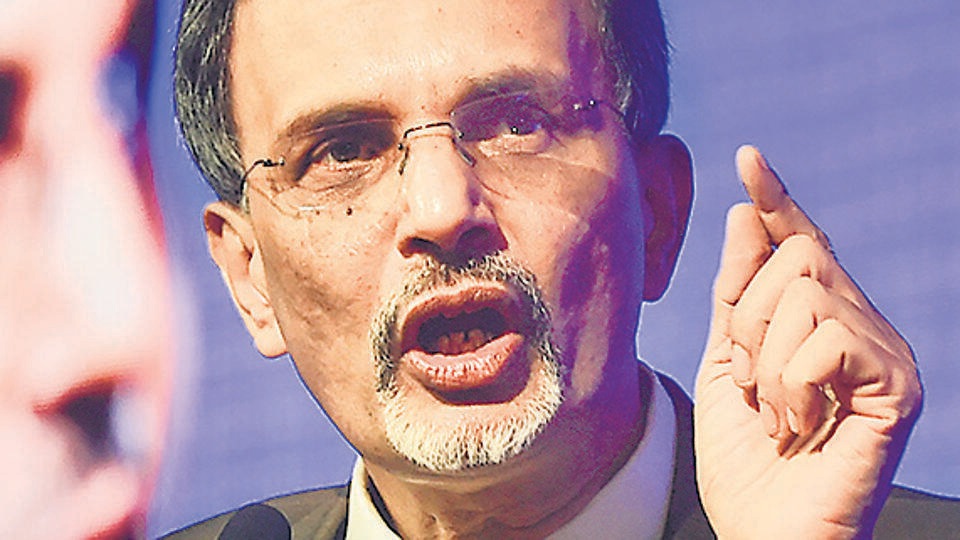
Addressing a session at the 7th India Ideas Conclave, organised by the India Foundation, Nageswaran said it was important to maintain focus fiscal prudence and sustainability. “…Therefore as we go into the next decade, it is all about responsible economics on the part of the local, state and union governments and the private sector,” he said.
The India Foundation is a think tank that is ideologically tethered to the Rashtriya Swayamsevak Sangh (RSS) and the Bharatiya Janata Party (BJP).
“To deliver the kind of growth rate that will take us to a state of a middle income economy in the next 20 years, from being a low income economy, we will need a vibrant financial sector. A sector that is capable of providing funds that are required for development,” said Nageswaran at the event.
He went on to explain that India has gone through a difficult phase in the last decade when the banking sector over-lent and the corporate sector over-borrowed. The bulk of the last decade was spent cleaning up balance sheets in the financial and corporate sector, he noted.
“That is why, in this decade, as central banks around the world tighten the monetary policy, India is better placed than many counties because we have paid our growth dues in the last decade and we are in a position to deliver domestically driven growth,” he said.
He appreciated the BJP- led NDA government’s efforts to usher in reform in the midst of the pandemic and said the government used the crisis as an opportunity to deliver new schemes, including Production Linked Incentive Scheme (PLI) schemes, reduced corporate tax rates, and introduced rules for startups that were simplified.
“India has re-embarked on to privatisation after a gap of 20 years,” he said.
Underlining what he saw as benefits of privatisation, he said, “Privatisation of Air India was not just a milestone exercise but an important paradigm shift after a two-decade gap. The asset monetisation scheme basically improves the government’s balance sheet. As we pass assets into private hands, we will able to extinguish government liability and bring down government costs, debt ratio and cost of capital for the private sector.”
Pointing out that the Indian private sector invests very little in terms of research and development, he said the sector will need to invest in basic and fundamental research and ensure that it pays the medium and small-scale enterprises on time as it is imperative for growth.
“If we have to become a meta economy, manufacturing complexity has to increase and Indian private sector has to shed its myopia and invest in research,” he said.
Earlier, addressing a separate session, union minister for IT, Ashwini Vaishnaw ,said India would have to sharpen its edge in the telecom and semiconductor manufacturing sector, master the design and manufacturing ecosystem of devices and work for digital inclusion for “India 2.0”.
“We have to create a regulatory structure where accountability of manufacturers comes along with the freedom of the users,” he said.
He said that for the first time, India’s intellectual property has been accepted in telecom standards.”We need to do well on the semi-conductors front. We need to have our own IPR, design power houses and chipsets and do all this at a cost post which is lower than many other geographies. What we also need to master is design and manufacturing ecosystem of devices,” Vaishnaw said.


