E-Paper



Nagaland has never elected a woman to its assembly and chances look slim again this election
Only five of the 227 candidates in the fray for February 27 Nagaland assembly election are women.


Nagaland has never elected a woman to its assembly and chances of the trend changing this time around appear slim.
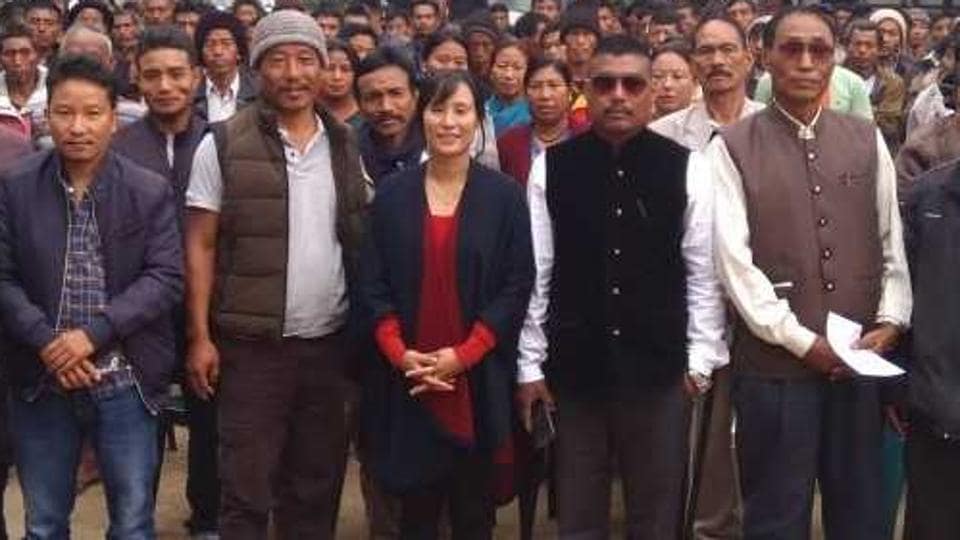
Only five of the 227 candidates in the fray for February 27 election are women. Still, this is better than the last state polls in 2013 when just two women contested the election.
The only woman parliamentarian from the state was Rano M Shaiza who was elected to Lok Sabha in 1977. Since the state was formed in 1963, only 30 women have contested the assembly polls but none have won.
This time, the Bharatiya Janata Party (BJP) and its newly formed ally Nationalist Democratic Progressive Party (NDPP) have fielded one women candidate each, the National People’s Party (NPP) has fielded two and there’s one independent candidate.
“Unlike other parties who fail to give tickets to women, BJP reposed faith in me for a second time. In 2013, I lost by just 800 votes. I am confident of a win this time,” said Rakhila, BJP candidate from Tuensang Sadar-II seat.
The ruling Naga People’s Front (NPF) and the Congress have failed to give tickets to women candidates.
“We wanted to give tickets to a few women candidates, but we failed to get any suitable person. The boycott call and threat from underground outfits also led to fewer women candidates seeking candidature,” Nagaland unit president of Congress K Therie said.
Women in Nagaland have a high literary rate – 76% women in Nagaland are literate compared to the national average of 65% -- and are well represented in government jobs (23.5%) and private sector (49%), according to figures from the Nagaland Gender Statistics, 2016.
But women don’t enjoy the right to inherit property and are yet to be represented in elected bodies like municipal councils and state assembly—keeping them away from decision-making processes.
Tribal customary laws of Nagaland are protected under Article 371(A) of the constitution. Women are not part of village councils as per these laws. They have 25% reservation in village development boards but don’t have much say in crucial matters.
Violence broke out in January last year when the NPF-led government tried to conduct municipal elections giving 33% reservation to women candidates. Several government buildings in the capital Kohima were burnt down.
Influential tribal councils, where men are in charge, opposed the move and said reservation to women, as per the 74th constitutional amendment, would violate provisions of Article 371(A).
Stiff opposition to the municipal elections forced chief minister TR Zeliang to leave his chair. The municipal polls, which had not been held for over 13 years, had to be called off.
“We expect things will change this time. Even though the number of women is few, we hope we will have at least one winner from among them this time and a new beginning will be made,” said Abeiu Meru, president of Naga Mothers Association (NMA).
The NMA, the most powerful women’s body in the state, has been fighting a legal battle to ensure reservations for women. In 2016 acting on a petition by the NMA, the Supreme Court had directed the Nagaland government to conduct municipal polls with 33% reservation for women.
But the violent protests and stiff opposition to reservation forced the NMA to withdraw its name from the petition.
“I want to fight the election because I want to see a Nagaland which is developed and corruption free. But there’s pressure on me to quit. Even when I went to file nominations, I was told not to go ahead,” Rekha Rose Dukru, Independent candidate from Chizami, said.
Awan Konyak, another woman candidate who is contesting as NDPP candidate from Aboi, is facing no such difficulty. The post-graduate from Delhi University comes from a reputed political family.
A four-time MLA between and former minister, Awan’s father Nyeiwang Konyak had died last month—paving the way for Awan’s entry to politics.
“Politics has been part and parcel of our family. I am receiving a lot of support and encouragement from everyone and am positive about winning,” said Awan, who was a social worker before taking the political plunge.