
 E-Paper



Nashik Lok Sabha: A battle of prestige and power for Shiv Sena
The Nashik Lok Sabha seat has become a battleground for the Shiv Sena factions, with Hemant Godse facing off against Rajabhau Waje

 Prefer HTon Google


In Maharashtra, Nashik has long stood as one of the key battlegrounds for the Shiv Sena. Historically, this city has been crucial for the undivided Shiv Sena, serving as a significant base after Mumbai and Aurangabad. Since 2014, the party has maintained a strong hold on the Nashik seat. However, following the split within the party, the contest has become more complex. Sitting MP Hemant Godse, who defected to the Eknath Shinde-led faction, is seeking re-election, while Uddhav Thackeray has nominated local leader Rajabhau Waje. Both candidates face significant challenges: Godse’s candidacy was opposed by the Bharatiya Janata Party (BJP), and Shiv Sena (UBT) experienced internal rebellion after Waje’s nomination.
The candidates
Godse, known for his approachable image, aims for a third term, while Waje, a loyal Shiv Sainik, presents a strong challenge to Godse. Waje previously served as an MLA from the Sinnar assembly constituency, which falls within the Nashik parliamentary constituency.
In the 2019 elections, as a candidate of the undivided Shiv Sena and the BJP's alliance, Godse defeated Sameer Bhujbal of the undivided Nationalist Congress Party (NCP) by over 2.92 lakh votes. This time, however, Godse faces anti-incumbency sentiments, a common hurdle after ten years in office. His path to securing the election ticket was fraught with difficulty, creating discontent among the ruling coalition.
Initially, the BJP was keen on fielding its candidate from the Nashik seat. Union home minister Amit Shah even asked the NCP to field party heavyweight Chhagan Bhujbal. However, chief minister Eknath Shinde insisted on Godse’s candidacy. Bhujbal, who had started his poll preparations, felt humiliated when his candidacy was not officially announced and subsequently withdrew. Finally, the BJP conceded to Shinde’s demand, and Godse’s name was announced just two days before the last day of filing nominations.
Political dynamics in Nashik
Nashik’s political dynamics are intricate. Godse’s faction lacks representation in the six assembly constituencies within the Nashik Lok Sabha seat. The BJP holds three of these seats, while Ajit Pawar’s NCP holds two, and the Congress holds one. Consequently, Godse’s campaign heavily relies on his allies. The BJP's local unit was not fully supportive of his candidacy, and the NCP is dissatisfied with the seat allocation.
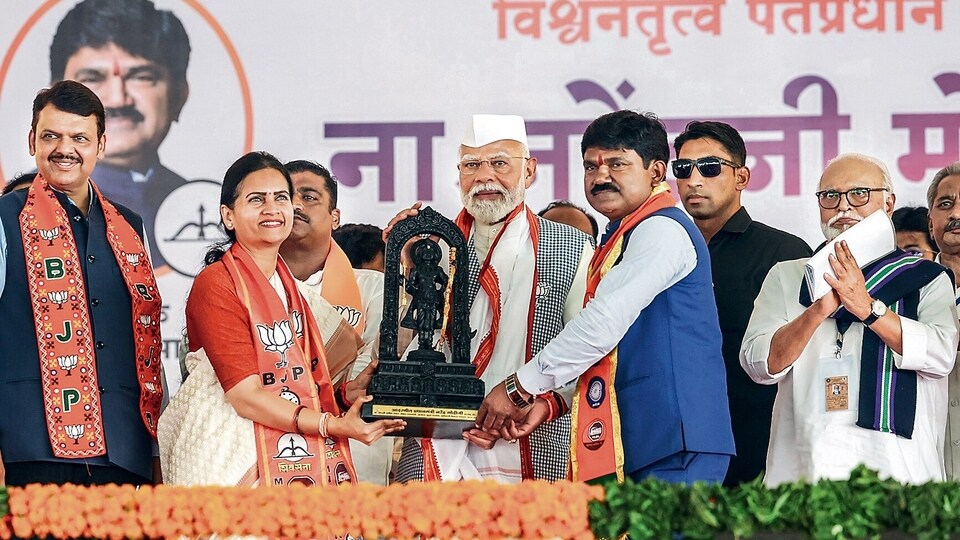
"Things started improving for Godse after PM Modi’s rally, and CM Shinde is also focusing on the seat. He held a roadshow recently that got a good response from the people. I believe Godse’s victory depends upon the Modi factor. If it works in his favour, then he will win; otherwise, he is in a difficult situation,” said Sudhir Kulkarni, a senior journalist from Nashik.
Historically, elections in Nashik have been direct contests between Godse and the Bhujbals. In 2009, Godse lost to Sameer Bhujbal, nephew of Chhagan Bhujbal, while running as a Maharashtra Navanirman Sena candidate. In 2014, as a Shiv Sena candidate, he defeated Bhujbal, and in 2019, he avenged the 2009 loss by defeating Sameer.
For Waje, the presence of Vijay Karanjkar poses a problem. Uddhav Thackeray had initially announced Karanjkar’s name before replacing him with Waje. Karanjkar, who has significant support in areas surrounding Bhagur and controls the Bhagur municipal council, could dent Shiv Sena (UBT) votes.
Both Godse and Waje are Marathas. Other candidates like Shantigiri Maharaj and Karan Gaikwad also come from the same community. Maharaj, a seer with around 2.5 lakh followers, is expected to draw votes away from Godse. Similarly, Vanchit Bahujan Aghadi candidate Karan Gaikwad, active in the Maratha reservation agitation, may affect Godse’s voter base. The community, which dominates the constituency, is upset with the way the Mahayuti-led government handled the Maratha reservation agitation.
Local issues and agrarian distress
Local issues, particularly agrarian distress, further complicate the election. Farmers are upset with the central government's ban on onion exports, which has hurt their incomes. Although the ban was lifted on May 4, the Centre also imposed a 40% export duty on onions, effectively making Indian onions more expensive than those from other countries such as Pakistan. Nashik is known for its onion and grape production, and economic issues here are likely to influence the polls.
Voting demographics in Nashik
Other Backward Classes (OBC) form the second largest demographic group in the constituency and are seen as a traditional BJP voter base. The Mali sub-caste, with close to 1.5 lakh voters, may be influenced by Bhujbal’s “humiliation.” Dalits and Muslims, forming 3.5 lakh votes together, are likely to vote against the BJP. Approximately 1.5 lakh tribals may back Godse’s candidature. He will also benefit from the support of Raj Thackeray’s MNS and the BJP’s robust election machinery. However, internal dissent and local grievances present significant obstacles.
The Nashik election is a complex and multi-faceted contest, reflecting the broader dynamics of Maharashtra politics. With significant local issues, community dynamics, and internal party conflicts, the outcome remains uncertain. The decision will ultimately depend on how well the candidates can navigate these challenges and mobilise their voter bases.


