
 E-Paper



‘Adverse reactions natural’: Khaleda Zia's BNP on Sheikh Hasina's stay in India
BNP leaders expressed hope that India would stop supporting the Awami League and Sheikh Hasina, who fled the country after a mass uprising.

 Prefer HTon Google


Bangladesh Nationalist Party (BNP) leaders on Friday said that Indo-Bangla bilateral ties are not solely dependent on the Awami League and it is ‘natural for adverse reactions’ to arise in Bangladesh over India providing refuge to former Prime Minister Sheikh Hasina.
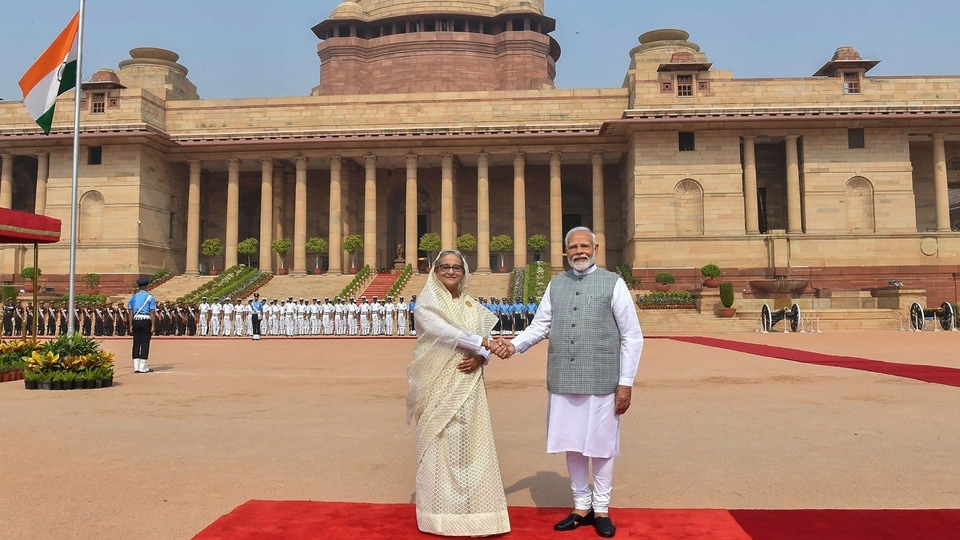
“India was very important to Bangladesh and it is high time to start a new chapter in bilateral relations,” said BNP leader Khandaker Mosharraf Hossain.
He welcomed Prime Minister Narendra Modi's congratulatory message to Bangladesh's interim government and expressed hope that India would stop supporting the Awami League and Sheikh Hasina, who fled the country after a mass uprising.
Another BNP leader Abdul Awal Mintoo said it would have been better if Hasina had not fled to India as people in Bangladesh are eager to maintain good relations with the country. He said that Bangladesh and its people see India as a friend.
“The impact of Sheikh Hasina getting refuge in India is quite natural. For example, if I don’t like you and someone else is supporting you, then I will naturally have a dislike for that person too. It is natural to have adverse reactions. But the fact is India-Bangladesh always shared good ties irrespective of whether the Awami League or Sheikh Hasina is in power,” PTI quoted Hossain as saying.
Hossain mentioned that when the BNP was in power, he served as a minister in the Bangladesh government and had witnessed the excellent relationship between the two countries.
'India is very important to Bangladesh'
India is very important to Bangladesh, having consistently supported its people, said Hossain and expressed confidence that both countries would continue to maintain good bilateral ties.
The 77-year-old leader said the people of Bangladesh hope that the Indian government will "not always support a corrupt and dictatorial regime like the Awami League."
Hossain hoped that the interim government led by Nobel laureate Muhammad Yunus would quickly restore normalcy and democratic rights for the people.
Yunus took the oath as the head of an interim government in Bangladesh on Thursday. He was administered the oath of office by President Mohammed Shahabuddin at a ceremony in Dhaka.
With PTI inputs


