
 E-Paper



Need a new, independent body to oversee probe agencies: CJI
This new umbrella institution, CJI NV Ramana added, needs to be created through a comprehensive statute, clearly defining its powers, functions and jurisdictions.


The country needs an independent umbrella institution with an oversight over agencies such as the Central Bureau of Investigation (CBI), the Enforcement Directorate (ED) and the Serious Fraud Investigation Office (SFIO), as the image of the institutions has been tarnished by allegations of corruption, excesses, lack of impartiality, and a close nexus with the political class, Chief Justice of India (CJI) NV Ramana on Friday said.
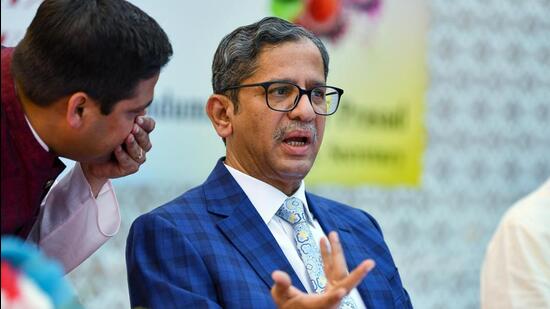
This umbrella institution, he added, needs to be created through a comprehensive statute, clearly defining its powers, functions and jurisdictions.
The head of this body should be an impartial and independent authority, appointed by a committee, much like a panel which appoints the CBI director, the CJI said while delivering the 19th DP Kohli Memorial Lecture of the CBI at Vigyan Bhawan. The CBI director is appointed by a three-member committee comprising Prime Minister, the CJI, and the leader of Opposition. DP Kohli was the founder of the CBI.
The CJI asserted that having such an organisation, which can have separate prosecution and investigation wings, will also end multiplicity of proceedings.
“A single incident these days gets investigated by multiple agencies, often leading to dilution of evidence, contradiction in depositions, prolonged incarceration of innocents. It will also save the institution from being blamed as a tool of harassment. Once an incident is reported, the organisation should decide as to which specialised wing should take up investigation,” Ramana said.
He suggested the states can also replicate having such institutions in their respective jurisdictions.
CJI Ramana further said that CBI’s credibility has come under public scrutiny due to its “actions or inactions”.
“When it comes to the CBI, it possessed immense trust of the public in its initial phase. In fact, the judiciary used to be flooded with requests for transfer of investigations to CBI, as it was a symbol of impartiality and independence. Whenever the citizenry doubted the skill and impartiality of its own state police, they sought investigation by CBI, as they wanted justice to be done. But, with the passage of time, like every other institution of repute, CBI has also come under deep public scrutiny. Its actions and inactions have raised questions regarding its credibility, in some cases,” CJI said.
Dwelling on the eroding image of police and agencies in India, Ramana told the chiefs of country’s top agencies, senior police and CBI officers present at the event “the need of the hour is to reclaim social legitimacy and public trust”, the first step in which is “to break the nexus with the political executive”.
“The truth is, that no matter how deficient and non-cooperative the other institutions may be, if you all stand by your ethic and stand united with integrity, nothing can come in the way of your duty. In fact, this stands true for all institutions,” Ramana said.
Asserting that the investigative agencies should not allow authoritarian tendencies to creep in the democratic Indian society, the CJI said the officers must remember that their allegiance “must be to the constitution and the rule of law, and not to any person.”
“When you stand upright, you shall be remembered for your courage, principles and valor. The political executive will change with time.
“But you, as an institution are permanent. Be impermeable and be independent. Pledge solidarity to your service. Your fraternity is your strength,” he added.
“A few upright officers can bring a revolution within the system. We can either go with the flow or we can be a role model. The choice is ours,” Justice Ramana said.


