
 E-Paper


Follow the latest breaking news, major developments and agenda-setting stories from India and around the world with the newsdesk at Hindustan Times. Operating round the clock, the desk brings together experienced editors, reporters and correspondents to deliver fast, accurate and contextual reporting across subjects that influence public policy, governance, business, society and international affairs. The HT News Desk covers politics, elections, government policies, the economy, business and markets, science and technology, the environment, law and order, infrastructure, education, climate issues and geopolitics, while closely tracking developments across states, institutions and global capitals. The team also leads coverage of major breaking news events, policy announcements, court proceedings, natural disasters, public emergencies and significant international developments. Reports published by the newsdesk are based on information gathered from reporters on the ground, official statements, government agencies, court records, regulatory filings, recognised institutions and other authoritative sources. Stories undergo editorial scrutiny and verification processes to ensure accuracy, fairness and relevance, and are updated as events evolve and additional information becomes available. Whether covering a key political decision in New Delhi, an economic policy shift affecting millions, a landmark court ruling or a major global event, the HT News Desk aims to provide readers with reliable, fact-based journalism that delivers not only the latest developments but also the context and analysis needed to understand their wider implications.
Nepal’s FM radio stations beam propaganda across border, say Lipulekh theirs
Nepalese parliament recently adopted a new political map of the country showing these areas as part of its own territory, a move strongly opposed by India.


Nepal’s FM radio channels close to the border with India are broadcasting propaganda to back Kathmandu’s claim on Kalapani, Lipulekh and Limpiyadhura, residents in India’s border villages said.
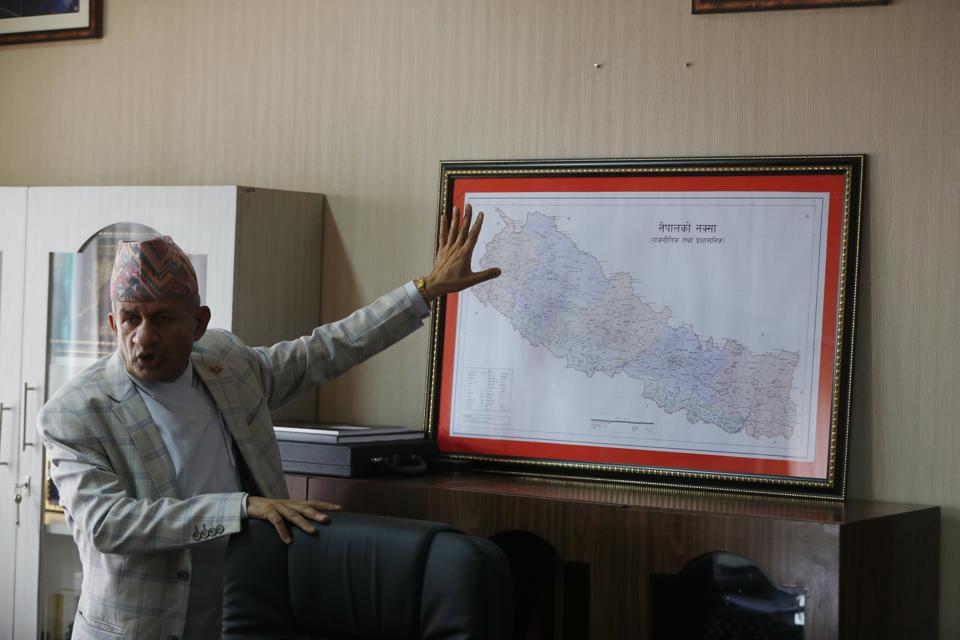
Nepalese parliament recently adopted a new political map of the country showing these areas as part of its own territory, a move strongly opposed by India.
“Some Nepalese FM channels have of late started playing anti-India speeches in between Nepali songs,” said Shalu Datal, a resident of Dantu village in Pithoragarh’s Dharchula sub-division.
“As people on both sides of the border listen to Nepali songs, they also hear the anti-India speeches delivered by Nepalese leaders in between them,” she said.
The main FM stations playing anti-India content between songs are Naya Nepal and Kalapani Radio, Datal said.
“Some old channels like Mallikarjun Radio and a website named annapurna.online are also broadcasting reports depicting Kalapani as Nepalese territory,” she said.
The FM stations are situated at Chabrigar near the district headquarters in Nepal’s Dharchula.
The stations have a range of about three kilometers and can be heard in Dharchula, Baluakot, Jauljibi and Kalika on the Indian side of the border.
These radio stations have also started giving weather reports on Kalapani, Lipulekh and Limpiyadhura, treating them as Nepalese territory, Krishna Garbiyal, a Rang community leader based in Dharchula said.
However, the district administration and police said they have no information about any anti-India propaganda launched by Nepal through its FM radio channels.
“We have no feedback from our intelligence units on the subject,” Pithoragarh Superintendent of Police Preeti Priyadarshini said.
Dharchula Circle Officer V K Acharya also expressed ignorance.
“Our intelligence units have not yet spoken about any such anti-India propaganda by Nepal,” he said.
Ashok Nabiyal, a leader from Vyas Valley, said Indian intelligence agencies active on the border need to take cognizance of the situation to be able to counter the propaganda.


