
 E-Paper



Netaji's cap ‘goes missing’, returns, but grandnephew has a doubt: Row over Subhas Chandra Bose's belonging, explained
Controversy began when members of an organisation called Open Platform for Netaji (OPN) discovered an empty display case at the museum in Red Fort, Delhi

 Prefer HTon Google


Chandra Kumar Bose, a grandnephew of freedom fighter Subhas Chandra Bose, has demanded an investigation into the “authenticity” of Netaji’s cap currently on display at the Red Fort museum. His demand follows an initial claim that the cap was missing, which was clarified by the authorities. He has now claimed that the cap — back in its glass case in Delhi — may not be the original one.
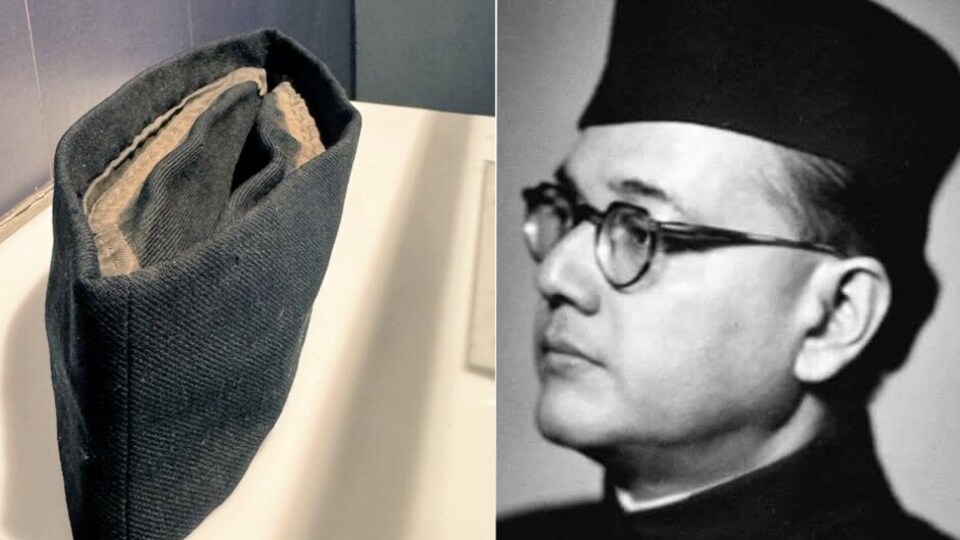
The controversy began when members of an organisation called Open Platform for Netaji (OPN) discovered an empty display case at the INA Museum. Naveen Bamel, a lawyer and a member of the organisation, visited the museum recently and found the iconic cap was missing.
Staff were reportedly unable to provide an immediate explanation.
Also read | SC asks Netaji’s daughter to move court herself to bring ashes back from Japan temple
This prompted Chandra Kumar Bose, a former leader of PM Narendra Modi’s BJP, to raise the alarm online, addressing his concerns directly to the PM.
He noted in his post on X that he and others had handed over the cap to PM Modi, “which you had personally dedicated at the Netaji Museum, Red Fort - Delhi on 23 Jan - Netaji Jayanti (Patriots Day of India) 2019”. He said the cap’s going “missing” was “highly embarrassing”.
This “missing” bit was clarified quickly as the Archaeological Survey of India (ASI) said the artefact had been taken to the Andaman and Nicobar Islands as part of an exhibition in January. In its post on X, the ASI said the cap was returned safely to Delhi after that event concluded but there was a “technical issue” with the display case’s lock. That, it said, prevented its immediate return to public view. The agency also confirmed that the lock is fixed and the cap is back on display.
After this, Chandra Kumar Bose alleged on Friday that the cap appears “different” from the one originally handed over to the government.
“Netaji researchers and those who had previously seen this said cap feel that this isn't the original cap,” he said in another X post. He demanded a probe for authentication. The ASI had not yet reacted to this fresh claim.
Chandra Kumar Bose also questioned the protocol of moving such a precious personal item. He argued that transporting a small artefact like the cap increases the risk of it being misplaced or damaged. "How can a personal cap of Netaji presented to the Prime Minister, who placed it in the display box at the Red Fort Museum be taken all over the place for display?" he questioned.
He also criticised the fact that visitors were not informed that the item had been sent elsewhere.
A similar situation occurred in 2021 when reports suggested the cap had disappeared from the museum. The ASI clarified at that time that the cap had been loaned to the Victoria Memorial in Kolkata for temporary display alongside approximately two dozen other artefacts.
Meanwhile, in another development related to Subhas Chandra Bose's legacy, the Supreme Court on Thursday asked Anita Bose Pfaff, his daughter, to “come forward” and file a petition in her own name if she wanted the court’s intervention in bringing Netaji’s ashes from Japan’s Renkoji temple to India.
A bench comprising Chief Justice Surya Kant and Justices Joymalya Bagchi and Vipul M Pancholi declined to entertain a petition filed through Netaji’s grandnephew and author Ashish Ray, noting that the issue involved reported differences within the Bose family over the circumstances of the leader’s death and the authenticity of the ashes and, therefore, a “direct heir” must approach the court.


