E-Paper



‘Never refused to accept bodies, compensation’: Kukis refute SC panel’s report
In a letter to the SC-appointed panel, the ITLF and the JPO claimed that the committee had been misled by the state officials into believing that the tribals were obstructing the acceptance of dead bodies

 Prefer HTon Google


Two prominent Kuki organisations– Indigenous Tribal Leaders Forum (ITLF) and Joint Philanthropic Organisation (JPO) – in ethnic violence-hit Manipur have refuted a Supreme Court-appointed panel’s report and denied exerting families of victims to refuse to accept the bodies or take compensation.
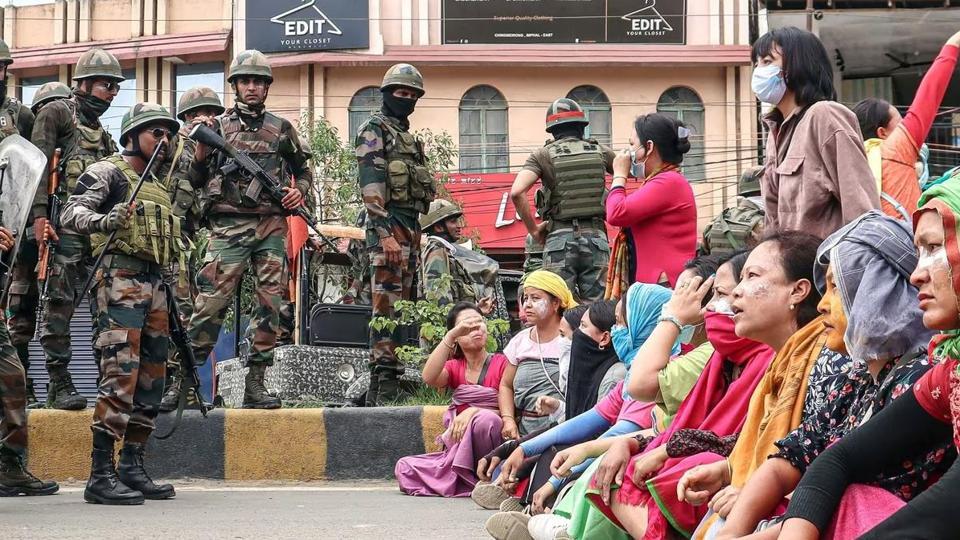
The Supreme Court had issued directives for the burial or cremation of all those killed in the ethnic violence in the state, including 88 that have been identified but not claimed by their next of kin, by December 11.
According to information provided by the committee to the top court last week, there have been 175 deaths in the state of which 81 bodies have already been received by their next of kin and 88 have been identified by the administration but have not been claimed yet.
In one of its reports submitted last week, the three-member committee had accused civil society organisations of “obstructing the performance of last rites by relatives on account of vested interests”.
The ethnic conflict between Meitei and Kuki communities that started on May 3 has so far claimed 182 lives and displaced more than 50,000. At present, 94 bodies of victims (six unidentified) are lying unclaimed at the morgues of two hospitals in Imphal and the district hospital in Churachandpur.
In a letter to the SC-appointed panel, the ITLF and the JPO claimed that the committee had been misled by the state officials into believing that the tribals were obstructing the acceptance of dead bodies.
Returning the dead bodies has always been part of the demands by the community, it said.
Another report from the panel stated that families of 38 victims had expressed unwillingness to receive ex-gratia amounts given by the government due to pressure from ITLF and two other Kuki organisations– JPO and Kuki Inpi Manipur.
Also Read: Manipur: Kuki group threatens to set up ‘self govt’ if demand not met in 2 weeks
The government had earlier declared that a compensation amount of Rs.10 lakh ( ₹5 lakh by state and ₹5 lakh by Centre) would be given to families of victims killed in the ethnic violence.
As of October 7, out of the 169 identified cases, payments had been made to the next of kin of 73 victims, efforts were underway to verify details in 58 cases and families of 38 others had “expressed unwillingness to receive ex-gratia amounts”, the report from the panel said.
Responding, the ITLF said that the tribal organisations have never refused compensation, nor have they instigated anyone to not take compensation. “Any tribal can walk up to the government and take compensation. The tribal organisations have never hampered nor will ever hinder tribals from accepting compensation,” the letter further read.
“However, the view among the tribals is that it would be an insult to the dead to accept money at this stage from the very state that engineered the ethnic cleansing. Hence, the overall feeling is that after the dead bodies are buried with dignity according to the tribal customs then a decision can and will be taken as quickly as possible regarding compensation,” it added.
Manipur government spokesperson Sapam Ranjan Singh, who is also a minister, and representatives of the Meitei civil society group COCOMI (Coordination Committee on Manipur Integrity), could not be contacted despite calls.