
 E-Paper



NGT does not have suo motu powers: Centre to SC
New Delhi: The National Green Tribunal (NGT) does not possess suo motu powers but it can act on letters or communication addressed to it raising environmental concerns, the Centre told the Supreme Court on Thursday

 Prefer HTon Google


New Delhi: The National Green Tribunal (NGT) does not possess suo motu powers but it can act on letters or communication addressed to it raising environmental concerns, the Centre told the Supreme Court on Thursday.
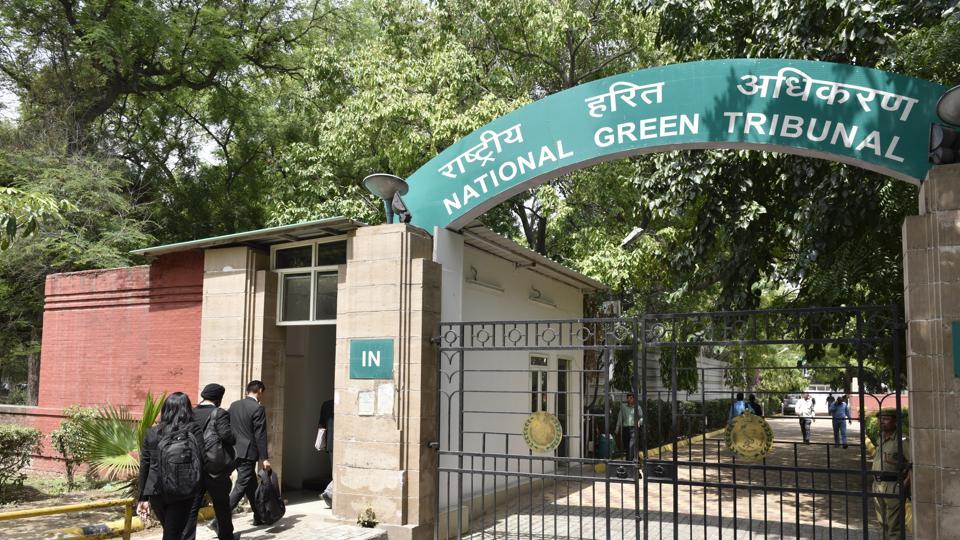
The submission was made by additional solicitor general (ASG) Aishwarya Bhati, appearing for the Union Ministry of Environment, Forest and Climate Change (MoEFCC) during a hearing of a bunch of appeals, seeking the court’s decision on whether the tribunal has the power to directly take up issues on the basis on news reports or at the instance of any letter or communication.
“The NGT does not enjoy any suo motu powers. But this cannot be stretched to the extent to suggest that a letter or application cannot be entertained by it. The tribunal cannot be tied up in procedural law for exercising power which is amply available to it under the Act. Once the tribunal receives any communication, it is duty bound to take cognisance of that,” ASG Bhati said, conveying the government’s point of view.
A bench of justices AM Khanwilkar, Hrishikesh Roy and CT Ravikumar responded that the ASG’s submission is “crucial” to the case since MoEFCC was the ministry which piloted the bill constituting the NGT through Parliament.
Bhati said that the National Green Tribunal Act, 2010, was enacted with the purpose of protecting the environment, and the only objection of the Centre was with regard to vesting suo motu powers to the tribunal and its members through which they can initiate action on their own.
The bench said that the problem arises by using the generic term “suo motu”. “Even we are not using the term suo motu. But when a communication in the form of a letter or a sworn affidavit is received, should the Tribunal ignore it or will it be duty-bound to consider it?”
The court agreed that procedural law requires the tribunal to act on an application or appeal filed before it. However, the judges wondered if this formal step could be substituted by converting a letter or a news report into an application and taking the process forward by issuance of notices to the authors of the new report and to the alleged defaulters or authorities concerned.
The Centre said that often it is seen that environmental issues are the last concern of citizens.
“Nobody has argued that there is lack of power with the tribunal to consider issues falling within the laws where the NGT exercises jurisdiction,” he said. These include legislations such as Environment Protection Act, Air (Prevention and Control of Pollution) Act, the Water (Prevention and Control of Pollution) Act, the Forest (Conservation) Act, and Biological Diversity Act.
“We are seeing it from the point of view that environment is of paramount consideration. Environment, unfortunately, ends up being nobody’s baby. Any view taken by the court must not undo the good work achieved so far by the Tribunal,” Bhati said.
The ministry so far filed a one-page affidavit denying suo motu power to NGT. The ASG said she will supplement it with a written note explaining the stand of the Centre.
The court-appointed amicus curiae (friend of Court), senior advocate Anand Grover, supported the view of the Centre. Having taken a stand earlier that no suo motu power is permissible under NGT Act, Grover told the bench: “What is meant by suo motu is that the Tribunal or its members cannot initiate action or trigger the process on basis of reading a newspaper report.” However, he added, “it can be triggered on an application received by the Tribunal which need not be in the form prescribed under the NGT Act or Rules.”
Grover will continue his submissions on Tuesday.
In appeals being heard by the apex court about the powers of NGT, two cases stand out. One relates to Kerala, where NGT took up a letter written by a group of residents who wrote to Prime Minister Narendra Modi complaining against the pollution caused by the presence of stone quarries in their vicinity. A copy of the letter was also marked to NGT. The letter was registered as an application, and orders were passed restricting stone quarries from operating within 200 metres from the nearest residential house.
The other case relates to orders passed by NGT on solid waste management in Mumbai based on a newspaper report. The green panel imposed a cost of ₹5 crore on the municipal body for its failure to set up sewage treatment plants.
In the first case, the appeals are by granite manufacturers, owners of stone quarries, and the Kerala government, and in the other case, the Municipal Corporation of Greater Mumbai has approached the top court.
The top court said that once the question of suo motu power of NGT is decided, the orders under challenge will either remain or cease to exist.


