
 E-Paper



NHAI bans entry of slow-moving vehicles on Bengaluru-Mysuru expressway
The ban encompasses motorcycles, three-wheelers, non-motorised vehicles, tractors, multi-axle hydraulic trailer vehicles, and quadricycles

 Prefer HTon Google


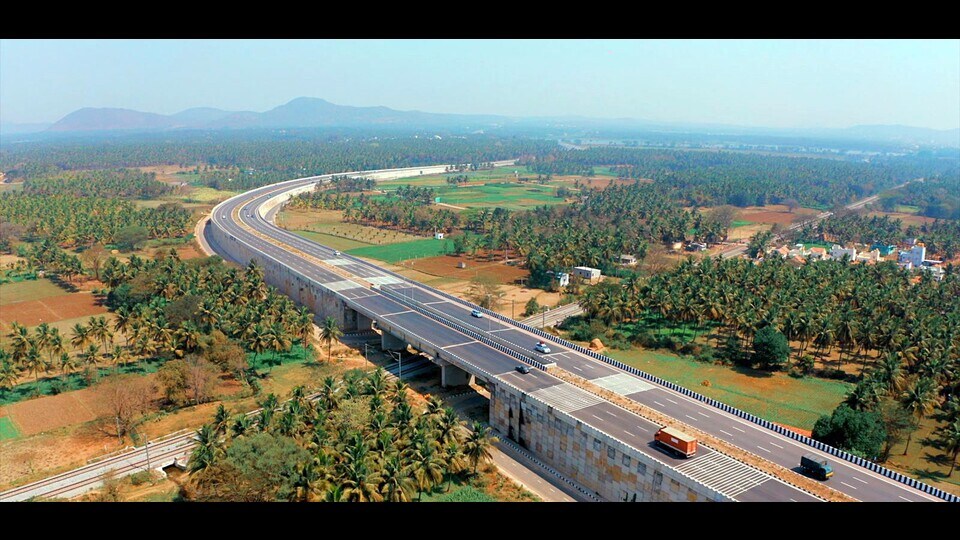
Effective from August 1, the National Highways Authority of India (NHAI) has enforced a prohibition on slow-moving vehicles, including two-wheelers and autorickshaws, from entering the Bengaluru-Mysuru expressway (NH-275). The ban encompasses motorcycles, three-wheelers, non-motorised vehicles, tractors, multi-axle hydraulic trailer vehicles, and quadricycles.
“The decision to implement this restriction was prompted by the concern that high-speed vehicles pose a safety risk to slower-moving vehicles such as two-wheelers, three-wheelers, and non-motorised vehicles due to speed differentials, making them vulnerable and compromising road safety aspects. The move comes under the authority’s powers granted by section 35 of ‘The Control of National Highways (land and Traffic) Act 2022’,” said an official in the know of the development.
The Bengaluru-Mysuru expressway has witnessed a high number of accidents, with 512 reported between January and June 2023. These accidents have resulted in 123 fatalities and 585 individuals sustaining serious injuries, with a significant number of them occurring on the Bengaluru-Nidaghatta stretch of the highway.
In response to the alarming accident rate, the NHAI formed a committee of road safety experts to conduct inspections. Additionally, DGP (Traffic and Road Safety) Alok Kumar personally reviewed the measures taken to prevent accidents on the expressway.
The issue of overspeeding on the expressway also became a focal point, with over 2,000 drivers being booked for overspeeding within the last 24 days of July. In light of this, traffic police personnel equipped with speed radars have been deployed on the expressway to catch vehicles exceeding the speed limit of 100 kmph, that was set after an inspection conducted by Alok Kumar in June.
The Bengaluru-Mysuru expressway, spanning 117 km and constructed at a cost of ₹8,408 crore, includes various features aimed at enhancing traffic flow and reducing congestion, such as 4 rail overbridges, 9 major bridges, 40 minor bridges, 89 underpasses and overpasses, and 6 bypasses. This project facilitates inter-state connectivity between Karnataka, Tamil Nadu, and Kerala, thereby reducing travel time to cities like Coorg, Srirangapatna, Wayanad, and Ooty.
However, the expressway was built not without controversies. Farmers and residents from nearby villages protested by blocking the expressway, demanding the construction of an underpass near Hanakere in Karnataka’s Mandya district. This demonstration highlights some of the challenges faced during the project’s development.


