E-Paper



Nine universities from UK to have campuses in India
UK universities Lancaster and Surrey received approval to open campuses in India, increasing the total to nine, enhancing educational ties and boosting the economy.

 Prefer HTon Google


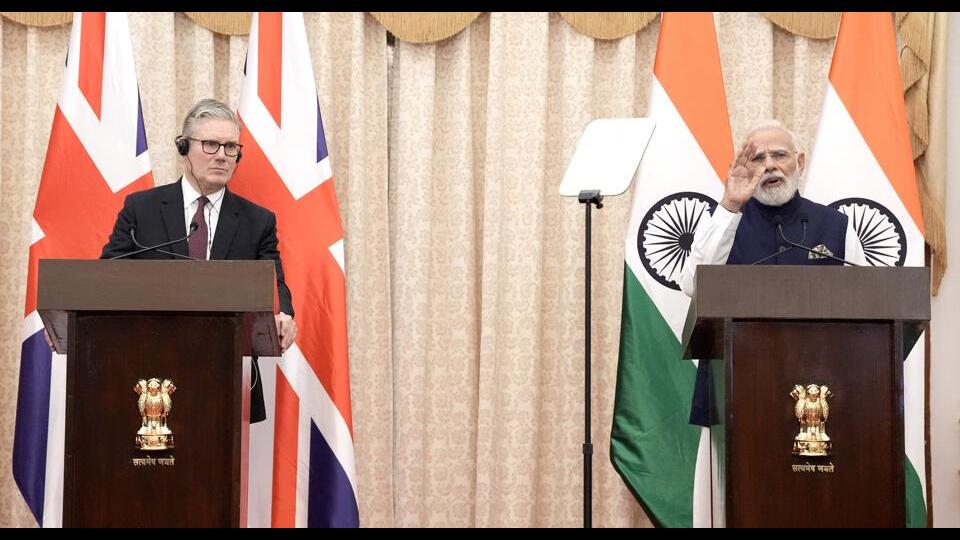
New Delhi: Lancaster University and the University of Surrey, two of the UK’s leading universities, received Letters of Intent (LoIs) from Indian authorities on Thursday to open campuses in Bangalore and GIFT City, Gujarat, respectively in Mumbai during the visit of UK Prime Minister Keir Starmer to India. With this, the total number of UK universities approved to establish campuses in India rose to nine—the highest ever for any foreign country.
UK’s University of Southampton has started its academic activities in September 2025 with its inaugural cohort of 140 Indian students to its campus in Gurugram.
Higher education regulator University Grants Commission (UGC) issued The University Grants Commission has also handed over Letters of Intent (LoI) for establishment of branch campuses of University of Liverpool, University of York, University of Aberdeen and University of Bristol in India.
These universities received LoIs under the UGC (Setting Up and Operation of Campuses of Foreign Higher Educational Institutions in India) Regulations, 2023. According to UGC regulations, foreign universities intending to set up campuses in India must be ranked within the top 500 globally, either in QS overall or subject-specific rankings.
“Further, Queens University of Belfast and Coventry University have been authorised to open their branch campuses in GIFT City,” the Ministry of External Affairs (MEA) said in a statement on Thursday.
Universities set up in GIFT city are governed by ‘International Financial Services Centres Authority (setting up and operation of international branch campuses and offshore education centres) regulations, 2022’ notified by International Financial Services Centres Authority (IFSCA) – a central regulator for financial products, services and institutions – based in Gujarat.
Meanwhile, the UK government in a statement said that UK’s world-leading higher education sector is set to bring in a £50 million boost to the economy as part of a major expansion of British universities in India.
“Currently, there are 40 million students at university in India, but 70 million places are needed by 2035. The UK’s world-renowned higher education sector is capitalising on that demand by giving thousands of Indian students the chance to study for a UK degree without leaving home – while bolstering our economy by millions of pounds,” it said.
UK PM Starmer said,” I am delighted that more Indian students will be able to benefit from a world-class British education in the near future - strengthening the ties between our two countries while pumping millions back into our economy and supporting jobs at home.”
Prime Minister Narendra Modi in a post on X said, “It was also a delight to meet the Vice Chancellors of various UK universities. We will keep furthering educational and cultural linkages with the UK.”