
 E-Paper



Nitin Gadkari’s plan to reform road rule hits a block
Union transport minister Nitin Gadkari’s plans to clear certain road safety provisions of the contentious Motor Vehicles Amendment Bill through government notifications have hit a roadblock.


Union transport minister Nitin Gadkari’s plans to clear certain road safety provisions of the contentious Motor Vehicles Amendment Bill through government notifications have hit a roadblock, a senior ministry official with knowledge of the matter said.
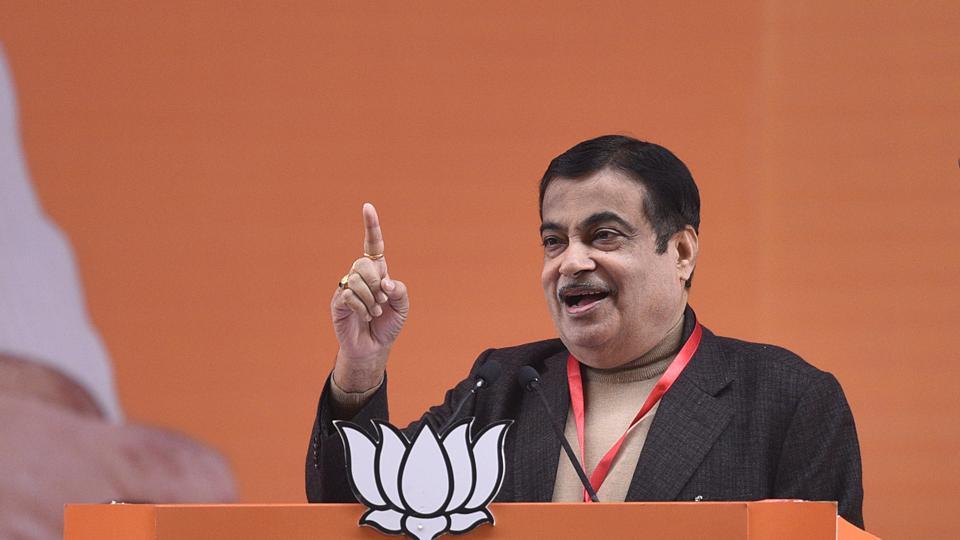
The bill that was passed by the Lok Sabha in April 2017 has been stuck in the Rajya Sabha for the past one year because of objections by opposition parties that it will curtail the powers of state governments and favour corporate entities.
The bill, which seeks to amend the Motor Vehicles Act, 1988, was introduced by transport minister Nitin Gadkari in 2016 with the aim of making Indian roads safer in the aftermath of the death of former Union minister Gopinath Munde in a car crash in Delhi on June 3, 2014.
“Since the bill could not be passed in the Upper House, the minister [Gadkari] had formed a team to especially look into clauses of the bill which could be passed through government notifications,” a senior transport ministry official said on condition of anonymity.
“We went through every such clause and sent it to the law ministry, which informed us that it is not possible to do so,” the official said.
“The ministry informed us that the as soon as the bill is tabled, they look into these provisions themselves to see if they can be notified directly,” the official added.
The ministry has the jurisdiction to introduce new rules through amendments to the Central Motor Vehicle Rules (CMVR),1989.
“We had drafted the Motor Vehicle Bill but unfortunately it has been stuck in Rajya Sabha for the past one year,” said Gadkari at an event on road safety on January 11.
“Road safety is not a political subject. Our mission is to save the lives of people. We are working on whatever rules and regulations possible to pass within our jurisdiction because the bill is not passed. We are seeing if it’s possible to issue some rules by which we can bring some relief on road safety,” he said.
The bill aims to address issues of third party insurance — it removes the cap on liability for third-party insurance — and regulation of cab aggregators, road safety, opening the public transport sector for private entities and regulate permits. It also proposes a National Transportation Policy to frame guidelines on transportation of goods and passengers.
The bill also proposed to set up a National Road Safety Board which will be the apex body to take policy decisions in matters of road safety. It also proposed increasing penalties for several offences, protecting Good Samaritans and a unified licence system aimed at uniform specifications for licences and registration.
HT had on December 14 reported that the Centre may not amend contentious clauses in the Bill to ensure its passage in the Rajya Sabha. “The Motor Vehicles Act is a very complex set of legislations and with the kind of geographical diversity in our country, states also have to be on board,”said Kushal Singh, partner, Deloitte India.
“It initially took a lot of time to draft the bill and getting all stakeholders on board and then it got stuck in Parliament for reasons beyond the minister’s control. That is when he [Gadkari] had the idea of bringing certain clauses through notifications and any change in the law is not possible without the approval of Parliament,” said Singh.
“So yes, this is a setback for the transportation sector and we will have to wait much longer for substantial legislations to be drafted in the future,” he added.


