
 E-Paper



No coercive action against Halal Trust in FIR over sale of halal products: SC
The complaint against the Halal Trust and Halal India alleged that trust was attracting consumers “of a particular religion” for creating profits by “fraudulently” providing Halal certification for certain products

 Prefer HTon Google


The Supreme Court on Friday said no coercive steps should be taken against former Rajya Sabha member Mahmood Madani and office bearers of Jamiat Ulama i-Hind trust in connection with a criminal case lodged in Uttar Pradesh last year over the ban on halal-certified products.
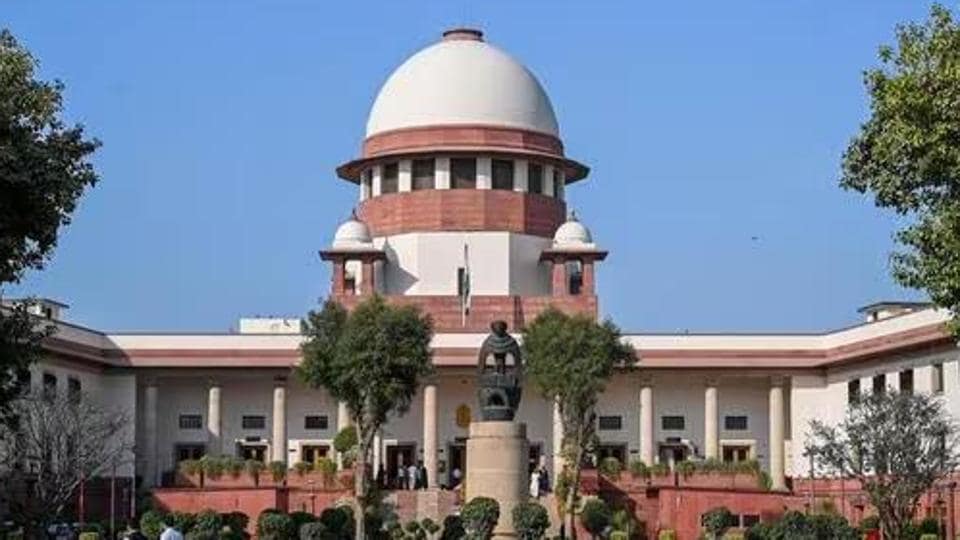
A bench of justices BR Gavai and Sandeep Mehta while seeking response of the UP government to a petition filed by the trust held, “No coercive steps shall be taken against the petitioner and the office bearers in connection with a criminal case lodged by Hazratganj police station in Lucknow on November 17, 2023.
Advocate MR Shamshad who appeared for the trust said, “The petitioner has been cooperating with the investigation. But recently they have issued notice seeking personal presence of the trust President Mahmood Madani to be present in connection with the probe. He is a former Rajya Sabha member. Why is his presence necessary?”
Also Read:SC notice on plea against UP halal ban; provides no interim relief
The Court issued notice on the petition as the same bench is already seized of the issue in two separate petitions filed by the Halal India Private Limited, an internationally recognised halal certification provider and Jamiat Ulama-e-Maharashtra.
On January 5, the top court had issued a notice on these petitions which challenged the state government’s ban of November 18, 2023, on manufacturing, storage, sale and distribution of halal-certified food products.
On that day, the Court had refused to protect halal certification providers against any coercive action.
The criminal case was lodged a day before the ban was imposed.
The complaint against the Halal Trust and Halal India alleged that trust was attracting consumers “of a particular religion” for creating profits by “fraudulently” providing Halal certification for certain products.
The FIR alleged that the process of Halal certification undertaken by the petitioner does not have any legal basis and is based on “forged documentation”.
The trust stated in its petition, “Halal certificates are issued to the manufacturers by the Halal Trust to facilitate export of different items. The process of certification is not only of the ready products but as per the international requirements, it also involves certification of manufacturing units to check how purity (Halal) compliance is ensured while manufacturing. That being the reason, for export purpose, the petitioner does certifications of the manufacturing unit.”
The FIR against the petitioner accused them of fostering social animosity with the UP police under offences of promoting enmity, cheating, forgery, extortion, criminal conspiracy among other offences registered under the relevant provisions of 120-B, 153-A, 298, 384, 420, 467, 468, 471 and 505 of the Indian Penal Code (IPC).
The petitioner claimed the case against them was “without any iota of truth or evidence” and was totally malicious and baseless.
The petition said, “The FIR is an ‘open-ended’ FIR as it inter alia names other anti-national conspirators, those who fund terror organisations and anti-national organisations’ and those who play with public sentiments and conspire for riots.”
The trust claimed that it is recognised globally and within the country for carrying an unblemished reputation for Halal certification.
Further, it added, “There is no compulsion for any company/body/manufacturer to seek Halal certification for any products by the trust under the law. Similarly, there is no compulsion for the consumers in the market to buy products with Halal certification and thus... the allegations against the petitioner of polarising the market on communal lines is entirely malicious and concocted,” the petition added.
The petition also challenged the November 18 notifications issued by the UP government under the Food Safety and Standards Act, 2006 and the Drug & Cosmetics Act, 1940 imposing the ban.
The petition said, “The notifications are manifestly arbitrary and in violation of the fundamental rights of the petitioner as they prohibit only Halal certification in Uttar Pradesh when other similarly placed certifications such as Satvik, Jain, Kosher and Vegan similarly exist but have not been touched in the notifications.”
The other petitions pending in the top court on the same issue had objected to the ban order classifying persons based on religion.
It was argued that the issue had a “pan-India effect” as pursuant to the UP order, the Bharatiya Janata Party (BJP) in Karnataka demanded a nationwide ban on halal certification.
Union rural development minister Giriraj Singh even wrote a letter demanding a similar ban to Bihar chief minister Nitish Kumar.
Halal India told the Court in its petition, “The widespread impact of the notification and the ban on manufacture, sale, storage, and distribution of halal certified products has instilled fear in the populace all across India. The notification and FIR have had nationwide repercussions that have particularly affected the Islamic community and have created apprehension that the practice initiated by UP may be replicated by other states, intensifying the pervasive fear.”


