
 E-Paper



No end to tense Ladakh standoff in sight as India, China hold ground
The Indian army, which has matched the Chinese PLA in terms of manpower and resources at the standoff points, has prepped for a long haul and inducted more troops in the theatre.

 Prefer HTon Google


There has been no change in the ground situation or lowering of guard by either sides at the four standoff points between Indian and Chinese troops in Ladakh sector’s Galwan valley and Pangong Tso areas.
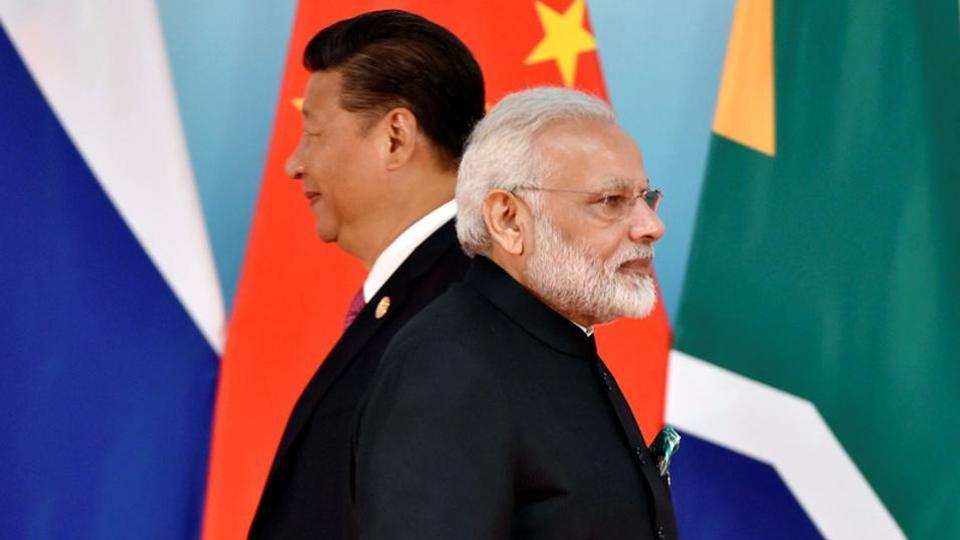
Both sides are holding firm and it is not possible to indicate at this time when the status quo ante will be restored, people familiar with the development told Hindustan Times on Thursday.
Yesterday, the Chinese foreign ministry had played down the tense standoff along the Line of Actual Control, insisting that the situation was stable and controllable and the two sides were in touch with each other at different levels.
The seemingly conciliatory approach articulated by the Chinese side has not reflected in the ground situation.
Three of the standoff points are located around Galwan valley and the fourth, near Pangong lake. The Chinese People’s Liberation Army had moved soldiers to close to these four standoff points that are seen to be an effort to stop India from upgrading its border infrastructure, particularly 60-metre long bridge across the Galwan rivulet or nallah and an observation post near the Pangong lake.
The Indian army has deployed reinforcements at the four standoff points without halting work on the border infrastructure work including the concrete Galwan bridge being built as part of a 255-km road to access Daulat Beg Oldie, the last military post south of the Karakoram Pass.
Also Watch | China’s muscle flexing explained and how India can tame the dragon l In Focus
“Nobody can question India’s right to build roads, bridges or airfields in its own territory. The infrastructure upgrade is continuing and will not be paused in eastern Ladakh,” an Indian official said.
Prime Minister Narendra Modi had reviewed the situation along the LAC at a high-level meeting this week.
National Security Adviser Ajit Doval, Foreign Minister S Jaishankar and Chief of Defence Services General Bipin Rawat are overseeing the Indian efforts at multiple levels. On their radar is also the activity on the western border with Islamabad after reports that the Pakistan army had moved troops in the neighbouring Gilgit Baltistan region that it illegally occupies.
The Indian army, which has matched the Chinese PLA in terms of manpower and resources at the standoff points, has prepped for a long haul and inducted more troops in the theatre. Another set of soldiers are undergoing the acclimatization process to give the soldiers posted at the standoff sites a break before returning.
Officials said China on the other hand, has also beefed up its defences in Aksai Chin area, both to handle ground and aerial adversaries.
It has upgraded its dual-use military and civil airfield at Ngari Günsa airport about 60 km from the LAC as part of this exercise where the PLA’s air force has been flying J 11 jets, widely considered to be China’s version of the Russian Sukhoi 27 fighters.
The other airfields in the vicinity of LAC are Yarkand 320 km from the LAC, Hotan is 240 km, Kashgar is 450 km while Korla is 600 km from the LAC.


