
 E-Paper



No ‘tukde tukde’ gang when I studied in JNU, says alumnus Jaishankar
On Sunday, Jaishankar had condemned the systematic targeting of students and teachers in the hostels of JNU, which were attacked by masked men and women armed with sticks and iron rods.


External affairs minister S Jaishankar on Monday defended his alma mater, Jawaharlal Nehru University (JNU), a day after its teachers and students were attacked by an armed mob, saying it was not home to any “tukde tukde gang”, at least when he was a student.
On Sunday, Jaishankar had condemned the systematic targeting of students and teachers in the hostels of JNU, which were attacked by masked men and women armed with sticks and iron rods.
The attackers assaulted students and caused widespread damage to the campus property for several hours.
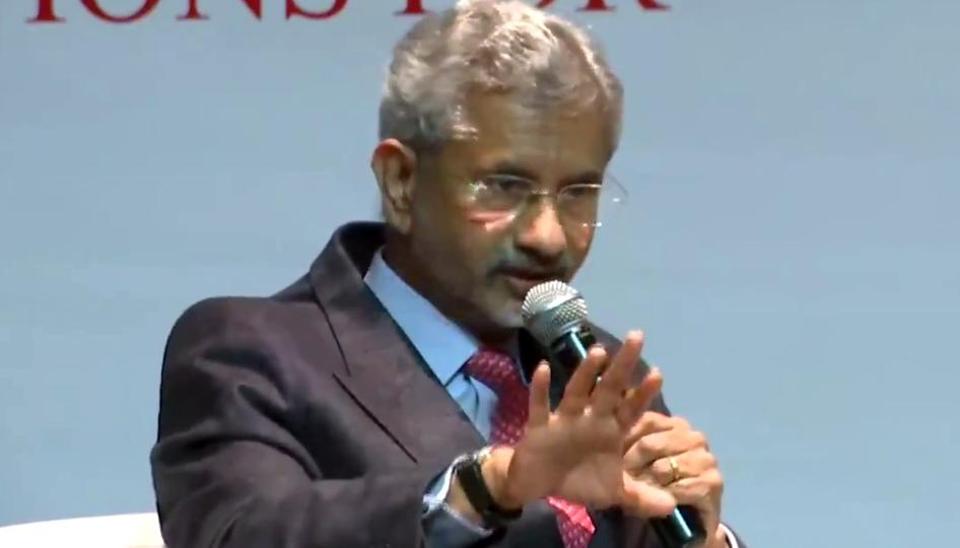
“I think what I have to say on JNU, I’ve said yesterday. It was very clear, and I can certainly tell you when I studied in JNU... we didn’t see any tukde tukde gang,” Jaishankar said during a question and answer session at an event where he released a book.
The minister, who studied at JNU in the 1970s, took to Twitter on Sunday to criticise the violence: “Have seen pictures of what is happening in #JNU. Condemn the violence unequivocally. This is completely against the tradition and culture of the university.”
“Tukde tukde gang” is a colloquial term used by detractors of the JNU against the university’s students while leveling accusations of them being linked to efforts to divide the country.
Jaishankar used the event to launch the book Pax Sinica, which analyses the implications of China’s rise, to criticise the former UPA government’s lack of “strategic clarity”, which allowed the “victim and perpetrator” of terrorism to be on the same plane at meetings between India and Pakistan at Havana in 2006 and Sharm-el-Sheikh in 2009.
This was seen by some as criticism of former foreign secretary Shivshankar Menon, who said last week India faces diplomatic isolation because of the NDA government’s action in Kashmir and a controversial citizenship law.
Menon was the foreign secretary during 2006-09.
Asked if the NDA government made the same mistake by allowing a Pakistani team to visit India as part of the probe into the 2016 Pathankot terror attack, Jaishankar said this was done to pressure Pakistan after it agreed to join the investigation.
“When Pathankot happened, even the Pakistanis accepted who was the perpetrator, (then premier) Nawaz Sharif didn’t deny it, there was an FIR actually filed against Pakistanis,” he said. “This government is very clear and consistent on who’s the victim and who’s the perpetrator,” he added.
Jaishankar said India should learn from China’s ability to tackle problems head on instead of brushing them under the carpet.
“We have accumulated a legacy of problems that have caught up with us,” he said, listing the citizenship issue that dated back 40 to 50 years, Article 370 of the Constitution that gave special status to Kashmir and was a “temporary” provision, and the Ayodhya issue and the delay in implementing GST.
“The big [lesson] out of china is unless a society has the mindset to decisively address its current issues, you’re not going to go up in the world,” he said.
India should also make greater efforts to shape and control the agenda with China, especially issues that affect the country’s “core concerns” and were often brushed under the carpet in the past, he added.


