
 E-Paper



Normalcy returning to Tripura as anti-CAB protests abate
The protests were sparked by fears that the new act, which grants citizenship to persecuted religious minorities from Pakistan, Bangladesh and Afghanistan who came to India seeking refugee before 2015, will lead to an influx of outsiders, resulting in the dilution of the character and the rights of the indigenous societies in the state.


After four days of protests against the Citizenship Amendment Bill, Tripura is gradually returning to normalcy with no reports of violence on Friday, said police.
The protests since December 9 had resulted in the death of a two-month-old, who could not reach the hospital on time as the ambulance carrying him got stuck in the protests, and injuries to three security personnel on Tuesday in a separate incident. The police said nobody had died in the violence so far.
Internet and SMS services also resumed on Friday after remaining suspended for 48 hours beginning December 10.
Violence was reported from a few places mostly in the Dhalai and the North district but the police said no incident of violence was reported from the South district and the Unakoti district.
Few shops in Gandacherra of Dhalai district were ransacked last evening following which the local market committee called for a 48-hours strike, said police. Section 144 was imposed in the area, which was “under control”, according to the police.
“Section 144 is currently imposed only in that area of the state,” said Additional Inspector General Subrata Chakraborty.
The 24-hour strike in the state called by the Youth Congress went off peacefully on Thursday barring a few stray incidents.
The protests were sparked by fears that the new act, which grants citizenship to persecuted religious minorities from Pakistan, Bangladesh and Afghanistan who came to India seeking refugee before 2015, will lead to an influx of outsiders, resulting in the dilution of the character and the rights of the indigenous societies in the state.
The legislation, however, is not applicable to the tribal areas of Assam, Meghalaya, Mizoram and Tripura that are included in the Sixth Schedule of the Constitution and in the areas covered under the Inner Line Permit regime, which is applicable in Arunachal Pradesh, Nagaland and Mizoram currently.
There have been large-scale protests in Assam, Tripura, Meghalaya and parts of Arunachal Pradesh in the last few days with thousands of people hitting the streets and defying prohibitory orders to demand scrapping of the contentious law.
Union minister of state for minority affairs Kiren Rijiju, who himself comes from Arunachal Pradesh, said some elements were fanning violence in the northeast and taking advantage of the situation, said PTI.
“All the areas of Meghalaya and Tripura are protected under this Act,” the Rijiju said in Delhi.
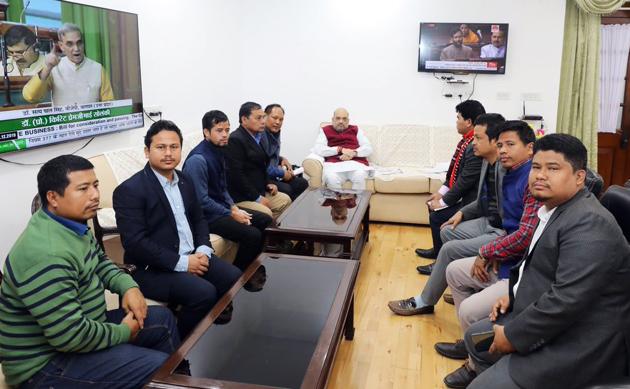
Home Minister Amit Shah had also met top leaders of three Tripura tribal-based parties on Thursday and discussed the new act.


