
 E-Paper



‘Not a fair comment’: Supreme Court rebukes Navjot Singh Sidhu, reserves order
Navjot Singh Sidhu’s legal team questioned the timing of the review pleas in the 1988 road rage case, saying the Supreme Court should be cautious in entertaining applications in the review petition as it was filed just before Punjab elections.


NEW DELHI: The Supreme Court on Friday told cricketer-turned-politician Navjot Singh Sidhu that it was not fair on his part to question the timing of the review pleas in the 1988 road rage case when he didn’t appear in the matter for four years since the notice was first issued on the review plea filed by victims in September 2018.
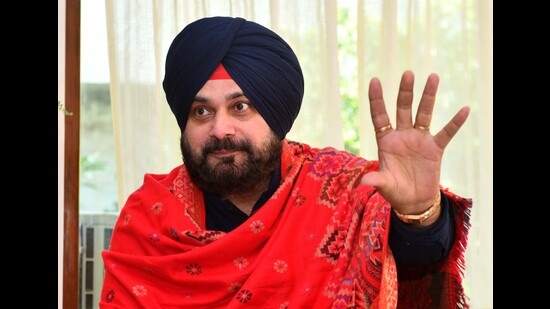
“This matter has nothing to do with elections. It is not a fair comment to make on your part when you don’t enter appearance despite notice being issued,” said a bench of justices AM Khanwilkar and Sanjay Kishan Kaul. The court reserved orders on a set of review petitions filed by the family members of a 65-year-old man who died in the road rage incident in Punjab and who demanded that Sidhu be tried for culpable homicide not amounting to murder.
The top court in May 2018 convicted Sidhu for causing hurt and let him off with a paltry fine of ₹1,000. However, on review of its order, the court decided on September 11, 2018, to revisit its verdict on the question of sentence to be awarded to Sidhu. After four years, when the matter was taken up in February this year, the victims demanded enlargement of the review plea for considering the guilt of Sidhu under a higher offence of culpable homicide, if not murder.
Navjot Singh Sidhu, who lost elections in the recently concluded Punjab Assembly elections from Amritsar East and had to quit as Punjab Congress chief following the party’s crushing defeat in the state polls, was represented by senior advocates Abhishek Manu Singhvi and R Basanth.
Singhvi said, “In criminal matters, court should be cautious in entertaining such applications (in review petition) as the timing was just before the elections in the state.” He further said, “It is a 34-year-old incident. Over the years, affairs of life are arranged for 34 years which is now sought to be unsettled.”
The bench rebutted him. “For four years (since the issuance of notice on review), you did not enter appearance. You are pressing a wrong point. We can infer much more from your conduct. We can’t deal with the matter based on this argument. Anything not touching on the process you may argue.”
Singhvi told the court that the fresh application by the family of the victim amounts to “review of review” which has not been permitted by the court in a catena of decisions. At the same time, he showed decisions of the court on the point where conviction under murder or a higher offence was set aside and punishment awarded under a lesser offence.
Basanth too argued that the review petition has to be restricted to the sentence to be awarded under section 323 of the Indian Penal Code (IPC) under which the top court has found the accused guilty and not go beyond it. The notice on review plea restricted the scope of consideration to the quantum of sentence only, he added. Under Section 323, tḥe maximum punishment that can be awarded is a one-year prison term or ₹1,000 fine or both.
On the other issue whether culpable homicide punishable under section 299 was made out, Basanth said that the top court acquitted Sidhu as there was no evidence to show that the single fist blow inflicted by Sidhu and not cardiac arrest resulted in the man’s death.
The incident occurred in December 1988 when the victim Gurnam Singh sought the right of way for his car as the Maruti Gypsy carrying Sidhu and his friend was blocking the road. In the fight that ensued, the two hit Singh and escaped.
Later, the victim was taken to the hospital where he died. The trial court acquitted Sidhu in September 1999 but the order was reversed by the Punjab and Haryana high court which found him guilty of culpable homicide not amounting to murder and sentenced him to three years imprisonment.
The bench, before reserving its orders, said, “What is to be seen is not whether the accused caused death but whether the injury inflicted resulted in death.”
Appearing for the victims, senior advocate Sidharth Luthra said that the top court’s judgment under review failed to consider that once it is proved that the fist blow inflicted to the deceased was fatal, the intention of the accused becomes irrelevant.
Singhvi summed up his arguments by suggesting that this case was an extraordinary case in the negative sense as it has the potential of being “subversive of the basic foundation of criminal justice process” and was an abuse of the process of court.
The bench allowed a week’s time for the parties in the matter to file any additional written submissions and said, “This kind of a battle is not unknown in Punjab….We have given more time than necessary for this matter. It has to end someday.”


