
Sign in

Not all private properties can be acquired by govt under Article 39(b): Supreme Court

Private resources may fall under the definition of material resource under Article 39(b) depending on the nature of the resource being ‘material’, it added.

Updated on: Nov 5, 2024, 12:59:12 IST
Share
Share via
  • facebook
  • twitter
  • linkedin
  • whatsapp
Copy link
  • copy link

The Supreme Court's nine-judge Constitution bench on Tuesday ruled that not every privately owned property of citizens can be acquired by the government under Article 39(b) of the Constitution to serve the common good.
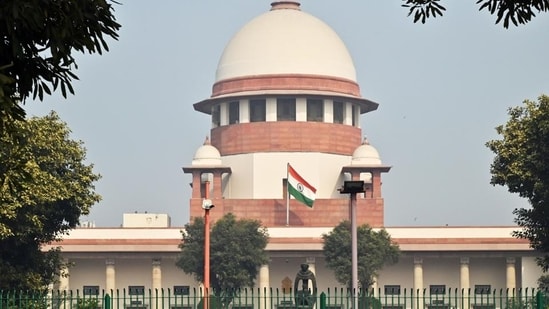
The Supreme Court of India (ANI)

The bench, headed by Chief Justice of India DY Chandrachud, however, said states can stake claim over private properties in certain cases.

The majority verdict pronounced by the CJI overruled Justice Krishna Iyer's previous ruling that all privately owned resources can be acquired by the State for distribution under Article 39(b) of the Constitution.

Private resources may fall under the definition of material resource under Article 39(b) depending on the nature of the resource being ‘material’ and the impact of the resource on the community, the court said.

The court also held that laws passed furthering the objective of Article 39(b) will enjoy constitutional immunity under Article 31 (C) of the Constitution.

The majority ruling was given by CJI DY Chandrachud, justices Hrishikesh Roy, JB Pardiwala, Manoj Misra, Rajesh Bindal, SC Sharma and Augustine George Masih.

The CJI wrote for himself and six other judges on the bench which decided the vexed legal question of whether private properties can be considered "material resources of the community" under Article 39(b) and taken over by State authorities for distribution to subserve the "common good".

It overturned several verdicts that had adopted the socialist theme and ruled that states could take over all private properties for the common good.

Justice BV Nagarathna partially disagreed with the majority judgement penned by the CJI, while Justice Sudhanshu Dhulia dissented on all aspects.

With inputs from Abraham Thomas, PTI

  • HT News Desk
    ABOUT THE AUTHOR
    HT News Desk

    Follow the latest breaking news, major developments and agenda-setting stories from India and around the world with the newsdesk at Hindustan Times. Operating round the clock, the desk brings together experienced editors, reporters and correspondents to deliver fast, accurate and contextual reporting across subjects that influence public policy, governance, business, society and international affairs. The HT News Desk covers politics, elections, government policies, the economy, business and markets, science and technology, the environment, law and order, infrastructure, education, climate issues and geopolitics, while closely tracking developments across states, institutions and global capitals. The team also leads coverage of major breaking news events, policy announcements, court proceedings, natural disasters, public emergencies and significant international developments. Reports published by the newsdesk are based on information gathered from reporters on the ground, official statements, government agencies, court records, regulatory filings, recognised institutions and other authoritative sources. Stories undergo editorial scrutiny and verification processes to ensure accuracy, fairness and relevance, and are updated as events evolve and additional information becomes available. Whether covering a key political decision in New Delhi, an economic policy shift affecting millions, a landmark court ruling or a major global event, the HT News Desk aims to provide readers with reliable, fact-based journalism that delivers not only the latest developments but also the context and analysis needed to understand their wider implications.Read More

Follow India news real-time updates and the latest news covered on Hindustan Times, featuring today's critical updates on Sonam Wangchuk LIVE and more across India.