
 E-Paper



‘Not revadis’: Nadda hails Modi’s policies
Amid the ongoing row over political freebies, Bharatiya Janata Party (BJP) president J P Nadda on Tuesday said Prime Minister Narendra Modi’s policies were aimed at empowering people and communities and not distributing revdis (freebies)


Amid the ongoing row over political freebies, Bharatiya Janata Party (BJP) president J P Nadda on Tuesday said Prime Minister Narendra Modi’s policies were aimed at empowering people and communities and not distributing revdis (freebies).
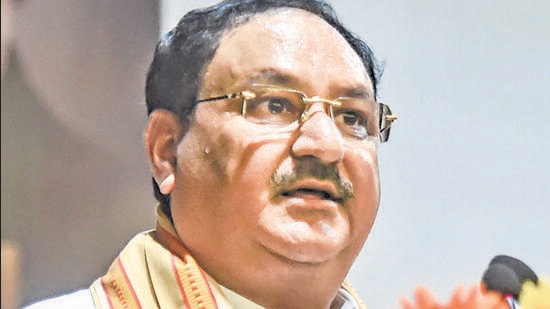
Speaking at an event organised by the Delhi BJP to celebrate the book, ‘Modi@20:Dreams meet delivery’, Nadda said PM Modi has delivered on his promises and brought about a paradigm shift in governance and the way people look at politics.
It is important to understand the PM’s policy-making process, the BJP chief said.
“He is involved in the entire process. He has always spoken about empowerment of villages, poor people, the deprived, women, Dalits and youth. This is why, policy and programmes have been planned with some philosophy and understanding. The policies that will help society and empower people. Revadiya baatna nahi, par sach mein empowerment karna (Not distributing freebies, but truly empowering). This has been his goal,” said Nadda.
The BJP president listed out schemes such Ujjwala, Beti bachao, Beti padhao, monitoring of health indicators such as Infant mortality Rate and Maternal Mortality Rate etc and said that efforts are made to ensure that people can benefit from these programmes.
In his 40-minute long address, Nadda said that Modi is a leader with “conviction, capacity and someone who has brought about a paradigm shift in the way we look at politics” while citing the example of the surgical strikes carried out in Pakistan in 2016.
Referring to the abrogation of article 370 from the erstwhile state of Jammu and Kashmir (J&K) , Nadda said that it was PM Modi who made it possible.
Nadda said that Modi’s working style has five pillars: people first; inclusive economy; the world is one family and politics of unity; and development.
“People are at the centre of his policies. He believes in the politics of unity and development. Under his leadership, the informal economy has been brought under the formal economy…. In 2014, 2.75 crore people had bank accounts, but today, 45 crore people have bank accounts. Today, poor people get benefits directly in their accounts,” said Nadda.
NEED OPPN REAX


