E-Paper



Number Theory: Climate crisis, energy, and the rise of air conditioners
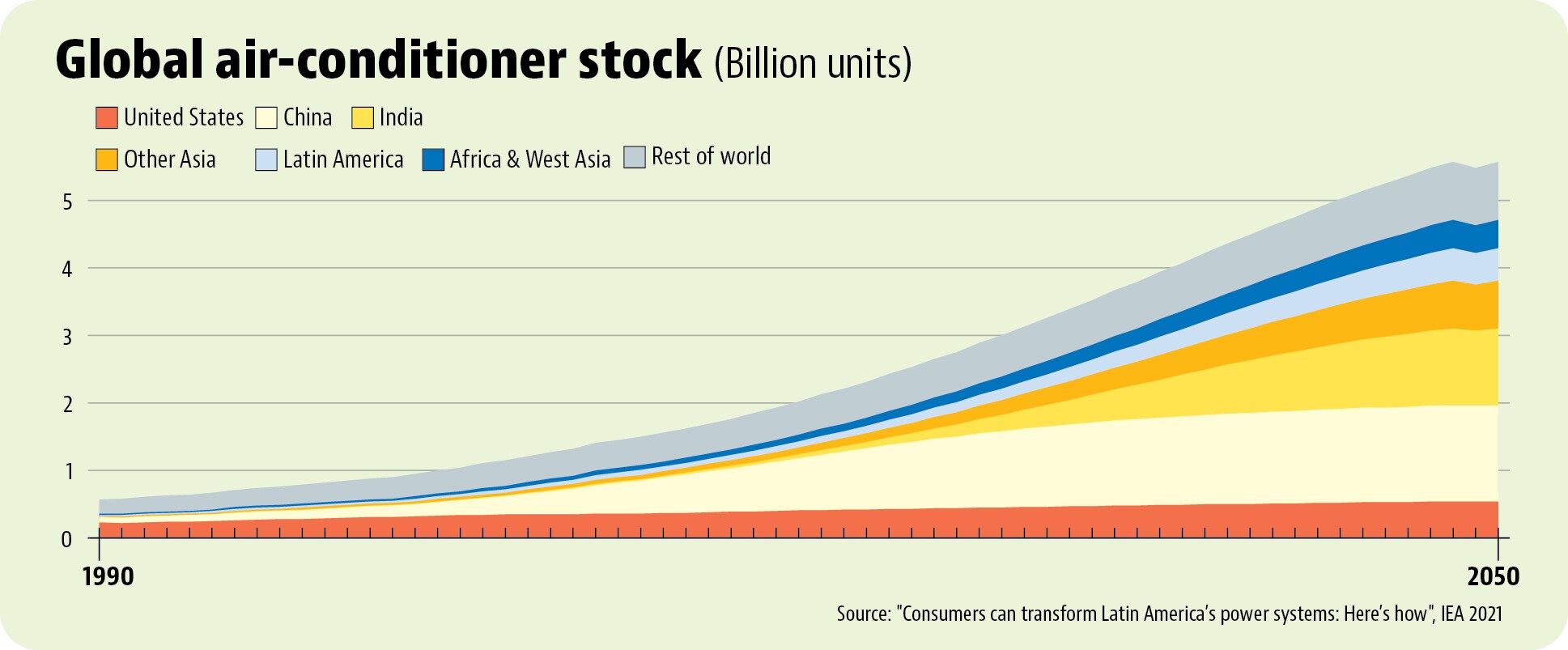
The 2021 IEA data on AC ownership shows that absolute number of AC units in India will increase from around 60 million in 2021 to 1.14 billion by 2050

 Prefer HTon Google


The Narendra Modi government has defined the period between 2022 and 2047 -- India’s 75th and 100th years of Independence – as Amrit Kaal. The government has set itself a goal of making India a developed country by that end of that period. The government has also said that India will become the third largest economy in the world sometime between 2024 and 2029. Most economic projections suggest that this is not a wrong claim to make.

Most credible forecasters do not make GDP projections for more than a few years. IMF’s current forecasts end in 2028. However, the latest World Energy Outlook (WEO) Report by the International Energy Agency projects a massive growth in one area for the Indian economy. “Household air conditioner (AC) ownership is estimated to expand ninefold by 2050 across the IEA scenarios, outpacing the growth in ownership of every other major household appliance including televisions, refrigerators and washing machines”, the report says. What does this mean for India? Here are four charts which try and answer this question.
 India’s global share of AC ownership will increase from 3% to 20.4% between 2021 and 20502021 IEA data on AC ownership shows that absolute number of AC units in India will increase from around 60 million in 2021 to 1.14 billion by 2050. The number of AC units in the world are expected to increase from 2 billion to 5.57 billion during this period. While China will continue to be the country with the highest number of ACs in the world between 2021 and 2050, India’s share in number of ACs in the world will increase from 2.97% in 2021 to 20.4% by 2050.
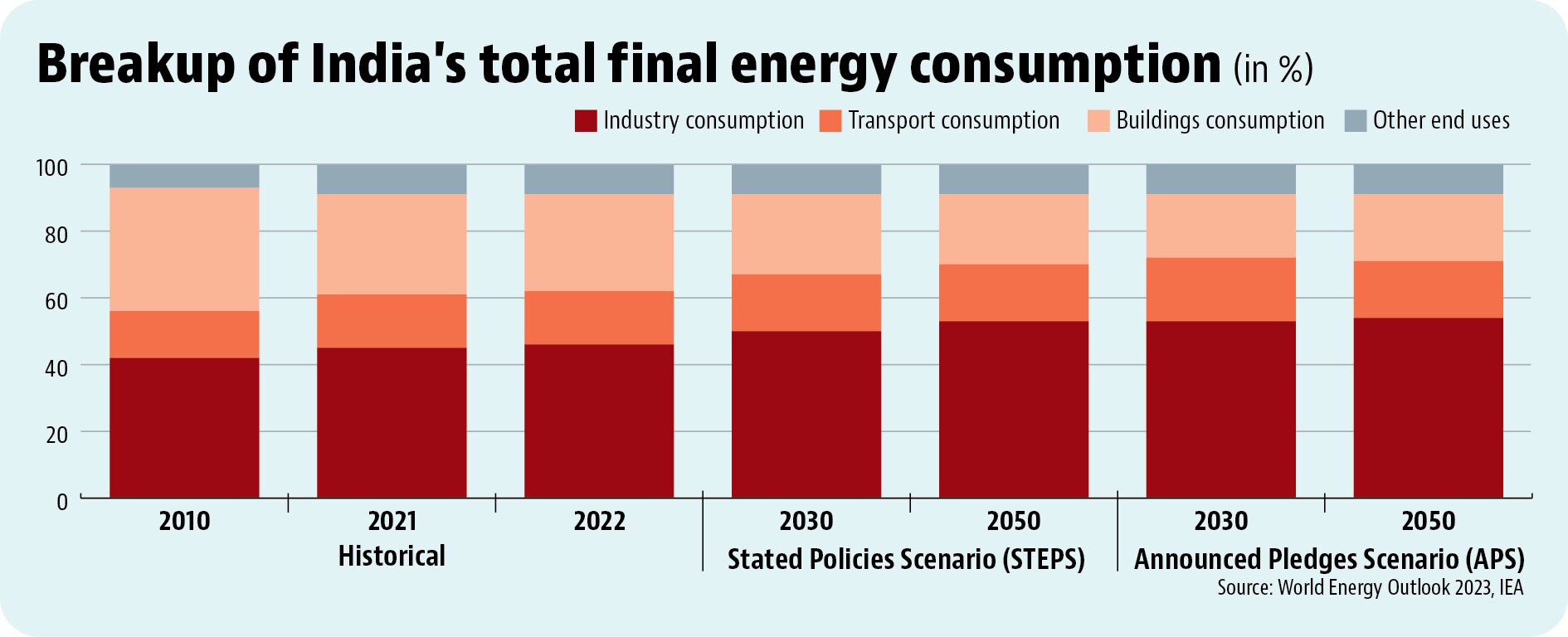
- While absolute energy demand for cooling will rise in India, its overall share might notData from the IEA shows that residential consumption has been one of the key drivers of rise in electricity consumption in India, a close second to industrial consumption. Given the fact that ACs consume much more electricity than most household appliances and their ownership has increased sharply in recent years, they are likely to have played a role in the residential consumption of electricity. Even if one includes the fuel burnt for different end uses, buildings have the second biggest share after industry in the current total final consumption (TFC) of energy in India. What the WEO report clarifies is that the share of buildings in TFC is declining in India: from 37% in 2010 to 29% in 2022. If India goes through with its currently stated policies, this share will decrease further to 24% by 2030 and 21% by 2050. However, this is in part because the energy consumption of other sectors is expected to grow at a faster rate. In absolute terms, energy consumption of buildings is estimated to increase from 9 exajoules (EJ) to 12 EJ in 2050 under stated policies.
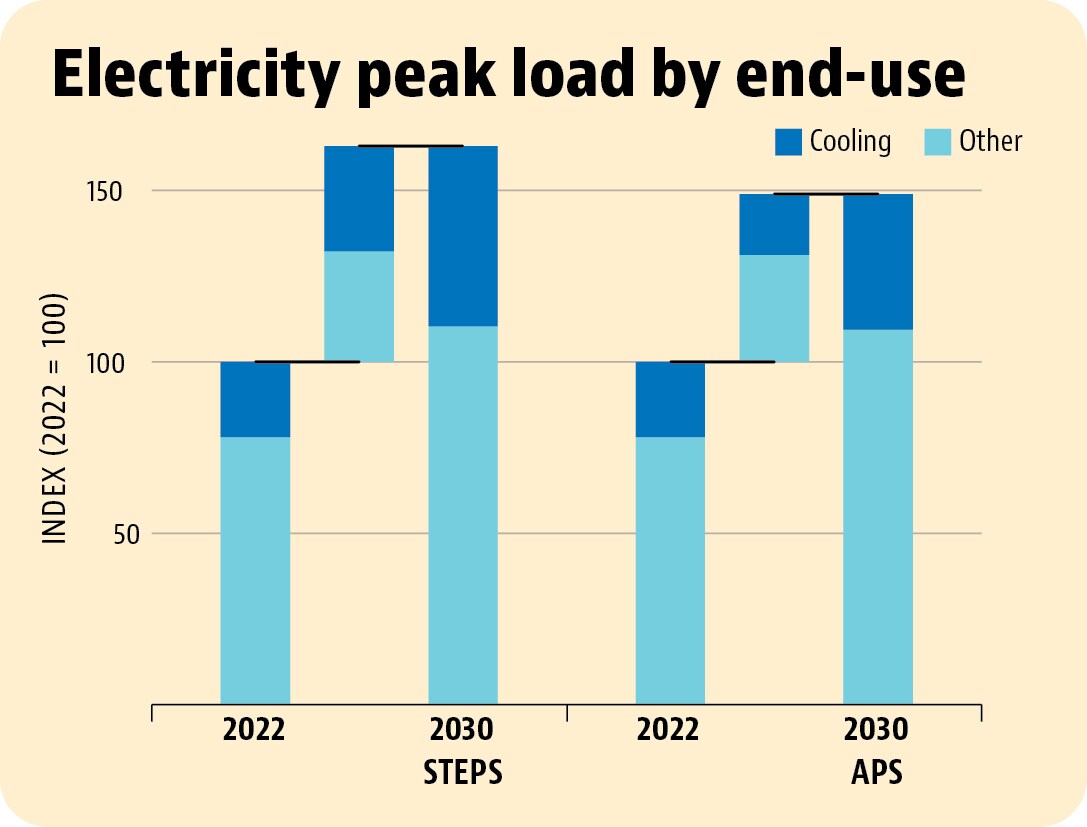
- India’s problem with rising AC ownership lies in meeting peak electricity demandAC ownership and buildings may not be the main drivers of India’s total energy demand in the future, but they still pose a difficult problem for country’s energy transition. This is because ACs are the main driver of peak electricity demand. “In the STEPS (Stated Policies Scenario), peak electricity demand rises around 60% from the 2022 level by 2030 and cooling accounts for nearly half of this increase,” the WEO report says. HT also reported earlier this year that peak demand is rising faster than overall electricity demand in India. This is a problem because renewable sources are not always available when demand peaks. This means investment in standby generation capacity or batteries. The WEO report suggests more cost-effective options, such as producing energy-efficient ACs and thermally insulating buildings. “Lowering cooling demand through energy efficiency policies therefore reduces the need for investment in batteries or expensive standby generation capacity, and thus helps to integrate renewables more cost effectively.”
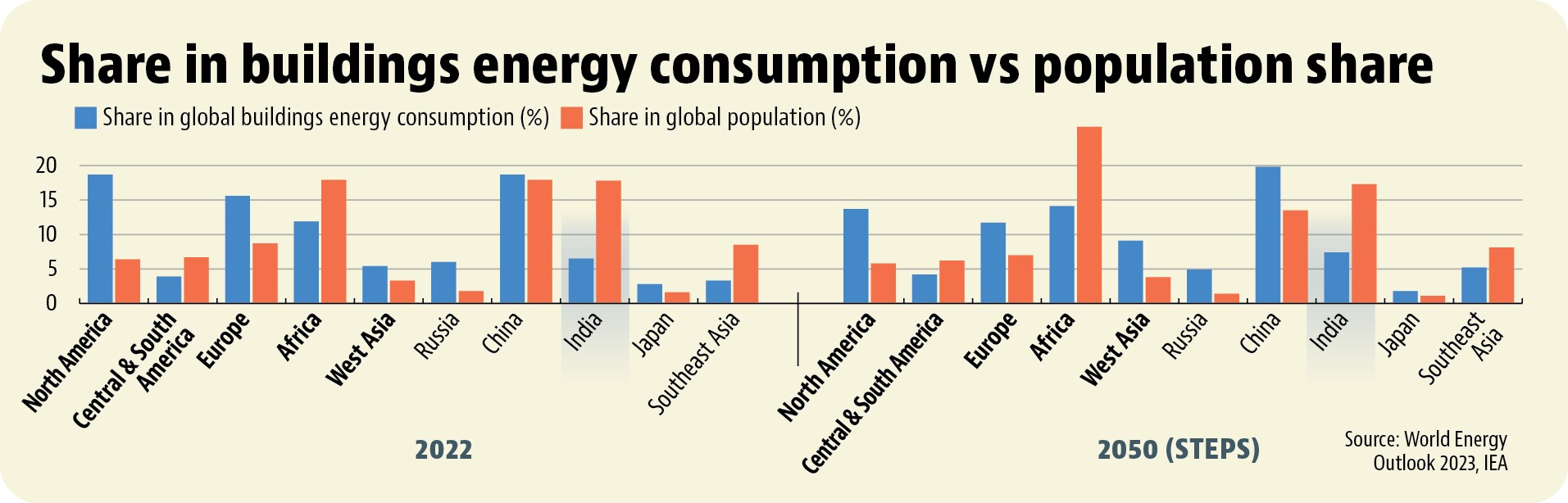
- But developed countries are likely to remain much bigger users of energy for buildingsIndia is not the only country outside the developed world which will see an increase in energy consumption on account of cooling needs. As incomes rise in warmer countries, more and more poor people will use air-conditioning to survive in a planet which is becoming warmer. However, this is unlikely to change the fact that developed world will continue to use much more energy for building use (primarily heating). Building’s contribution in world’s total energy consumption is estimated to remain relatively stagnant under stated policies: 29.7% in 2050 compared to 30% in 2022. This is because the share of buildings in total consumption is estimated to be relatively stagnant in the developed world: from 31.3% in 2022 to 30% in 2050 in North America for instance. The developed world will also continue to have a disproportionate share in world’s total energy consumption for buildings. For example, Europe and North America will have a share of 25% in global buildings consumption of energy in 2050 under stated policies. While this is much less than their current share (34%), it is still double the projected 12% share in world population in 2050.