E-Paper



Number Theory: How the electorate has changed over the years
This is the first of a two-part data journalism series on voters in 2024 general elections. The 2nd part will look at the economic status of first-time voters.
Published on: Apr 17, 2024, 10:13:17 IST


Share via


Copy link

There are 969 million voters on the electoral rolls for the 2024 general elections in India. To be sure, this number could change marginally because the electoral rolls continue to be updated till the last date of filing of nominations in a constituency. The number of voters in 2024 elections is 6.25% more than the 912 million number for the 2019 elections.

Apart from these headline figures, what do we know about characteristics of almost a billion voters who will participate in the 2024 elections? How different is India’s pool of voters for the 2024 elections compared to past elections? How many of them are first-time voters?
How the electorate has changed over the years
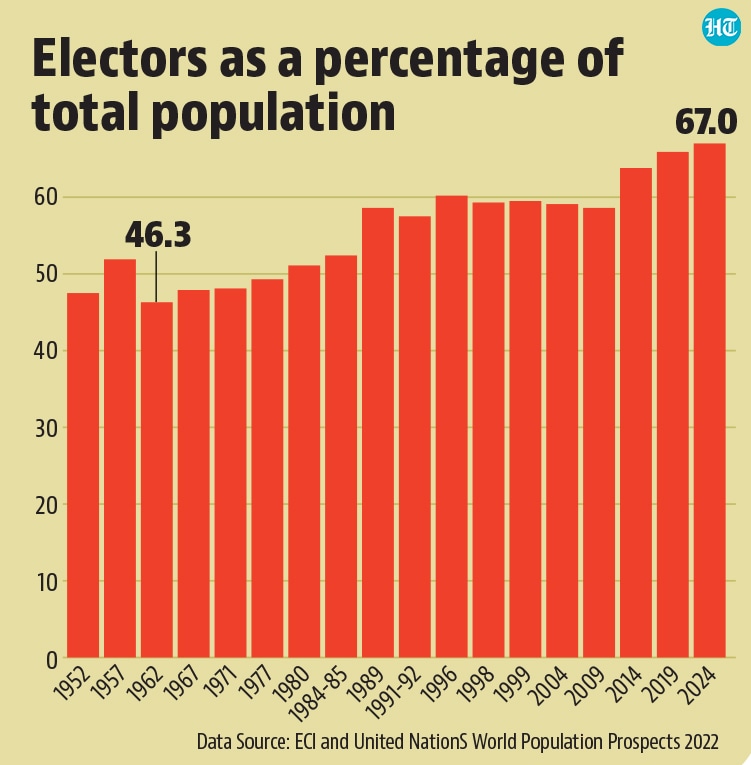
 The share of voters in total population will be the highest in 2024Not everybody who lives in a country is eligible or registered to vote. The former is a much more important criterion because of an age limit for voters. According to United Nations World Population Prospects published in 2022, India’s population is expected to be 1.44 billion on July 1, 2024. This means that the share of voters in total population is 67%. HT has compared the share of voters in total population in all Lok Sabha elections and the data shows that this number is the highest for 2024 elections. To be sure, this share increased significantly in the 1989 elections when Rajeev Gandhi brought down the minimum voting age from 21 to 18 years. However, the recent increase in this number is a reflection of the fact that the share of people who are less than 18-year-old has been falling in India’s total population.
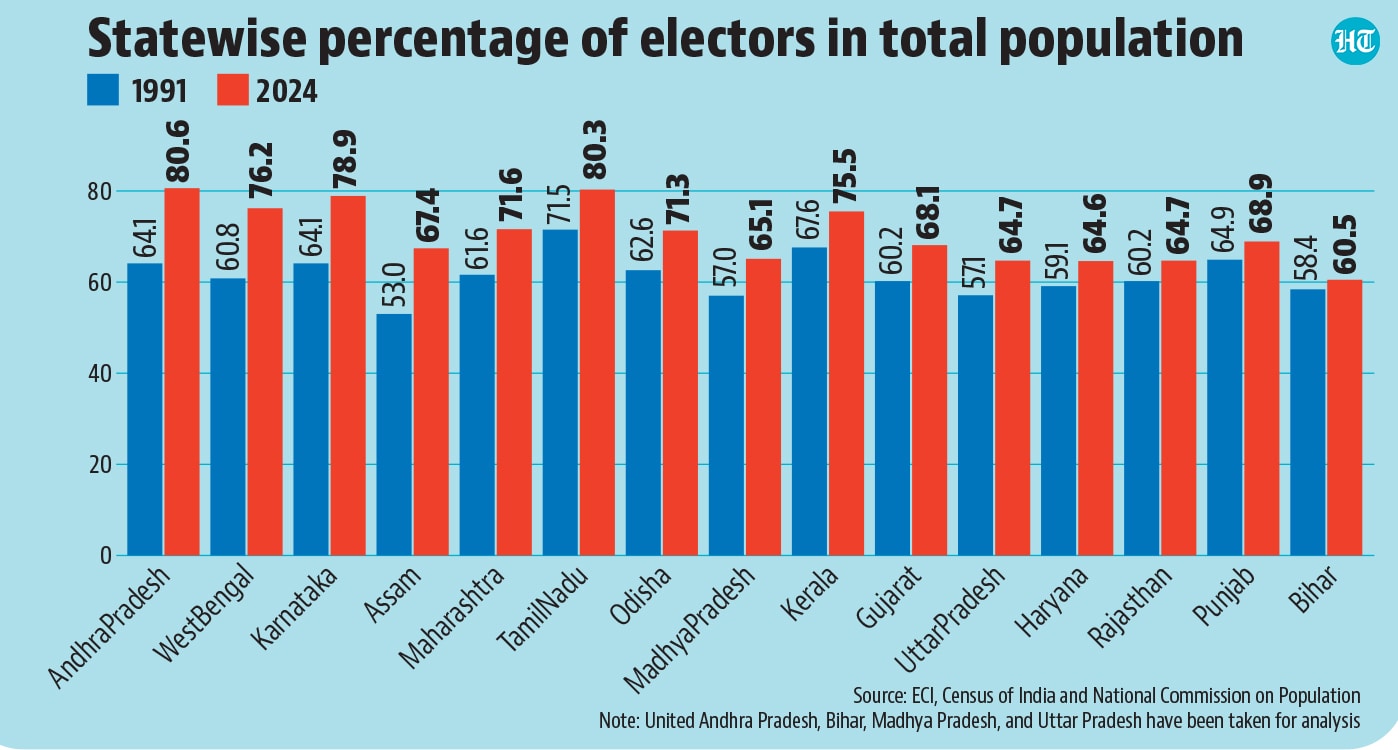
- The voter-population ratio varies across statesBecause of the difference in demographic profile of states, the voter-population ratio shows large interstate variation. How has this changed over time? A comparison of voter-population ratio in states with at least 10 Lok Sabha seats between 1991 and 2024 elections shows that this number has increased across almost all states, but in differing magnitude. Undivided Andhra Pradesh has witnessed maximum increase of 16.5 percentage points followed by West Bengal and Karnataka where percentage points increase is 15.4 and 14.7 respectively. Bihar has seen lowest increase at 2.1 percentage points followed by Punjab (3.9 percentage points) and Rajasthan (4.5 percentage points).
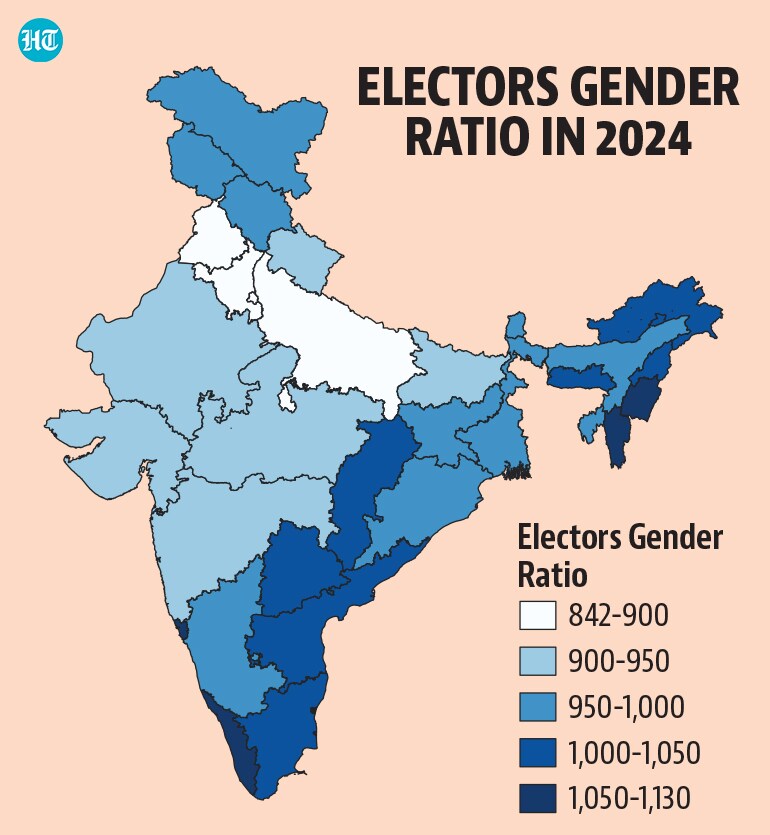
- 2024 elections will see the lowest gender imbalance in the electorateA comparison of electors gender ratio (EGR) shows this clearly. EGR is defined as the number of registered female electors per 1,000 male electors. Electors gender ratio is available from ECI from 1971 onwards. The elector gender ratio for 2024 is 948, which is the highest since 1971. It was 926 in 2019. To be sure, EGR shows significant variation across states. There are 12 states/UTs with an EGR greater than or equal to 1,000. These include Nagaland, Telangana, Chhattisgarh, Meghalaya, Arunachal Pradesh, Tamil Nadu, Andhra Pradesh, Goa, Mizoram, Kerala, Manipur, and Puducherry. Among the major states, Uttar Pradesh, Haryana, Punjab, and Bihar have the lowest EGR at 877, 883, 900 and 909 respectively. A comparison from 2019 elections shows that EGR has increased in every state between 2019 and 2024.
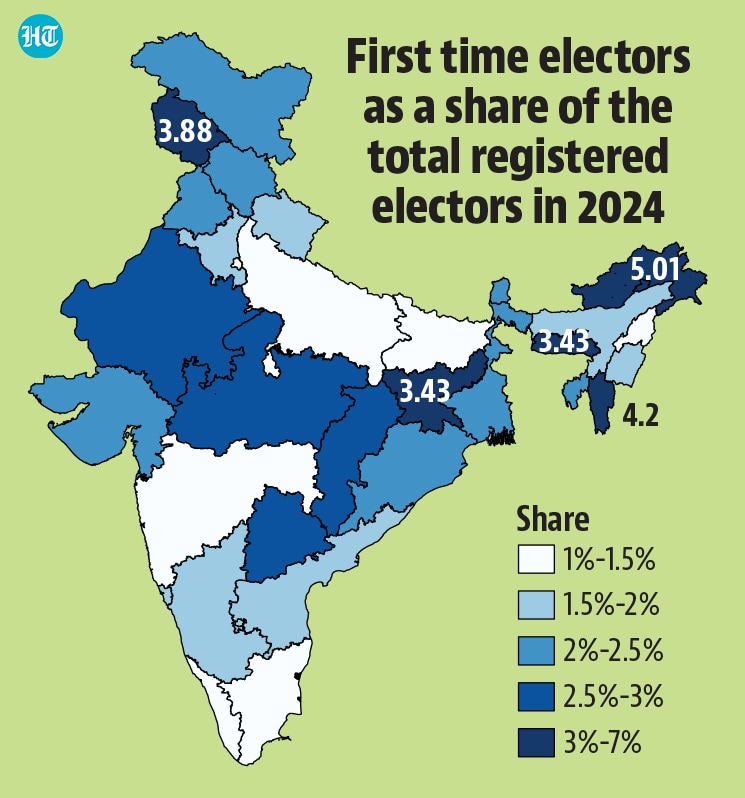
- Share of first-time voters in 2024 is higher than what it was in 2019, but it is not the highestThe share of the first-time voters in registered voters is 1.9% in 2024. As per ECI data, 18.2 million first time voters have been registered so far for the 2024 elections. In 2019, this number was 15.1 million – 1.71% of the total 912 million voters in 2019. However, this number has been higher in the past and was 2.75% in 2014. As is expected, it varies across the states. The percentage of the first-time voters is the highest in Jharkhand at 3% followed by Rajasthan and Madhya Pradesh at 2.9% and 2.8% respectively amongst states with at least 10 PCs. This number is lowest for Kerala and Maharashtra at 1.1% each. What do we know about these first-time voters? This is the question the second part of this series will try and answer.