E-Paper



Number Theory: Political and social battles that women in India fight
Women are still forced to shoulder a disproportionate share of household responsibilities. This unfair burden doesn't disappear with education or rise in income
Published on: Mar 8, 2024, 09:01:02 IST


Share via


Copy link

The 114th International Women’s Day will be celebrated in India with the 2024 general elections just about a month away. What role have women played in Indian politics, both as leaders and voters? Have things changed on this front in the recent past? An HT analysis of various data points shows that women have overcome their entrenched disadvantages in India’s demographics and economy to play a game-changing role in politics. However, it remains to be seen whether they can win this battle at home. Here are four charts which explain this in detail.
Political and social battles that women in India fight
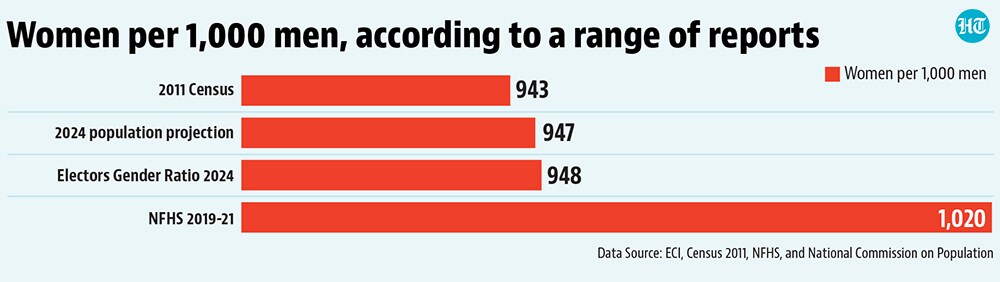
 Women are outnumbered in the overall population, voters and elected representativesAccording to the 2011 census, there were 943 women per thousand men in India. While there has not been a census in India after 2011, and some survey estimates do suggest that the gender ratio has improved – the 2019-21 National Family and Health Survey (NFHS) claims that it is 1020 – official data released by the Election Commission of India (ECI) shows that men outnumber women among voters for the 2024 general elections. When it comes to gender gap in political representation in India, things are much worse than the gap in terms of population. India ranked 145 among 193 countries in terms of the number of women in the parliament according to the latest global data on national parliament of Inter-Parliamentary-Union.
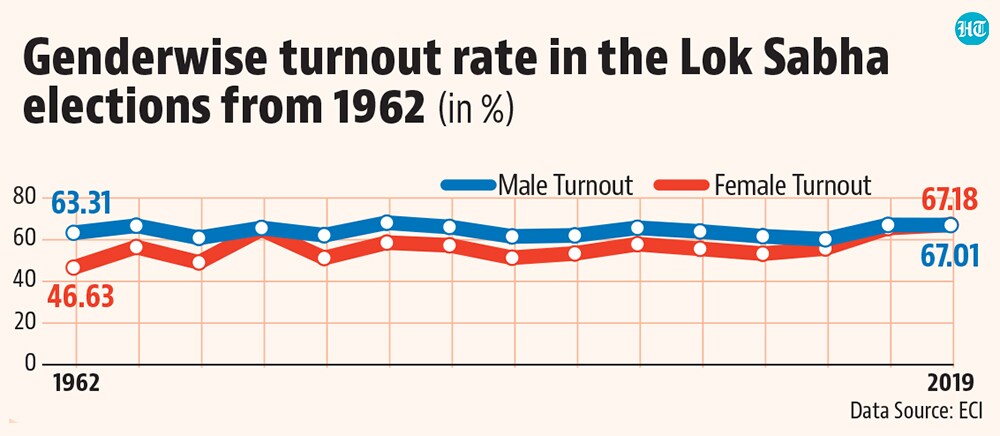
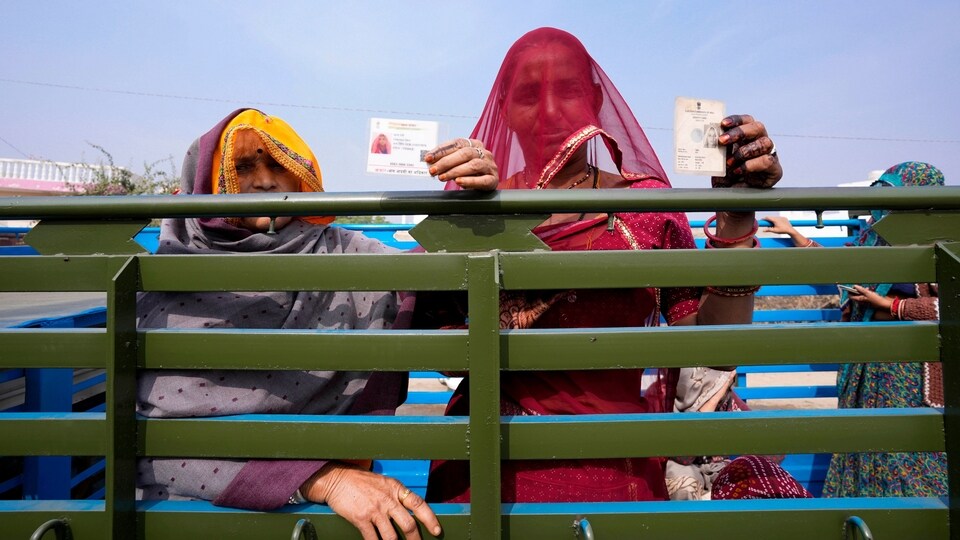
- But Indian women have been trying to close the gap in grassroots political participationThe data is unambiguous on this. ECI’s published statistics on gender-wise voter turnout are available from 1962 onwards. Barring the exception of the 1977 elections which were held in the aftermath of the emergency and saw an almost equal turnout of men and women voters, the gender gap in voter turnout – difference in share of turnout among men and women voters – has been continuously falling in India. The 2019 general elections were the first in the country when voter turnout for women exceeded that of men in the country.
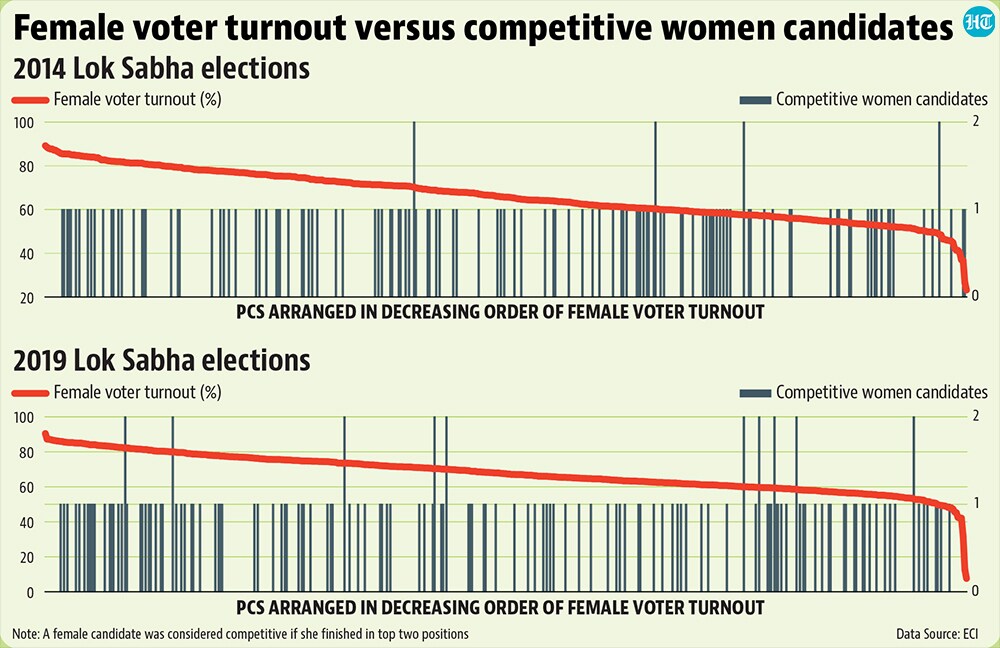
- Turnout of women voters is gender agnostic when it comes to the constituency levelThis is another interesting insight one can draw from parliamentary constituency (PC) level gender-wise voter turnout data. ECI has published this data for the 2014 and 2019 general elections. It shows that the turnout of women voters at the PC level is agnostic of there being a women candidate in the fray. HT has checked this result by looking at the relation between turnout of women voters at the PC level with whether or not a woman candidate finished in the top two positions.
- Rising turnout of women voters has forced male dominated political parties to take noteThis is now a well-established fact when it comes to electoral politics in India. No serious political party -- an overwhelming majority of them are controlled by men -- can afford to go to elections without appealing to the women voter. Parties have taken different routes to achieve this goal, from promises of imposing prohibition such as by Nitish Kumar in Bihar to targeted cash transfers by Mamata Banerjee in West Bengal, targeted entitlements such as free bus travel for women in Karnataka and Delhi, and, of-course, large-scale asset transfers such as toilets, LPG cylinders, tap water etc. all unleashed by the BJP under Narendra Modi. This is a trend which is only likely to get stronger including in the 2024 general elections.
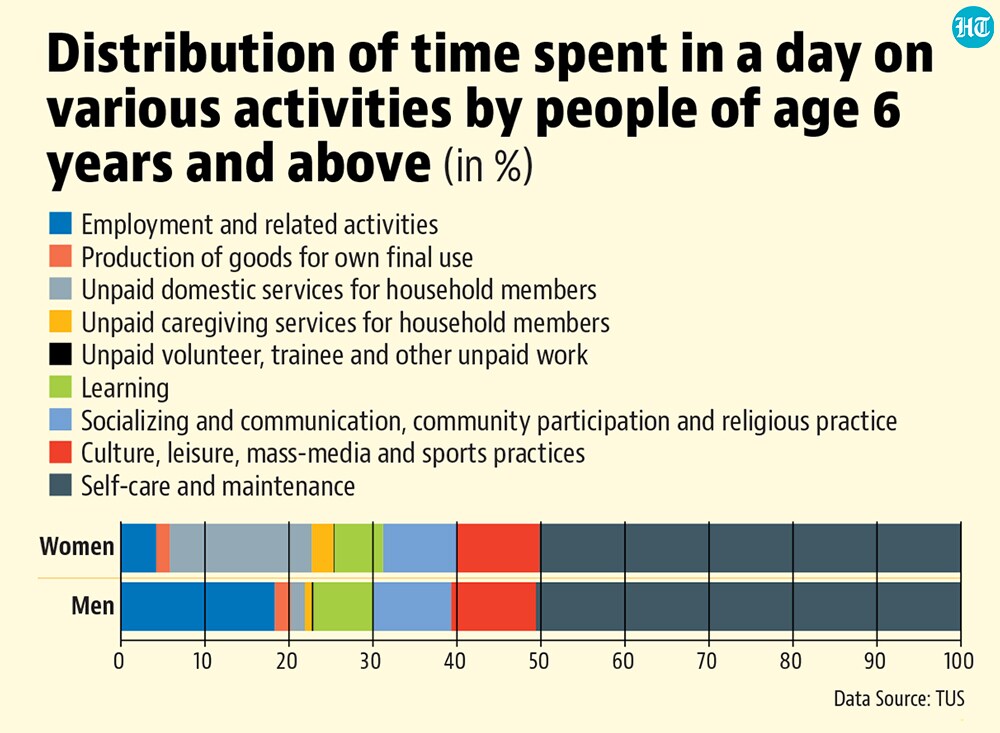
- Another government survey shows that women are still struggling to change attitudes of men at homeThe 2019 Time Use Survey (TUS) conducted by the National Statistical Office (NSO) shows this clearly. Women are still forced to shoulder a disproportionate share of household and care giving responsibilities and this unfair burden does not disappear with rise in education or incomes. The costs which this unfair burden imposes on women’s well-being, their upward mobility and productivity in the overall economy is immense. Can Indian women win this battle at home? It is a question which might not matter for the next set of elections, but will definitely play a crucial role in shaping India’s future.