E-Paper



Number Theory: Three charts that explain the farmers' demand for MSP guarantees
A mindless expansion of MSP operations without a critical look at their existing structure can do more bad than good.
Published on: Feb 13, 2024, 19:51:42 IST

 Prefer HTon Google
Share via


Copy link

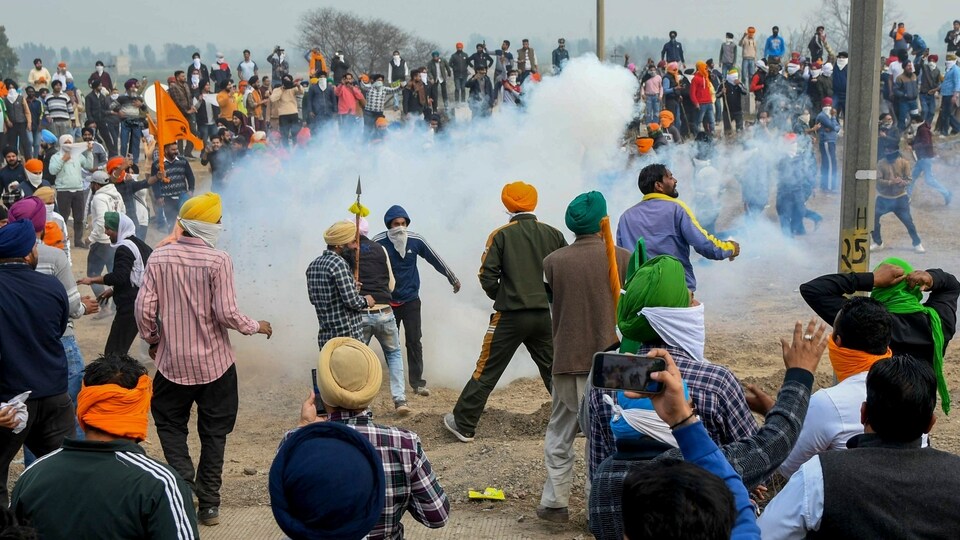
Farmers from Punjab have resumed their protests and are trying to come to the national capital just about a month before the 2024 Lok Sabha elections are announced. Guaranteed minimum support prices (MSP) are among the key demands being raised by the protesting farmers. Are the farmers justified in making this demand? Here are three charts which try and answer this question.
Failure to get remunerative prices is a problem in Indian agriculture
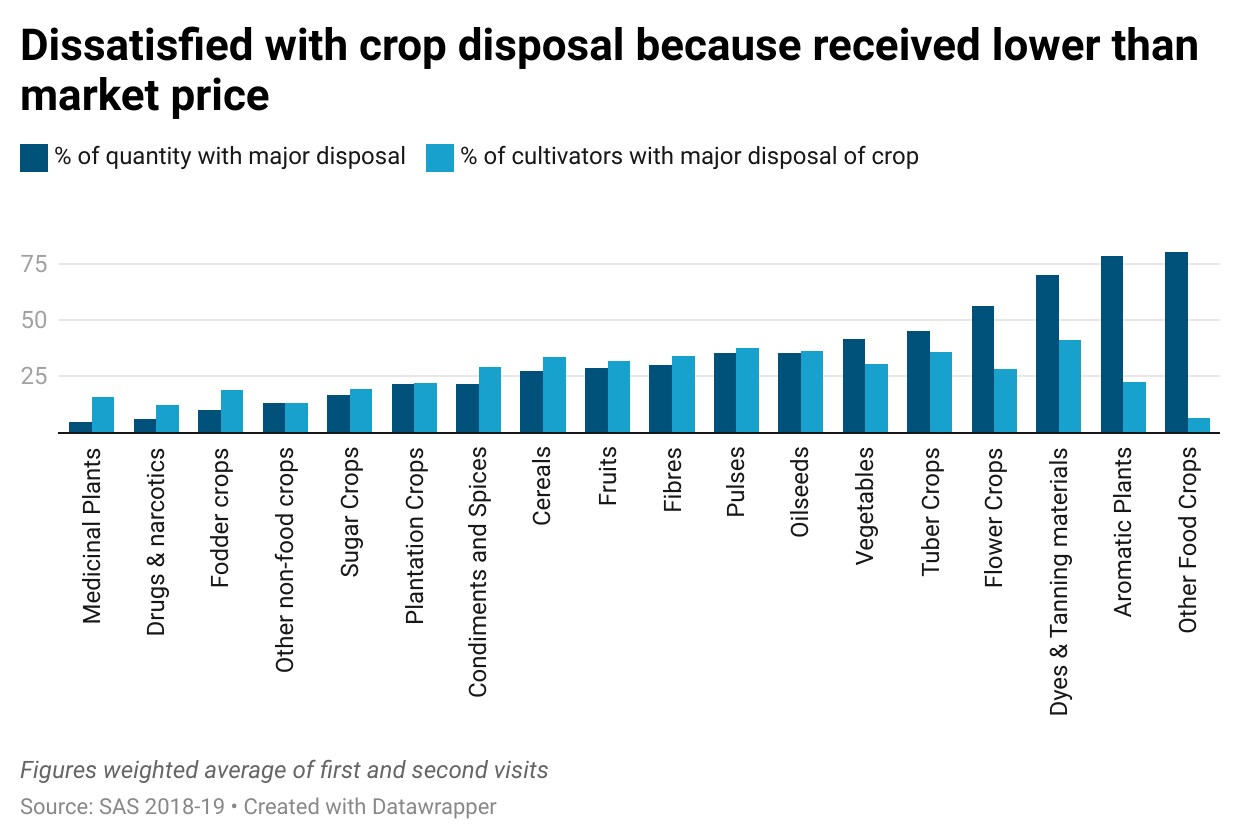
 Failure to get remunerative prices is a problem in Indian agricultureThere is official data to support this statement. In 2021, the National Sample Survey Office (NSSO) released the Situation Assessment of Agricultural Households and Land and Livestock Holdings of Households in Rural India (SAS) conducted in 2018-19. This is the most authoritative source of statistical information on the economic conditions of Indian farms and farmers. SAS data shows that every third Indian farmer was dissatisfied with the prices they received for their output in the market. In terms of quantity, farmers were dissatisfied with a quarter of the disposal of their crop. The dissatisfaction level was much bigger among those who grow crops such as fruits, vegetables (in terms of quantity sold at a dissatisfactory price), pulses (in terms of both dissatisfied households and quantity sold at a dissatisfactory price) or oilseeds (in terms of dissatisfied households). To be sure, the SAS only collects this data for those agricultural households that sold their crop in the season. Agricultural households are defined as households that have at least one member self-employed in agriculture and produced output from specified agricultural activities worth at least ₹4,000 in the previous 365 days. Because data on sale satisfaction is collected for individual crops, households growing more than one crop were counted as many times as the number of crops they grew.
- Crops covered by MSP account for about one-fourth of total value of agricultural production in IndiaWhile the government announces MSPs for 22 crops for the two cropping seasons, large-scale procurement is limited to only paddy (rice) and wheat. Data from the Centre for Monitoring Indian Economy (CMIE) shows that the share of procurement in total rice and wheat production has been increasing over time. However, the share of these two crops, as far as the overall value of crop production in the country is concerned, is less than one-fourth. As can be seen in the first chart, cereals – rice and wheat accounted for 23.6% of total cereal output value in 2021-22 -- show lower price dissatisfaction levels due to the cushion they enjoy from MSP operations. To be sure, any meaningful expansion of MSP operations is bound to lead to a significant increase in the Centre’s food subsidy bill which is already one of the biggest spending heads in the union budget at the moment.
- But the ongoing MSP operations are not without their flawsThis is the critical aspect which farmers’ organisations do want to talk about. While there is no denying the fact that large parts of Indian agriculture are facing a viability crisis and a lot of it has to do with not getting remunerative prices for crops, a mindless expansion of MSP operations without a critical look at their existing structure can do more bad than good. The nature of MSP procurements, as it takes place today, is heavily biased in favour of a few states, with Punjab being among the biggest beneficiaries. In fact, SAS data also shows that procurement operations are heavily biased towards farmers with bigger holdings. Both of these introduce a regressive bias in the ongoing MSP operations.
- ...and MSP might be hurting Punjab’s farmers rather than helping themThis is the biggest irony in the protests for MSP from Punjab farmers. A large-scale expansion in the cultivation of rice in Punjab; most of it is grown with an eye on MSP assured procurement, has inflicted serious ecological damage to the agricultural ecosystem in the state leading to severe exploitation of water tables and worsening of soil health. A lot of experts have been warning that unless Punjab moves away from rice cultivation, it could face a serious sustainability crisis as far as the future of farming is concerned in the state. In an ideal world, the farmers and government, both at the Centre and in the state, should have been working together to mitigate this sustainability crisis and use policy as an effective nudge rather than a blanket support for opposition for the demand of guaranteed MSP.