E-Paper



Odisha district seals off church over allegations of religious conversion
The Bhadrak district administration has also imposed prohibitory order under section 144 of the CrPC in Geltua village, where the said church is located.

 Prefer HTon Google


BHUBANESWAR: The gates of a church in Odisha’s Bhadrak district was sealed on Wednesday following complaints of religious conversions there by Bajrang Dal activists, police said.
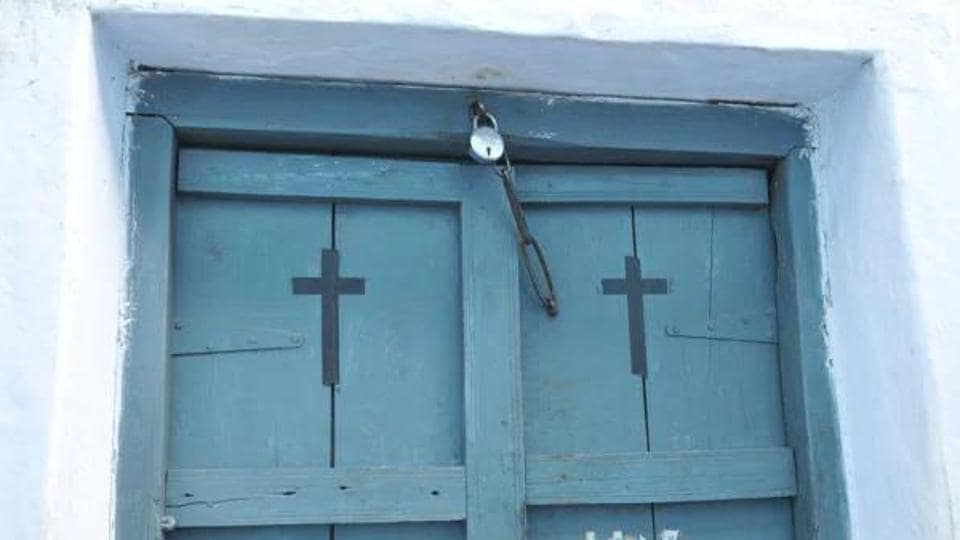
The administration also imposed prohibitory order under section 144 of the CrPC in Geltua village of Bhadrak, where the Believer’s Church is located, to ensure law and order.
Manoj Patra, sub-collector of Bhadrak, said the officials had received a complaint from Bajrang Dal regarding tribals being converted to Christianity in the church.
“Bhadrak Tahasildar and the revenue inspector had conducted inquiries early this month which revealed that some people of one community used to gather at the church in Geltua and engage themselves with objectionable activities. As such people of other communities are reacting to it, there is every possibility of communal tension and clash between two communities. At any times they may take law into their own hands for which there is every possibility of breach of peace which may lead to bloodshed, arson and communal riot,” said the sub-collector.
Manas Mohanty, a Bajrang Dal activist alleged that Hindu tribals were being lured and converted to Christianity in the church on a regular basis. “Therefore, we immediately gave a written complaint to the district administration to stop the practice,” said Mohanty.
Phulamani Munda, a local tribal Christian in Geltua, said they were not using loudspeakers. “We are just praying peacefully in the Church. We believed in Jesus and follow the path of Jesus. I don’t understand why the church was sealed,” said Munda.
In September 2021, a Christian priest was detained by a group of villagers over allegations of forced conversion in Tangardihi village of Sundargarh district of Odisha.
As per Orissa Freedom of Religion Act, 1967, any person intending to convert needs to give a declaration before a first class magistrate, prior to such conversion that he intends to do so on his own accord. The priest will have to intimate the date, time and place of the ceremony where conversion would take place, along with the names and addresses of the persons to be converted, to the district magistrate concerned 15 days prior to the said ceremony in a prescribed form. The district magistrate has to maintain a register of conversion and enter particulars of the intimation received by him. The district magistrate by the 10th of each month needs to send to the government a report of intimations pertaining to such conversions.
Punishment pertaining to the violation of the Act makes one liable for imprisonment that may extend to one year, with or without fine, which may be up to ₹5,000. The Act prohibited conversion of anyone under the age of 18. For conversions involving persons below the age of 18, a woman, or a person belonging to a Scheduled Caste or Scheduled Tribe, the punishment is for two years and fine is up to ₹10,000.